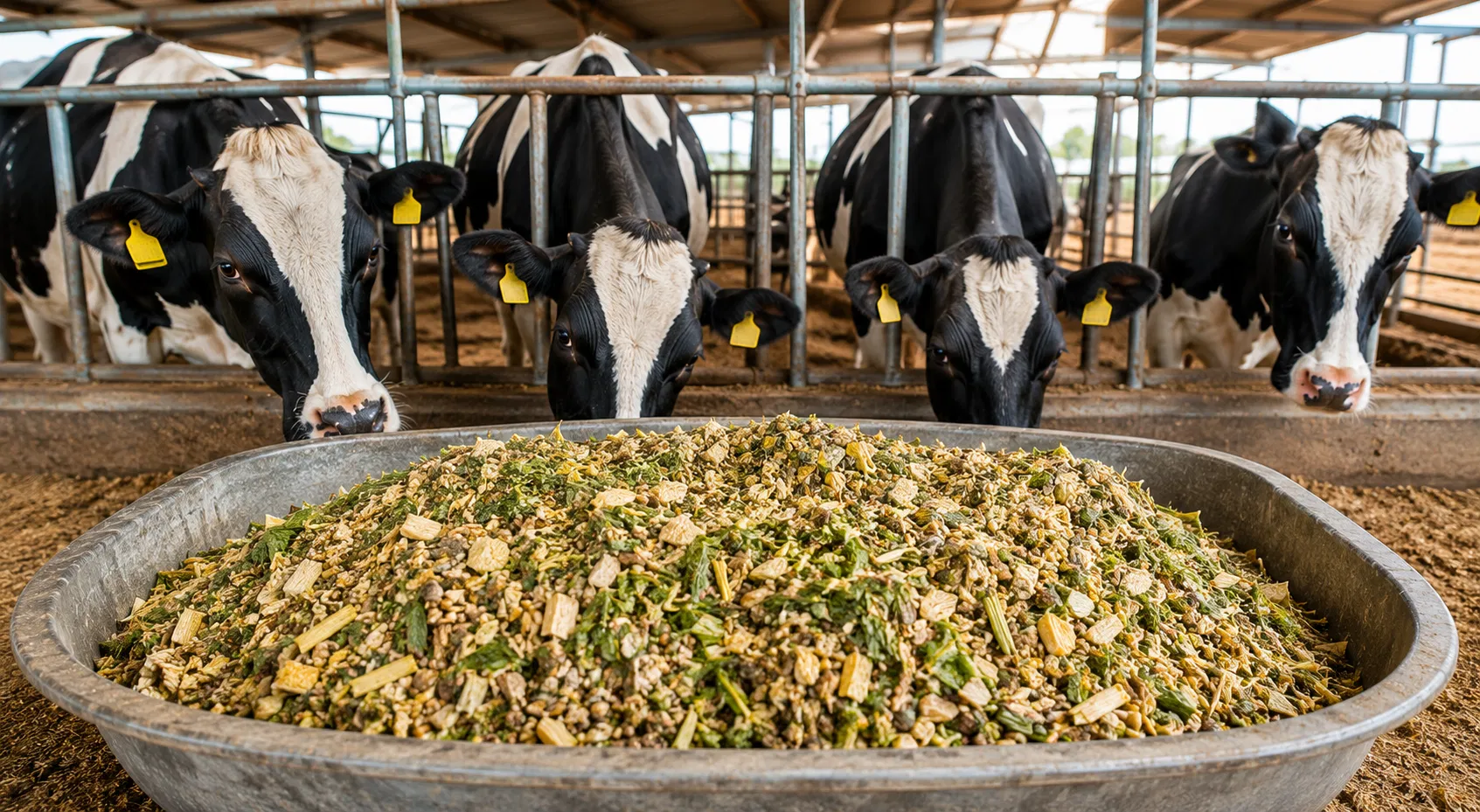
When dairy cows are fed well, everything works better: milk yield improves, rumen function stays stable, and herd health becomes easier to manage. That is exactly why Total Mixed Ration (TMR) for dairy cattle has become one of the most effective feeding systems in modern dairy farming. By blending forage, grains, protein sources, minerals, and additives into one balanced ration, TMR helps ensure every bite delivers consistent nutrition.
For producers looking to improve feed efficiency, reduce sorting, and support steady milk production, a well-formulated TMR can make a major difference. Below, we'll break down what TMR is, why it matters, how it works, and how to get the best results from it.
What Is Total Mixed Ration for Dairy Cattle?
Total Mixed Ration (TMR) is a feeding method in which all feed ingredients are thoroughly mixed together before being offered to cattle. Instead of feeding forage, concentrates, minerals, and supplements separately, the entire diet is combined into one uniform ration.
This approach ensures that cows receive the same nutritional balance in every mouthful. It also helps prevent cows from selecting only the tastiest parts of the diet, which can lead to imbalances in energy, fiber, and protein intake.
"A properly mixed TMR supports consistent intake, healthy rumen fermentation, and more predictable milk production."
Why TMR Matters in Dairy Nutrition
Dairy cattle have high nutritional demands, especially during peak lactation. Their diet must supply enough energy, effective fiber, protein, minerals, and water to support milk synthesis and maintain body condition. TMR helps meet these needs by delivering a balanced ration in a consistent form.
Key benefits of TMR for dairy cattle include:
- Improved nutrient consistency in every bite
- Reduced feed sorting and selective eating
- Better rumen health through balanced fiber and starch intake
- Higher feed efficiency and more predictable performance
- Greater milk production stability
- Easier herd management in group-feeding systems
Core Components of a Dairy TMR
A successful TMR is built from ingredients that work together to meet the cow's nutritional requirements. The exact formula depends on lactation stage, milk goals, forage quality, and farm resources, but most dairy TMR diets include the following components:
1. Forages
Forages form the foundation of the ration and provide the effective fiber needed for proper rumen function. Common forage ingredients include:
2. Concentrates
Concentrates supply energy and protein to support milk production. These may include:
- Corn grain
- Barley
- Wheat middlings
- Soybean meal
- Canola meal
- Cottonseed
3. Minerals and Vitamins
Minerals and vitamins are essential for reproduction, immunity, hoof health, metabolism, and overall productivity. A TMR typically includes:
- Calcium
- Phosphorus
- Magnesium
- Sodium
- Trace minerals
- Vitamins A, D, and E
4. Additives and Buffers
Depending on the feeding strategy, the ration may also include additives that support digestion or improve rumen stability, such as:
- Yeast cultures
- Rumen buffers
- Protected fats
- Ionophores, where permitted
How TMR Supports Milk Production
Milk production depends heavily on how well cows can convert feed into energy and nutrients. TMR supports this process by reducing fluctuations in nutrient intake, which helps maintain a stable rumen environment. When the rumen functions properly, cows are more likely to digest feed efficiently and convert nutrients into milk.
Because cows receive a consistent diet, they are less likely to experience sudden drops in intake or energy shortages. This is especially important for high-producing cows, which need a reliable supply of nutrients every day.
In practical terms, a well-balanced TMR can help:
- Support peak lactation performance
- Reduce milk fat depression caused by poor fiber balance
- Promote steady dry matter intake
- Improve body condition management
Best Practices for Formulating a Dairy TMR
Creating an effective TMR is not just about mixing ingredients together. It requires careful planning, regular feed analysis, and close attention to the needs of the herd. Here are some best practices for formulation:
1. Test All Forages
Forage quality can vary widely from one cutting to the next. Testing for dry matter, protein, fiber, starch, and energy helps ensure the ration is built on accurate values rather than estimates.
2. Balance for Lactation Stage
Not all cows need the same ration. Fresh cows, early-lactation cows, mid-lactation cows, and dry cows each have different nutrient requirements. Grouping cattle properly makes it easier to feed the right TMR to the right animals.
3. Watch Fiber and Starch Levels
The balance between fiber and starch is critical. Too little effective fiber can increase the risk of rumen acidosis, while too much starch may also destabilize rumen fermentation. The goal is to support energy intake without compromising rumen health.
4. Mix Consistently
Consistency is one of the biggest advantages of TMR, but only if the mixing process is done correctly. Overmixing can reduce particle length, while undermixing can lead to separation and sorting. Follow a repeatable mixing order and monitor mixer performance regularly.
5. Deliver Fresh Feed on Schedule
Cows respond well to routine. Feeding fresh TMR at consistent times each day encourages intake and reduces competition at the bunk. Push up feed regularly so cows always have access to a fresh, reachable ration.
Common TMR Mistakes to Avoid
Even a well-designed ration can fail if management is inconsistent. Some of the most common TMR mistakes include:
- Using outdated forage analysis
- Inaccurate weighing of ingredients
- Poor mixer calibration
- Inconsistent batch sizes
- Allowing cows to sort the ration
- Feeding spoiled or heating feed
These issues can reduce intake, disrupt rumen function, and lower milk yield. Regular monitoring and small corrections can prevent bigger problems later.
How to Know If Your TMR Is Working
A good TMR should produce visible results in cow behavior, manure consistency, and herd performance. Signs that your ration is working well include:
- Steady dry matter intake
- Consistent milk yield
- Good cud chewing activity
- Uniform manure texture
- Stable body condition scores
- Low levels of sorting at the feed bunk
If cows are leaving feed behind, dropping milk production, or showing signs of digestive upset, the ration or mixing process may need adjustment.
The Role of TMR in Modern Dairy Farming
Today's dairy farms rely on efficiency, precision, and animal performance. TMR fits these goals by making it easier to deliver balanced nutrition at scale. Whether the herd is small or large, a properly managed TMR system can simplify feeding, improve production consistency, and support healthier cattle.
It also gives producers more control over ingredient use, ration cost, and nutritional strategy. With the right ingredients, accurate mixing, and regular monitoring, TMR becomes a powerful tool for sustainable dairy success.
Conclusion
Total Mixed Ration for dairy cattle is more than just a feeding method—it is a practical nutrition strategy that supports rumen health, milk production, and herd consistency. When formulated correctly and managed carefully, TMR helps cows get the balanced nutrition they need in every bite.
If you want stronger performance from your dairy herd, start with the ration. Test your forages, verify your mixing process, and keep a close eye on cow response. A well-designed TMR can be the difference between average results and a truly productive dairy operation.
Take action today: review your current feeding program and make sure your TMR is delivering the consistency, balance, and efficiency your cows need.