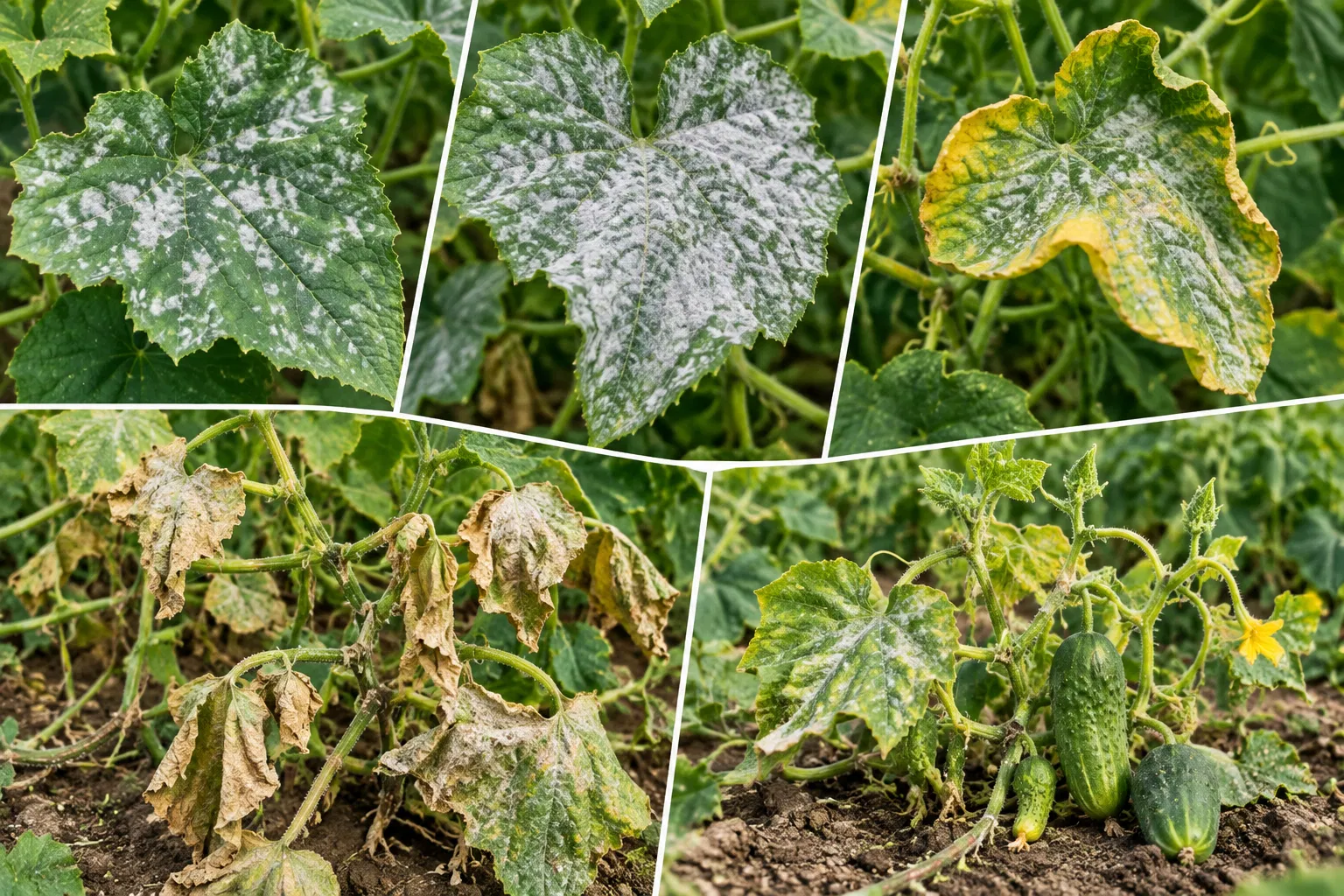
Powdery mildew is one of the most common fungal diseases in cucumber, especially as the crop moves into warm, dry weather with cool nights. It spreads fast once it takes hold and can cut into both leaf area and fruit yield if left unmanaged. Here are the top solutions to control it.
Signs of Powdery Mildew to Watch For in Cucumber
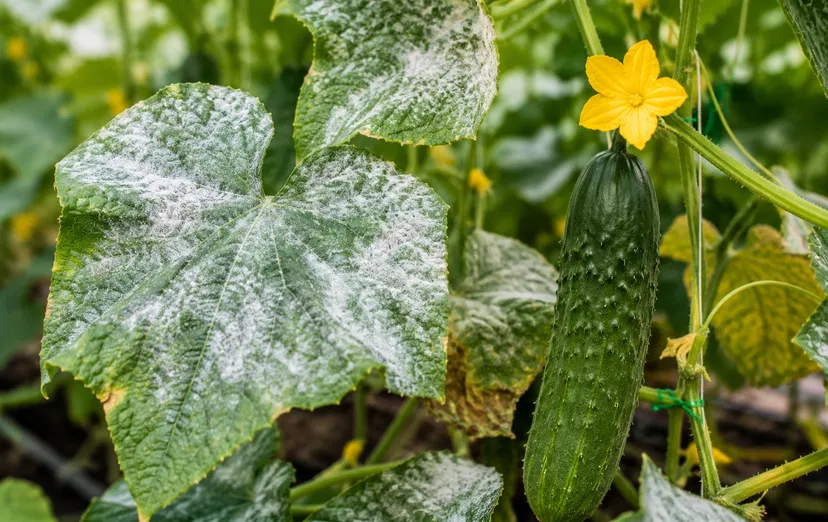
- White, powdery patches on the upper surface of leaves, starting on older growth
- Patches that spread to cover the whole leaf and move on to stems and petioles
- Yellowing and curling of affected leaves as the infection advances
- Premature drying and leaf drop, which exposes fruit to sunscald
- Stunted vine growth and smaller, poorer-quality fruit in heavy infections
What Causes Powdery Mildew in Cucumber
- Warm days combined with cool, humid nights, which favour spore germination
- Poor airflow from dense planting or overcrowded vines
- Low soil moisture and plant stress, which make the crop more susceptible
- Shaded or poorly ventilated parts of the field where humidity stays high
- Spores carried by wind from nearby infected cucurbit crops or volunteer plants
Solutions to Control Powdery Mildew in Cucumber
1. Azoxystrobin 23% SC for Systemic Protective and Curative Control
A systemic fungicide that moves through the plant, giving both protective and curative action against powdery mildew while also helping check downy mildew on the same spray.
Product Recommendation
2. Fluxapyroxad 250 g/l + Pyraclostrobin 250 g/l SC for Long-Lasting, Dual-Action Control
This combination brings together two modes of action, giving longer-lasting control and protecting new growth as the vine continues to develop through the season.
Product Recommendation
3. Fluxapyroxad 75 g/l + Difenoconazole 50 g/l SC for Established Infections
Another dual-action fungicide option, combining a broad-spectrum triazole with a newer SDHI component for reliable knockdown even in established infections.
Product Recommendation
4. Azoxystrobin 4.7% + Mancozeb 59.7% + Tebuconazole 5.6% WG for Broader Disease Coverage
A three-way combination product that pairs a systemic and a contact fungicide with a triazole, giving broader disease coverage in fields where powdery mildew often shows up alongside downy mildew or anthracnose.
Product Recommendation
5. Ampelomyces quisqualis 2.0% AS for Biological Control
A bio-fungicide built around a naturally occurring fungus that parasitises the powdery mildew pathogen itself, making it a useful option for growers who want to keep spray programmes biological or rotate away from chemical fungicides.
Product Recommendation
Disclaimer: Always confirm current label registration, approved dosage, water volume, and pre-harvest interval (PHI) for your state before using any product - labels are periodically revised by regulatory authorities.
This guide is a general advisory. Do your own research and verification before using any product. Always confirm suitability for your crop stage, region, and field conditions before making any purchase, spray, or crop-management decision.