Mite control in rose is a fight fought on the underside of leaves, where red spider mite and two spotted mite (Tetranychus urticae) colonies build up fast in hot, dry weather. Because mites are not true insects, ordinary insecticides often don't touch them, making dedicated miticides essential. Left unmanaged, mite feeding causes stippled, bronzed leaves, fine webbing, and premature leaf drop that weakens the bush and cuts down bloom quality. Mites also reproduce in days rather than weeks, so rotating between different modes of action is key to effective rose mite management and avoiding resistance build-up.
How to Identify Mite Infestation in the Field
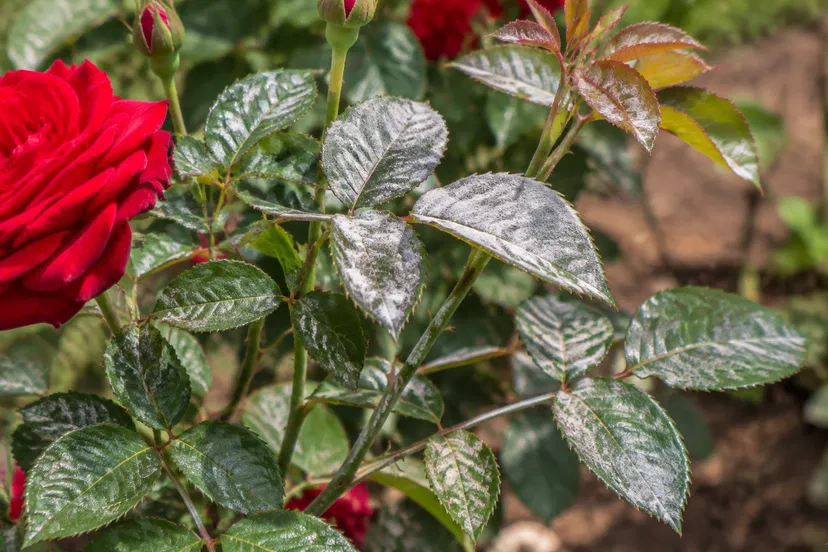
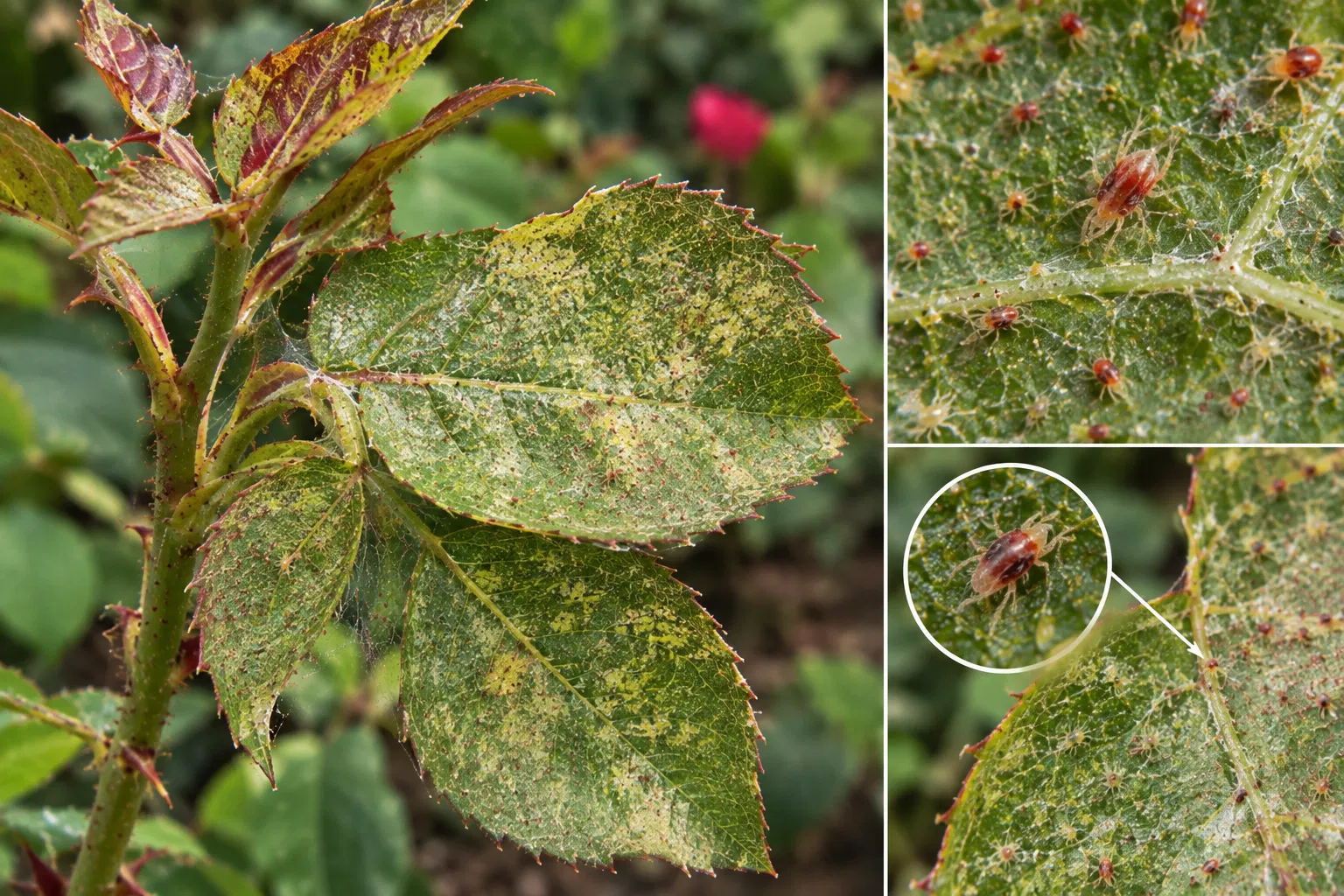
- Fine stippling or speckled discolouration on the upper leaf surface, giving leaves a dusty, bronzed look
- Tiny, barely visible pale yellow, green, or reddish specks clustered on the underside of leaves
- Fine silken webbing on the underside of heavily infested leaves and between leaf veins, especially near shoot tips
- Leaves curling, turning bronze or coppery, and drying out at the edges
- Premature yellowing and shedding of older leaves under sustained mite pressure
- Symptoms spreading fastest during hot, dry spells and easing off after heavy rain or cooler weather
Cultural and Mechanical Control Measures
- Field sanitation: Remove and destroy heavily infested leaves and pruned material rather than leaving it near the bush, to reduce carry-over populations.
- Adequate irrigation: Avoid moisture stress, since mite outbreaks are strongly linked to hot, dry conditions; consistent watering helps keep populations in check.
- Dust control: Knock down dust along paths and borders near the rose bed, as dusty conditions favour mite build-up on nearby foliage.
- Encourage natural predators: Avoid unnecessary broad-spectrum sprays so predatory mites and other natural enemies can help suppress early colonies.
- Water spray knockdown: A forceful spray of water on the leaf underside can physically dislodge light mite populations before they spread.
- Regular scouting: Check the underside of leaves often, especially in hot weather, so treatment starts before colonies and webbing build up.
1. Abamectin 1.9% EC
Abamectin is a naturally derived avermectin that acts on the pest's nervous system, disrupting nerve signal transmission and causing a rapid loss of normal feeding and movement. It has strong translaminar activity, meaning it's absorbed into leaf tissue and remains effective against mites feeding on the underside of leaves even where spray coverage on top is stronger, giving good residual control from a single well-timed application.
Product Recommendations
2. Hexythiazox 5.45% w/w EC
Hexythiazox is an insect growth regulator-type acaricide from the thiazolidinone group, applied early after eggs, larvae, or nymphs are first observed. It works through contact and stomach action with translaminar movement, targeting the pest's growth stages rather than adults directly, which gives it a resistance profile distinct from contact miticides and makes it a useful rotation partner in a mite-management programme.
Product Recommendations
3. Cyenopyrafen 30% SC
Cyenopyrafen is a pyrazole acaricide that undergoes metabolic transformation inside the pest into compounds that disrupt the mitochondrial electron transport chain, blocking normal cellular respiration. This gives quick action, typically visible within hours, and effective control across all mite life stages, including eggs, with no known cross-resistance to other miticide classes, making it a strong rotation option.
Product Recommendations
4. Bifenazate 22.60% SC
Bifenazate works as a mitochondrial electron transport inhibitor, causing mites to become hyperactive before they lose the ability to produce energy and die of exhaustion. It gives fast knockdown along with long residual control, is effective against all mobile stages of mites with some ovicidal activity against eggs, and holds up well through rain once applied.
Product Recommendations
Disclaimer: Always confirm current label registration, approved dosage, water volume, and pre-harvest interval (PHI) for your state before using any product — labels are periodically revised by regulatory authorities.
This guide is a general advisory. Do your own research and verification before using any product. Always confirm suitability for your crop stage, region, and field conditions before making any purchase, spray, or crop-management decision.