Aphid control in brinjal matters because these small, soft-bodied sap-suckers (mainly Aphis gossypii) build up colonies fast on the underside of young leaves and shoot tips, weakening the plant and coating it in sticky honeydew that invites sooty mould. Left unmanaged, aphids stunt growth, curl leaves, and can also spread plant viruses between crops. Because aphids reproduce quickly and can shift resistance within a season, rotating chemical modes of action alongside biological options is the most reliable way to keep brinjal aphid management effective through the crop cycle.
How to Identify Aphids in the Field
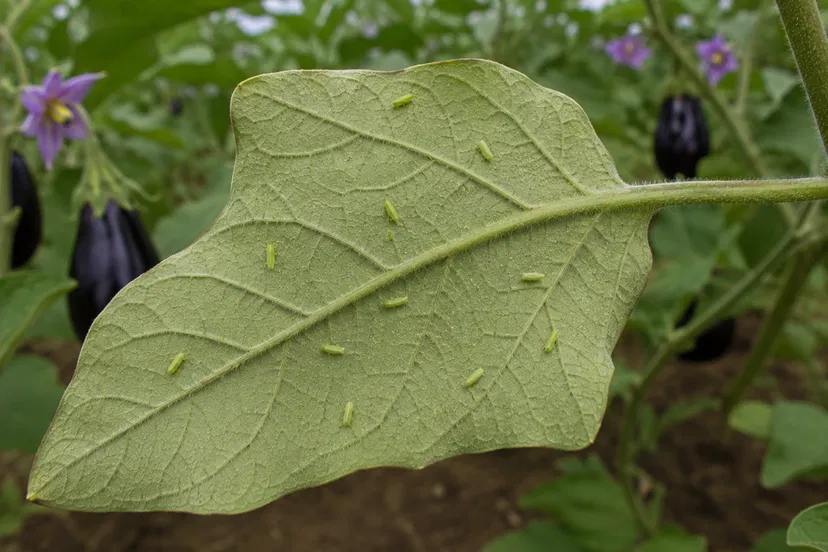
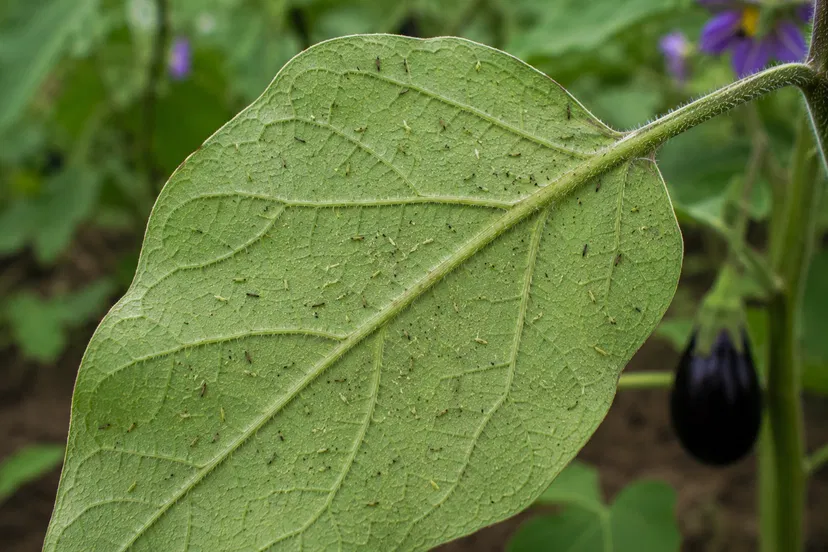
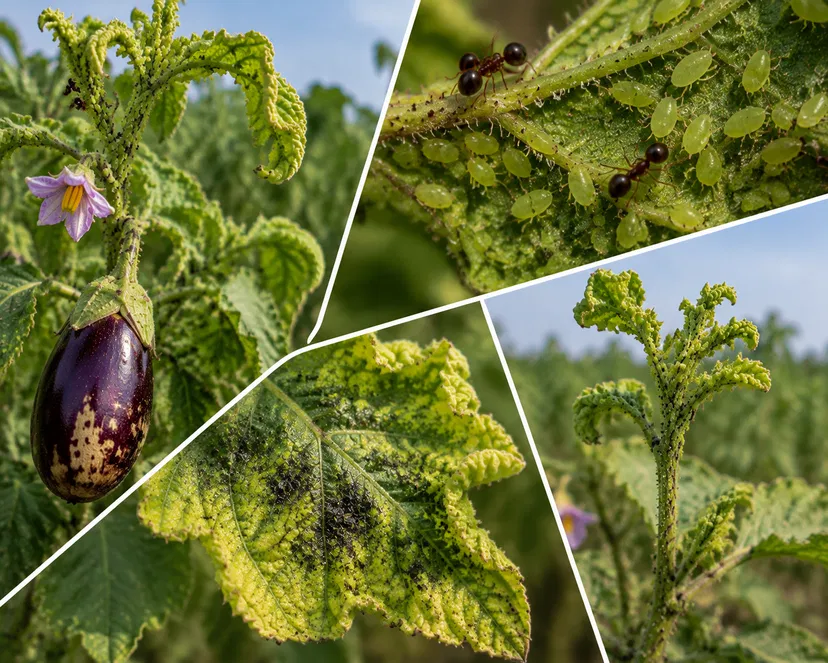
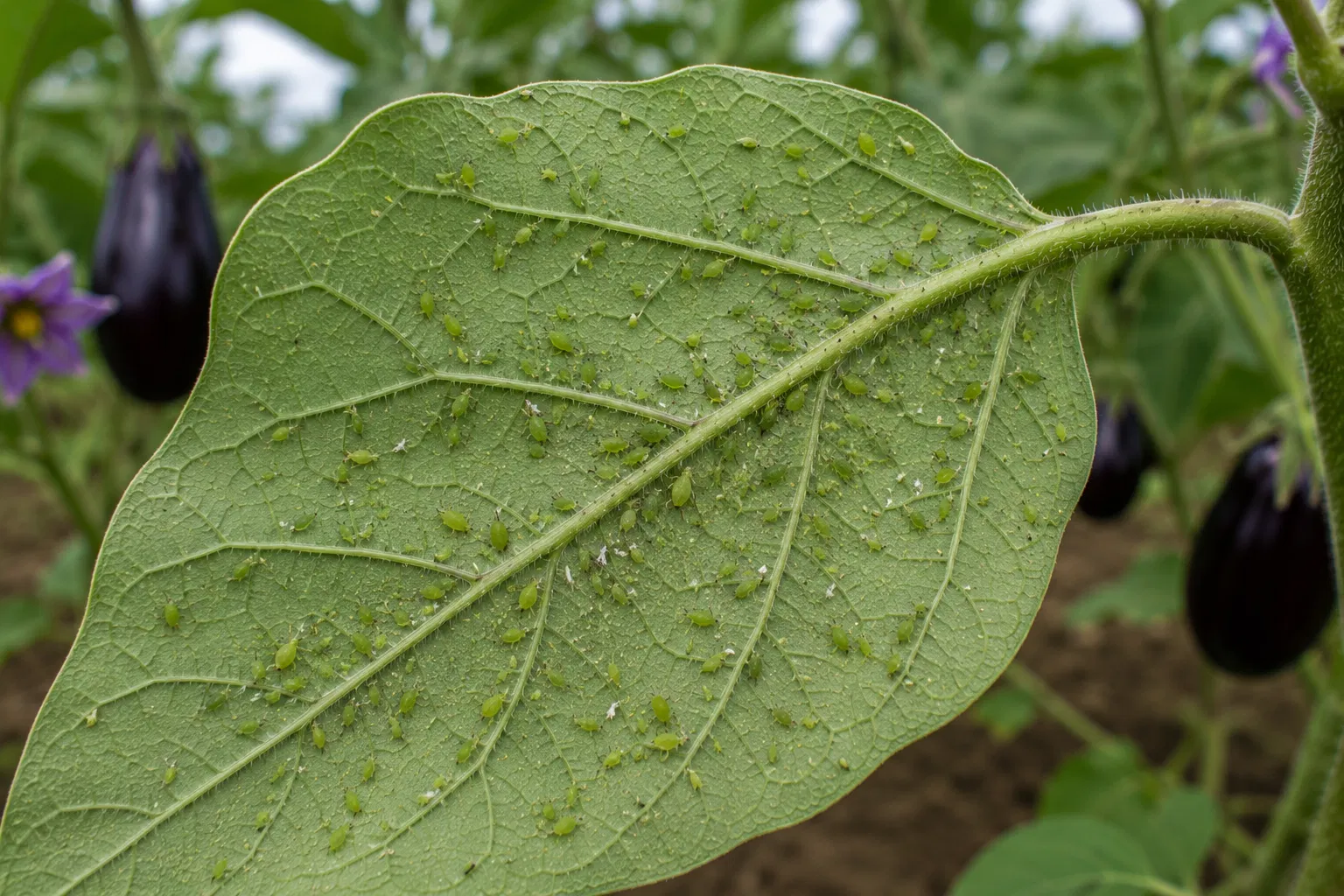
- Clusters of small, soft-bodied insects (green, yellow, or black) crowded on shoot tips and the underside of young leaves
- Curling, crinkling, or downward cupping of infested leaves
- A sticky film of honeydew on leaves and stems, often followed by black sooty mould growth
- Ants moving actively along stems, drawn to the honeydew aphids secrete
- Stunted shoot growth and distorted new flush on heavily infested plants
- Shed white or pale skins (exuviae) scattered near colonies as aphids moult
Cultural and Mechanical Control Measures
- Field sanitation: Remove and destroy crop residues and aphid-prone weed hosts after harvest to break the carry-over cycle.
- Yellow sticky traps: Install at canopy height to monitor and mass-trap winged aphids moving into the field.
- Encourage natural predators: Avoid broad-spectrum sprays where possible so ladybird beetles, lacewings, and hoverflies can keep early colonies in check.
- Balanced fertilization: Avoid excess nitrogen, since soft, sap-rich growth is exactly what draws aphids in and speeds up their reproduction.
- Water spray knockdown: A strong jet of water on the underside of leaves can physically dislodge light aphid colonies before they build up.
- Border and intercropping: Growing tall barrier crops or companion plants along field edges reduces the number of winged aphids drifting into the main brinjal plot.
1. Beta-cyfluthrin 8.49% + Imidacloprid 19.81% w/w OD
This pairing combines a synthetic pyrethroid with a systemic neonicotinoid for dual-action control. Beta-cyfluthrin acts as a sodium channel blocker on contact, causing rapid excitation and knockdown, while imidacloprid is absorbed into the plant and disrupts the pest's acetylcholine receptors from within, so aphids feeding on treated tissue are affected even without direct spray contact. Together they give both quick knockdown and longer systemic protection as new growth emerges.
Product Recommendations
2. Cyantraniliprole 10.26% OD
Cyantraniliprole is an anthranilic diamide that works through both contact and systemic action, moving translaminarly to reach aphid colonies tucked into curled leaves and shoot tips. It impairs the pest's muscle function, so feeding stops rapidly even before the aphid is fully killed, limiting further honeydew build-up and virus spread. Its distinct mode of action also makes it a useful rotation partner alongside older aphid chemistries.
Product Recommendations
3. Flonicamid 50% WG
Flonicamid is a selective feeding blocker that targets the pest's chordotonal sensory organs rather than the nervous system directly, causing aphids to stop feeding almost immediately after exposure and eventually starve. Because its mode of action is distinct from pyrethroids and neonicotinoids, it's a useful rotation option where aphid populations have grown tolerant of other chemistries, and it's generally considered gentle on pollinators and natural predators.
Product Recommendations
4. Pyriproxyfen 8% + Dinotefuran 5% + Diafenthiuron 18% SC
This ternary mix combines three mechanisms in one spray: dinotefuran is a fast-acting neonicotinoid that blocks feeding, diafenthiuron interferes with the pest's cellular energy production for contact kill, and pyriproxyfen is a growth regulator that stops surviving nymphs from maturing into reproductive adults. Together they attack aphid colonies at more than one life stage, giving both quick knockdown and a longer window of residual control than a single-active product.
Product Recommendations
5. Dimpropyridaz 120 g/l SL
Dimpropyridaz belongs to a newer chemical class, the pyridazine pyrazolecarboxamides, and works by interfering with the pest's TRPV sensory channels in a way distinct from other selective feeding blockers. Affected aphids become uncoordinated and stop feeding within hours, eventually dying of starvation. It has strong translaminar movement and acropetal activity, meaning it keeps protecting new growth as the plant develops between sprays.
Product Recommendations
6. Fenvalerate 20% EC
Fenvalerate is a contact synthetic pyrethroid that disrupts nerve signal transmission in the pest, giving fast knockdown on exposure. It's photostable, so it holds up reasonably well under field sunlight, and it acts broadly against chewing, sucking, and boring pests, making it a useful option when aphids are showing up alongside shoot and fruit borer pressure in the same brinjal plot.
Product Recommendations
7. Dinotefuran 70% WG
Dinotefuran is a neonicotinoid that disrupts the pest's nicotinic acetylcholine receptors, cutting off normal nerve signalling and leading to rapid paralysis. It's absorbed systemically into plant tissue, so it protects the whole plant including new growth and aphids sheltering on leaf undersides, and its low dosage requirement makes it an economical option for season-long aphid management.
Product Recommendations
8. Clothianidin 3.5% + Pyriproxyfen 8% SE
Clothianidin is a neonicotinoid that binds to the pest's acetylcholine receptors, rapidly disrupting nerve signalling and stopping feeding, while pyriproxyfen works alongside it as a growth regulator that prevents surviving nymphs from developing into breeding adults. This pairing gives both immediate control of active aphid colonies and a dent in the next generation, with translaminar movement that keeps the whole leaf protected.
Product Recommendations
9. Microbial Consortium (Verticillium lecanii + Beauveria bassiana + Metarhizium anisopliae)
This is a combination of three naturally occurring entomopathogenic fungi used as a biological insecticide against aphids and other sucking pests. Spores that land on an aphid attach to its body, germinate, and grow through the outer cuticle, gradually colonising the insect and draining its nutrients until it dies. Because it works through direct infection rather than a chemical toxin, it's gentler on ladybird beetles and other natural predators, and fits well into IPM or organic-leaning brinjal programmes when applied early and paired with the cultural practices above.
Product Recommendations
Disclaimer: Always confirm current label registration, approved dosage, water volume, and pre-harvest interval (PHI) for your state before using any product — labels are periodically revised by regulatory authorities.
This guide is a general advisory. Do your own research and verification before using any product. Always confirm suitability for your crop stage, region, and field conditions before making any purchase, spray, or crop-management decision.