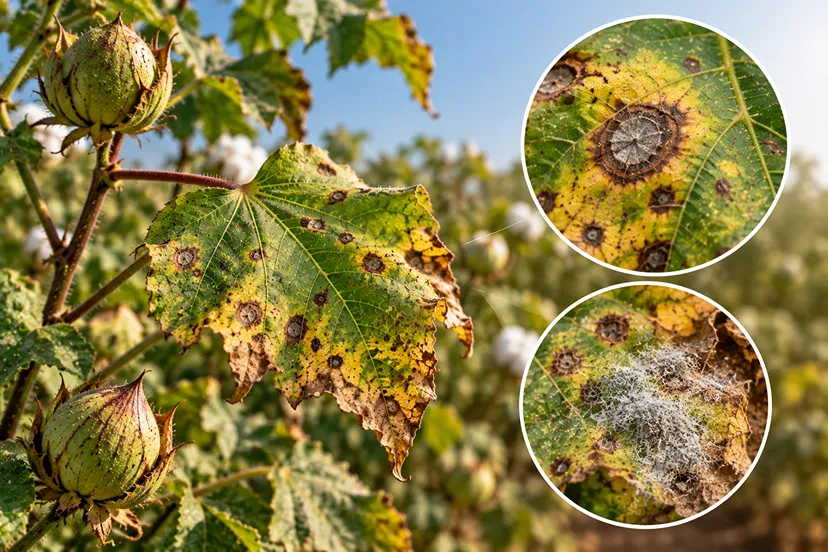
Cotton stays exposed to insect pressure right from the seedling stage through to boll opening, with different pests taking over as the crop moves from vegetative growth into flowering and fruiting. Left unchecked, these pests damage the plant directly and open the door to further losses from bolls that never mature.
1. Bollworm Complex (Helicoverpa armigera, Earias vitella & Spodoptera litura)
How to Spot It
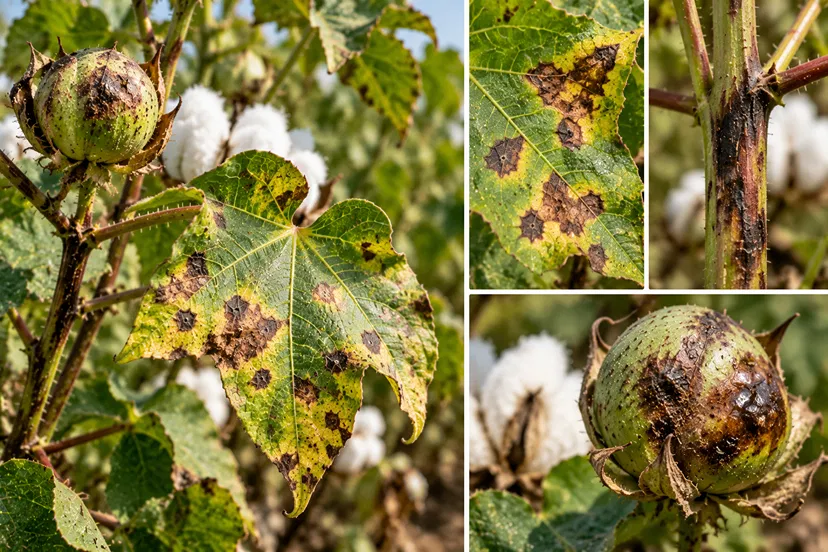
Look for small round entry holes on squares, flowers, and bolls, often with visible frass near the opening. Affected squares and young bolls may drop prematurely, and cutting open a damaged boll usually reveals feeding damage or the caterpillar itself inside.
Solutions to Control It
Chlorantraniliprole 18.5% SC - A diamide insecticide that disrupts the larva's muscle function, stopping feeding quickly and giving control across American bollworm, spotted bollworm, and tobacco caterpillar in a single spray.
Product Recommendation
2. Sucking Pest Complex (Aphids, Jassids, Thrips & Whitefly)
How to Spot It
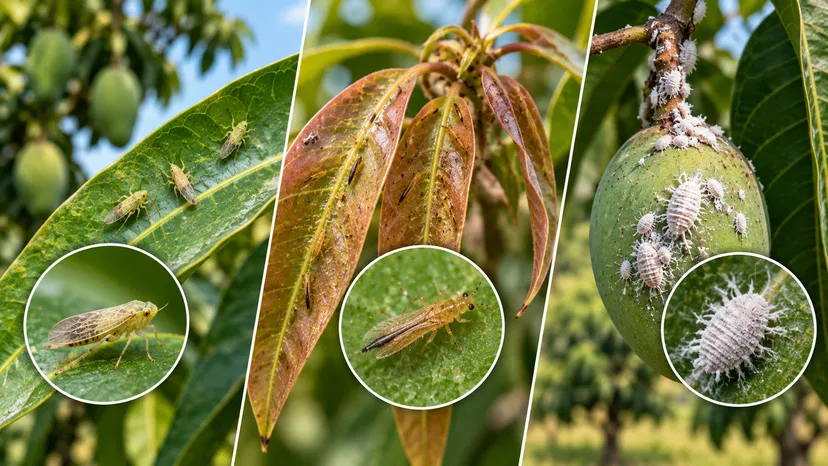
Look for curling, crinkling, or yellowing leaves, along with a sticky honeydew residue that often develops black sooty mould. Jassids cause a reddish-yellow triangular burn at the leaf margins, thrips leave a silvery scarring on the leaf surface, and whitefly can be seen scattering in a cloud when the plant is disturbed.
Solutions to Control It
Fipronil 5% SC - Acts through contact, stomach, and systemic action, disrupting the pest's nervous system and giving broad coverage against aphids, jassids, thrips, and whitefly together.
Product Recommendation
- Dhanuka Fax SC Insecticide
- Tata Rallis Sonic Flo Insecticide
- Adama Agadi SC Insecticide
- BACF Fenel Insecticide
- EBS Kavach Insecticide
Imidacloprid 70% WG - A systemic neonicotinoid absorbed quickly into the plant, giving fast knockdown of jassids, aphids, and thrips along with longer-lasting residual protection.
Product Recommendation
- Bayer Admire Insecticide
- Sumitomo Dzire Insecticide
- Dhanuka Ad-Fyre Insecticide
- Katyayani IMD-70 Insecticide
- EBS Imidapro
3. Cotton Mealybug
How to Spot It
Look for small, white, cottony masses clustered on stems, leaf undersides, and around the base of the plant. Heavily infested plants show stunted growth, bunched or distorted leaves at the growing tip, and a sticky honeydew coating that attracts ants and sooty mould.
Solutions to Control It
Spirotetramat 11.01% + Imidacloprid 11.01% w/w SC - Combines two systemic modes of action that move both upward and downward within the plant, reaching mealybugs hidden in leaf folds and stem crevices that contact sprays often miss.
Product Recommendation
Cultural Practices to Keep Pest Pressure Down
- Monitor the crop closely from the seedling stage through boll formation, when pest pressure changes fastest
- Remove and destroy damaged squares, flowers, and bolls promptly to break the pest's life cycle
- Keep field borders and bunds free of weeds and alternate hosts, especially for mealybug
- Avoid excess nitrogen application, which encourages the soft growth these pests prefer
- Rotate with a non-host crop where pest pressure has been high in previous seasons
Disclaimer: Always confirm current label registration, approved dosage, water volume, and pre-harvest interval (PHI) for your state before using any product, since labels are periodically revised by regulatory authorities.
This guide is a general advisory. Do your own research and verification before using any product. Always confirm suitability for your crop stage, region, and field conditions before making any purchase, spray, or crop-management decision.