Chilli (Capsicum annuum) is one of India's most widely grown and highest-value spice crops, prized for both fresh green pods and dried red chilli destined for masala and export markets. It's also one of the most disease-prone — the crop's long field duration, warm-humid growing windows, and back-to-back cropping in the same plots give fungal and bacterial pathogens plenty of opportunity to build up and strike at every stage, from the nursery tray to the ripening fruit.
A single missed disease can mean rotted fruit or a stripped, unproductive plant — which makes early, correct identification the difference between a manageable outbreak and a lost crop.
This guide walks through the 5 diseases that cause the most damage to chilli in Indian growing conditions, how to tell them apart in the field, and which solutions genuinely help with each one.
1. Damping-off (Pythium spp., Rhizoctonia solani, Phytophthora spp.)
Damping-off strikes at the most vulnerable stage of the chilli crop — the nursery. It rots seeds before they can even emerge, or topples freshly germinated seedlings within days of sprouting, often wiping out entire seed trays or nursery beds before transplanting ever happens.
How to Spot It
Water-soaked, thread-thin, pinched stems right at the soil line; seedlings that suddenly keel over in patches; patchy, poor germination that's worse in overcrowded, waterlogged, or overwatered trays and beds.
Solutions to Manage It
| Product | Active Ingredient |
|---|---|
| Tata Rallis Captaf Fungicide | Captan 50% WP |
| Syngenta Ridomil Gold Fungicide | Metalaxyl-M 4% + Mancozeb 64% WP |
| Dhanuka M-45 Fungicide | Mancozeb 75% WP |
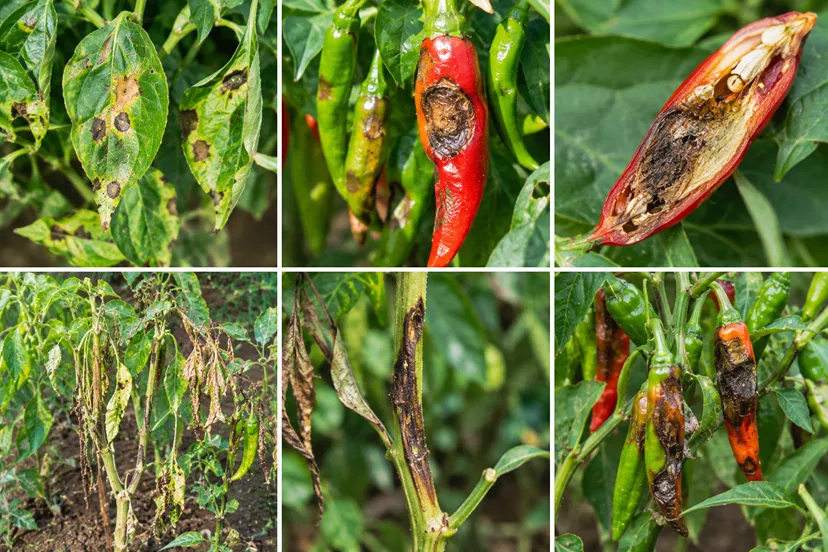
2. Anthracnose (Fruit Rot / Dieback) (Colletotrichum capsici)
Widely regarded as the single most damaging chilli disease in India, anthracnose attacks ripening and ripe fruit directly, rotting them on the plant, and can also work its way into shoot tips as dieback — hitting both marketable green chilli and the dried-chilli trade hard.
How to Spot It
Sunken, water-soaked circular spots on fruit that darken to brown-black and often show concentric rings of pink or orange spore masses in humid weather; shoot tips and young twigs wither and die back from the top downward.
Solutions to Manage It
| Product | Active Ingredient |
|---|---|
| Tata Rallis Taqat Fungicide | Captan 70% + Hexaconazole 5% WP |
| Sumitomo Rumpus Fungicide | Tribasic Copper Sulfate 34.5% SC |
| Bayer Nativo 75 WG Fungicide | Tebuconazole 50% + Trifloxystrobin 25% WG |
| Agriventure Cooxy Fungicide | Copper Oxychloride 50% WP |
| Dhanda Agro Tebusulf Fungicide | Tebuconazole 10% + Sulphur 65% WG |
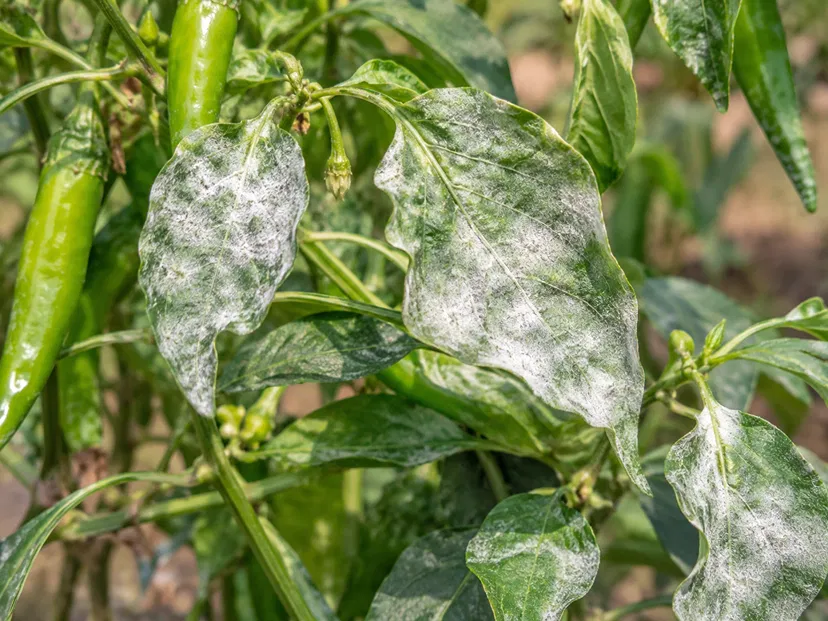
3. Powdery Mildew (Leveillula taurica)
This mildew colonises the underside of leaves, sapping the plant's vigour from within. Left unchecked it drives premature leaf drop, poor flowering, and shrivelled, undersized fruit — especially damaging during warm days with humid nights.
How to Spot It
Pale yellow blotches on the upper leaf surface, matched by a white-to-greyish powdery growth on the underside directly beneath them; heavily infected leaves yellow, curl, and drop early, starting from the lower canopy.
Solutions to Manage It
| Product | Active Ingredient |
|---|---|
| Bayer Nativo 75 WG Fungicide | Tebuconazole 50% + Trifloxystrobin 25% WG |
| Syngenta Thionutri Fungicide | Sulphur 80% WG |
| Corteva Galileo Sensa Fungicide | Picoxystrobin 6.78% + Tricyclazole 20.33% SC |
| Dhanda Agro Tebusulf Fungicide | Tebuconazole 10% + Sulphur 65% WG |
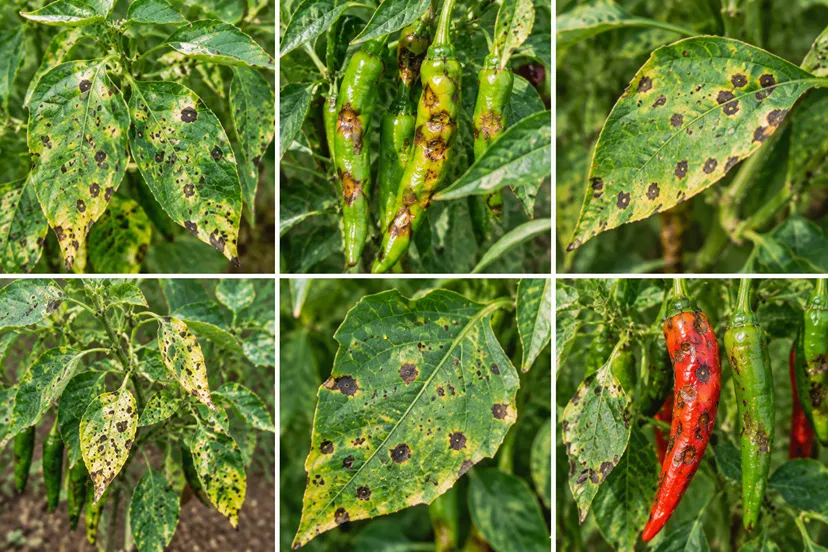
4. Leaf Spot (Cercospora capsici and bacterial leaf spot complex)
Leaf spot riddles the foliage with small circular lesions that eat into the plant's photosynthetic area. In a bad outbreak, older leaves yellow and drop early, thinning the canopy and leaving developing fruit exposed to sunscald.
How to Spot It
Small, roughly circular spots with grey-to-tan centres and dark brown margins — often described as a "frog-eye" pattern — appearing first on older, lower leaves and sometimes merging into larger blighted patches.
Solutions to Manage It
| Product | Active Ingredient |
|---|---|
| Sumitomo Rumpus Fungicide | Tribasic Copper Sulfate 34.5% SC |
| Dhanuka Kasu-B Fungicide | Kasugamycin 3% SL |
| Crystal Blue Copper Fungicide | Copper Oxychloride 50% WP |
5. Wet Rot (Choanephora spp.)
A fast-moving, wet-weather rot that turns flowers and young fruit into a slimy, collapsed mass — usually starting at the blossom end and spreading quickly through a whole fruit cluster in humid conditions.
How to Spot It
Soft, water-soaked, slimy rot on flowers and young fruit, soon covered in a coarse, whiskery grey-black fungal growth that looks like a fine pin-mould.
Solutions to Manage It
| Product | Active Ingredient |
|---|---|
| Corteva Galileo Sensa Fungicide | Picoxystrobin 6.78% + Tricyclazole 20.33% SC |
Frequently Asked Questions
What is the most damaging disease of chilli crops in India?
Anthracnose (fruit rot), caused by Colletotrichum capsici, is generally considered the most economically damaging chilli disease in India — it rots ripening fruit directly and can wipe out a large share of marketable yield during humid weather.
Can chilli seedlings be protected from damping-off before transplanting?
Yes. A seed or nursery-soil treatment with a labelled fungicide before sowing, combined with well-drained nursery beds and avoiding overwatering, is far more effective than trying to treat damping-off after seedlings have already collapsed.
How is chilli leaf spot different from anthracnose?
Leaf spot shows up as small, roughly circular "frog-eye" lesions scattered across the foliage, while anthracnose targets the fruit directly with sunken, dark, spore-ringed patches — both can occur on the same plant, and a few products in this guide cover both.
When is the best time to spray for chilli fruit rot and powdery mildew?
Preventive sprays timed at flowering and early fruit-set, repeated at label-recommended intervals through fruit development, generally control both diseases far better than waiting for visible symptoms — both spread fast once established on fruit.
Disclaimer
- Always confirm current label registration, approved dosage, water volume, and pre-harvest interval (PHI) for your state before using any product - labels are periodically revised by regulatory authorities.
- This guide is a general advisory. Do your own research and verification before using any product. Always confirm suitability for your crop stage, region, and field conditions before making any purchase, spray, or crop-management decision.