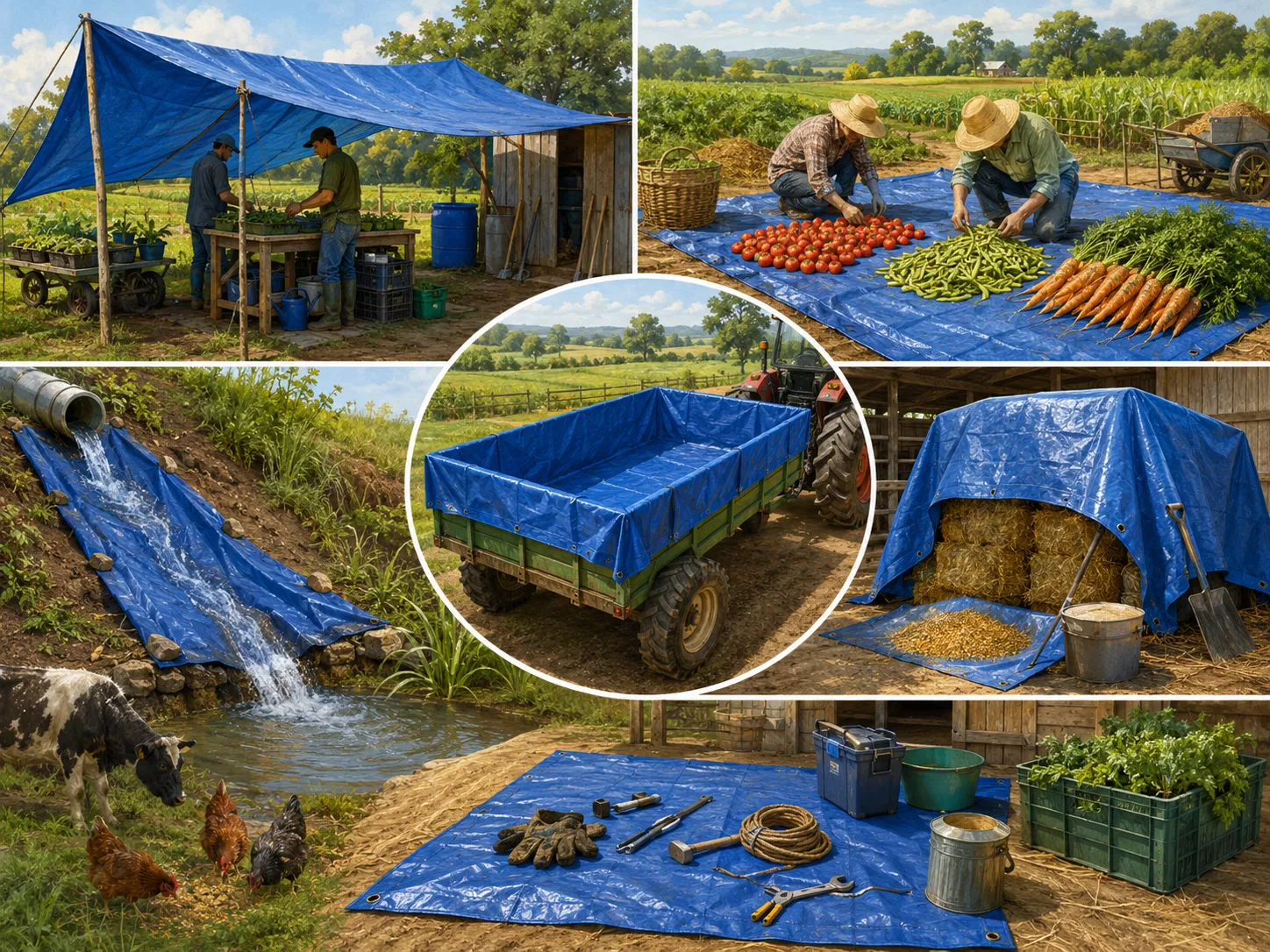
On a farm, a tarpaulin is far more than a simple cover. A good tarp can protect crops, manage feed, control mud, store materials, and solve everyday problems quickly and affordably. Whether you run a small family farm or a larger agricultural operation, tarpaulin uses on the farm go well beyond keeping rain off machinery.
Farmers rely on tarps because they are versatile, durable, and easy to move where needed. From shielding hay from moisture to creating temporary shelters and lining storage areas, tarpaulins help improve efficiency and reduce waste. If you are looking for practical ways to use tarps on the farm, this guide covers the most useful applications and why they matter.
Why Tarpaulins Are Essential on the Farm
A tarpaulin is one of the most useful farm tools because it solves multiple problems at once. It can protect, contain, separate, and shield in changing weather conditions. Farms deal with sun, wind, rain, frost, dust, and mud, often all in the same week. A strong tarp helps farmers stay prepared.
Key benefits of tarpaulins on the farm include:
- Weather protection for crops, feed, and equipment
- Temporary shelter for animals, workers, or supplies
- Dust and debris control in storage areas
- Moisture management around hay, grain, and wood
- Low-cost, flexible coverage for many farm tasks
Protecting Hay and Straw from Moisture
One of the most common tarpaulin uses on the farm is covering hay and straw. Even a small amount of rain can ruin feed quality, reduce nutritional value, and cause mold growth. A tarp creates a barrier that helps keep bales dry during storage or transport.
For best results, farmers often secure tarps over stacked hay bales with enough airflow to reduce condensation. This helps prevent trapped moisture, which can be just as damaging as rain.
Tip: Choose a heavy-duty, UV-resistant tarp for hay storage to help it last through long exposure to sunlight and weather.
Covering Farm Equipment and Machinery
Tractors, plows, seeders, and other farm machinery are expensive investments. Tarps help protect these assets from sun damage, rust, dust, and rain when storage buildings are limited or equipment must remain outside temporarily.
Using a tarp over machinery can also make daily work easier by reducing cleanup and maintenance time. Less exposure to the elements means fewer repairs caused by corrosion and weather wear.
- Shield engines and moving parts from moisture
- Prevent dust buildup on unused equipment
- Reduce fading and cracking from direct sunlight
- Offer short-term coverage during repairs or transport
Using Tarps for Feed Storage
Animal feed is vulnerable to rain, pests, and contamination. Tarpaulins are often used to cover bulk feed, bagged feed, and temporary feed stacks. This helps maintain feed quality and reduces waste from spoilage.
Farmers may also use tarps as liners for feed storage areas to keep grain or fodder protected from damp ground. In some cases, tarps serve as quick covers for feed during loading and unloading, especially in open areas.
Creating Temporary Shelters and Windbreaks
Tarpaulins are extremely useful for creating temporary shelters on the farm. They can be stretched over frames, poles, fences, or existing structures to provide quick protection from rain and wind. This is especially valuable during planting, harvesting, or emergency weather events.
Tarps also work well as windbreaks for protecting delicate seedlings, young animals, or workers in exposed areas. A properly placed tarp can reduce wind stress and help create a more workable environment.
Common temporary shelter uses include:
- Covering work areas during repairs
- Shielding livestock from rain and wind
- Protecting harvested crops during sorting
- Providing shade in hot weather
Helping with Crop Protection and Harvesting
Tarpaulin uses on the farm also extend to crop handling. During harvest, tarps can be laid under trees or shrubs to catch fruit, nuts, or seed. This makes collection faster and reduces losses on the ground.
Tarps can also be spread over harvested produce to protect it from unexpected rain while moving it from the field to storage. For vegetables, fruits, and grain, this extra layer of protection can make a big difference in quality.
In some operations, tarps are used to line transport vehicles or collection bins. This helps reduce contamination and makes cleanup much easier after harvest.
Managing Mud, Drainage, and Ground Protection
Farms often face muddy pathways, wet loading zones, and heavy traffic areas that become damaged after rain. Tarps can help reduce ground wear by covering vulnerable spots or creating temporary clean surfaces for equipment and foot traffic.
They can also be used to divert water away from certain areas or protect materials stored on the ground. In some cases, tarps serve as liners beneath compost, mulch, or sand piles to limit contact with wet soil.
- Protect wet loading zones from becoming deeper mud
- Keep harvested materials off damp ground
- Reduce erosion in temporary work areas
- Support cleaner and safer farm operations
Supporting Silage and Compost Storage
Silage and compost piles require proper covering to maintain the right conditions. Tarpaulins help keep excess rain out while preserving the moisture balance needed for decomposition or fermentation.
For silage, a strong tarp can reduce spoilage and protect feed value. For compost, tarps help control moisture while shielding the pile from too much rain or drying sunlight. This makes the process more efficient and easier to manage.
Farmers often choose reinforced tarps for these applications because they need to withstand regular use, weight, and shifting materials.
Using Tarps for Animal Care
Tarpaulins can also support livestock management. They are often used to create shade, block wind, or provide a dry resting area in open pens and pastures. In a pinch, a tarp can give animals temporary relief from harsh weather.
For young animals especially, protection from cold rain or direct heat can improve comfort and reduce stress. Tarps can also be used to cover bedding, feed, or grooming supplies in animal care areas.
Animal-related tarp uses include:
- Shade cloth substitute for temporary shelter
- Wind protection for corrals and pens
- Dry cover for bedding and feed supplies
- Emergency weather protection during storms
Transporting Materials Safely
Another practical tarpaulin use on the farm is securing loads during transport. Whether you are moving manure, feed, hay, tools, or harvested produce, a tarp keeps materials contained and protected from the elements.
This is especially useful on open trailers or during long trips between fields, barns, or storage sites. A well-secured tarp prevents items from blowing away, getting wet, or spilling onto the road.
How to Choose the Right Tarpaulin for Farm Use
Not all tarps are the same. The best tarp depends on the job, the weather, and how long it will be used. Farmers should look for strength, size, material type, and resistance to UV rays and water.
What to look for:
- Heavy-duty material: Better for long-term outdoor use and rough farm conditions.
- Water resistance: Essential for protecting feed, hay, and equipment.
- UV protection: Helps tarps last longer in direct sunlight.
- Reinforced edges and grommets: Makes fastening easier and more secure.
- Proper size: Ensures full coverage without excessive flapping.
Conclusion: A Simple Farm Tool with Big Value
Tarpaulin uses on the farm are limited only by imagination and need. From covering hay and protecting equipment to creating shelters, managing mud, and supporting harvest work, tarps are a practical solution for everyday farm challenges. They save time, reduce losses, and help farmers stay flexible in changing conditions.
If you want a tool that can do a little bit of everything, a reliable tarpaulin is hard to beat. Choose the right tarp for each task, keep a few sizes on hand, and you will always have a simple, effective answer ready when the farm needs it most.