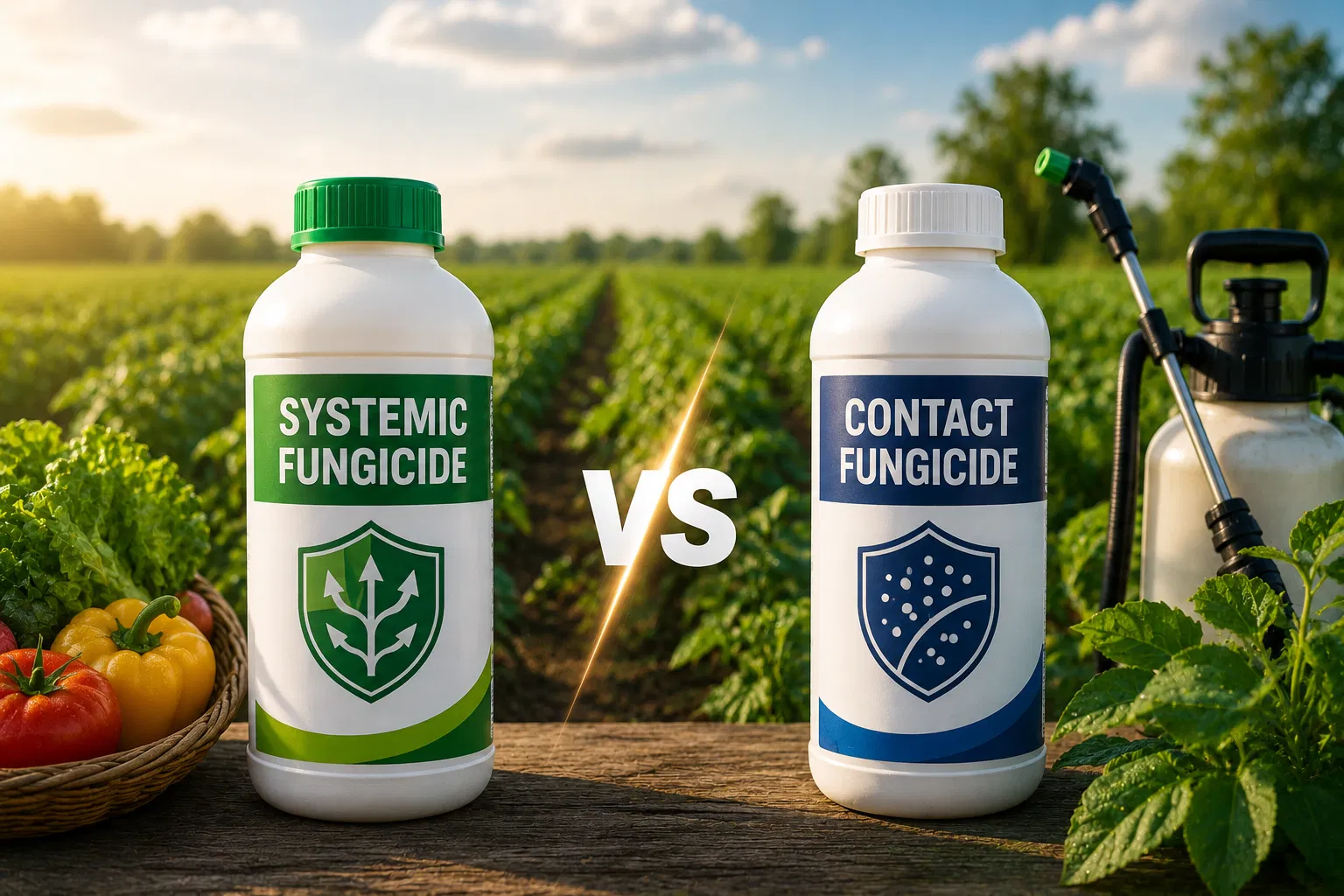
When a fungal disease starts spreading in your garden or crop, choosing the right fungicide can make all the difference. The key decision often comes down to systemic vs contact fungicides. One works from the outside in, while the other moves through the plant for broader protection. Knowing when to use each helps you stop disease faster, protect new growth, and avoid unnecessary damage.
What Is the Difference Between Systemic and Contact Fungicides?
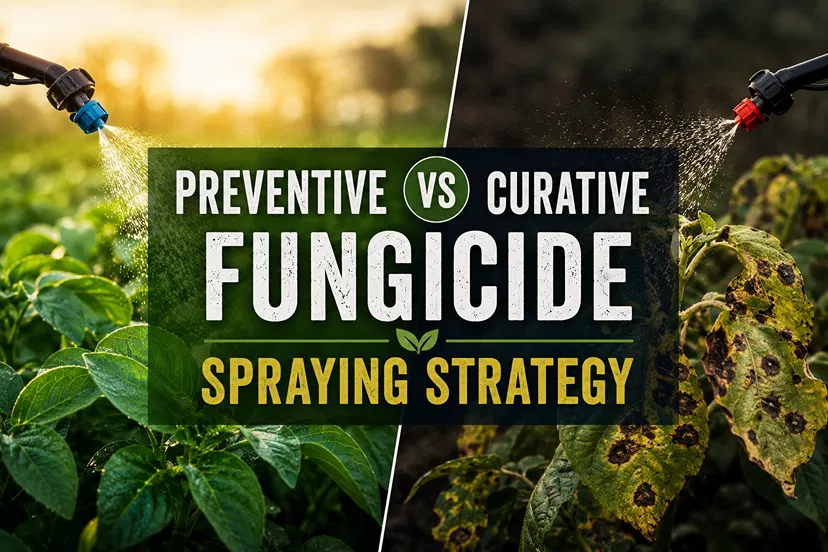
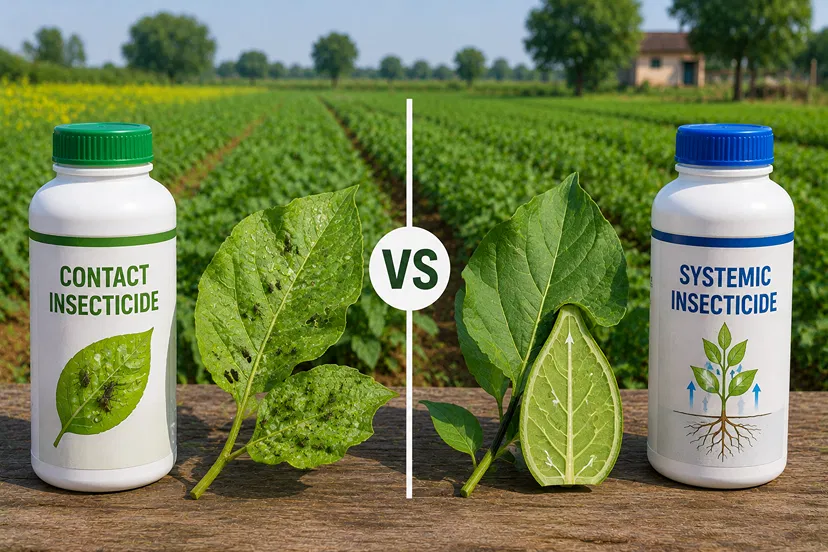
Contact fungicides stay on the plant surface. They create a protective barrier that kills fungal spores before they enter the plant. Because they do not move inside plant tissue, they are best used as a preventive treatment.
Systemic fungicides are absorbed by the plant and move through its tissues. Some travel upward only, while others move throughout the plant. This makes them useful for both prevention and early treatment, especially when a disease has already started to spread internally.
The simplest way to remember it: contact fungicides protect what they touch, while systemic fungicides protect the plant from within.
When to Use Contact Fungicides
Contact fungicides are ideal when you want to stop fungal spores before infection begins. They work best as a first line of defense, especially in high-risk weather conditions or when a known disease is likely to appear.
Best situations for contact fungicides:
- Preventing fungal disease before symptoms appear
- Protecting healthy plants during wet or humid weather
- Using a spray rotation program to reduce resistance
- Covering plant surfaces where spores land and germinate
- Managing surface diseases in gardens, orchards, and fields
Contact fungicides are often preferred when you need quick surface protection and do not need the product to move inside the plant. They are also useful when paired with good sanitation, pruning, and proper spacing.
Advantages of contact fungicides:
- Fast action on exposed spores
- Lower risk of resistance when rotated properly
- Good for preventive spraying
- Useful in integrated disease management
Limitations of contact fungicides:
- Wash off more easily with rain or irrigation
- Must cover plant surfaces thoroughly
- Do not control infections already inside the plant
- Require repeated applications for continued protection
When to Use Systemic Fungicides
Systemic fungicides are the better choice when a disease may already be present inside the plant or when you need longer-lasting protection. Since they move through plant tissue, they can reach areas that spray coverage may miss.
Best situations for systemic fungicides:
- Early infection has already occurred
- New growth needs protection after treatment
- Disease pressure is high and persistent
- Coverage is difficult on dense or fast-growing plants
- You need longer residual activity
Systemic fungicides are especially helpful for plants that grow quickly, since new leaves and stems may be protected after uptake. They are often used for diseases that are difficult to manage with surface sprays alone.
Advantages of systemic fungicides:
- Move into plant tissue for internal protection
- Can protect new growth
- Often last longer than contact products
- Useful against certain established infections
Limitations of systemic fungicides:
- Usually more expensive
- Can lead to resistance if overused
- May not be effective against all fungal pathogens
- Still require correct timing and application
Systemic vs Contact Fungicides: How to Choose
Choosing between systemic and contact fungicides depends on the disease stage, weather, plant type, and your overall management goal. If your goal is prevention, contact fungicides are often the safer and more cost-effective choice. If the disease is already active or you need internal protection, a systemic fungicide may be more effective.
Use contact fungicides when:
- You are spraying before symptoms appear
- Weather conditions favor spore spread
- You need a protective barrier on the plant surface
- You are rotating products to reduce resistance risk
Use systemic fungicides when:
- Symptoms have started and infection may be internal
- The plant has dense growth or hard-to-reach tissue
- You want protection that lasts through new growth
- The disease requires deeper or longer control
In many cases, the best strategy is not choosing one forever, but using both appropriately in a disease management program. This approach helps reduce resistance and improves overall control.
Application Timing Matters
Even the best fungicide will not perform well if applied at the wrong time. Timing is critical for both systemic and contact fungicides.
For contact fungicides:
Apply before infection happens. These products work best as a shield, so timing before rain, dew, or disease outbreaks is essential. Reapplication may be needed after rainfall or heavy irrigation.
For systemic fungicides:
Apply as early as possible once disease risk is identified or at the first sign of infection. Waiting too long may allow the pathogen to spread beyond what the fungicide can control.
Resistance Management: Why Rotation Is Important
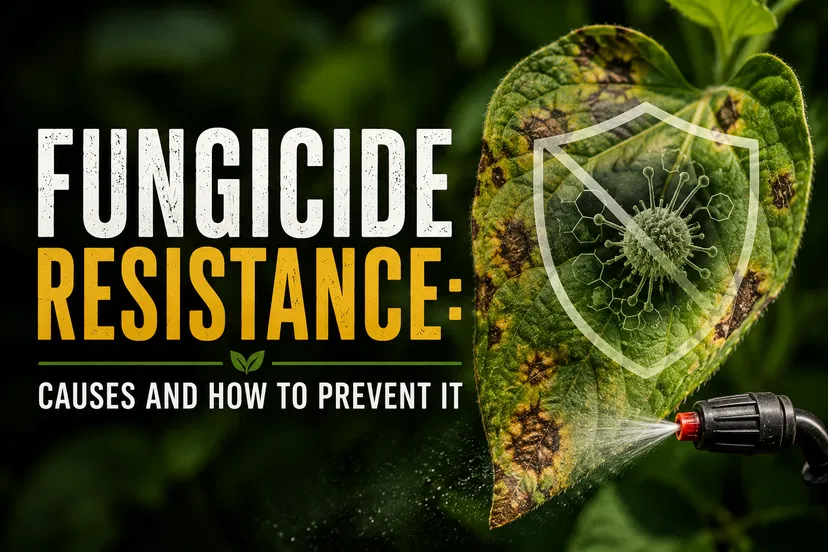
Fungal pathogens can adapt over time, especially when the same systemic fungicide is used repeatedly. This is why resistance management matters. Rotating fungicide modes of action and alternating between systemic and contact products can help preserve effectiveness.
Good resistance management includes:
- Using fungicides only when needed
- Rotating active ingredients and modes of action
- Mixing fungicides only when label directions allow it
- Combining chemical control with cultural practices
Contact fungicides often play an important role here because they can reduce disease pressure without putting as much selection pressure on pathogens as repeated systemic use.
Integrated Disease Control Works Best
Fungicides are only one part of effective disease control. The best results usually come from combining fungicide use with good plant care and sanitation. Removing infected leaves, improving airflow, watering properly, and choosing resistant varieties all reduce disease pressure.
Support fungicide success with these practices:
- Inspect plants regularly for early symptoms
- Remove infected plant material when possible
- Avoid overhead watering if disease is spreading
- Space plants to improve airflow
- Choose resistant or tolerant varieties
- Follow label instructions carefully
Common Mistakes to Avoid
Many fungicide failures happen because the wrong product is used at the wrong time or applied incorrectly. Avoid these common mistakes:
- Using a systemic fungicide as a cure for severe infection
- Relying on contact fungicides after infection has already entered the plant
- Skipping reapplication when weather removes surface protection
- Using the same fungicide class repeatedly
- Ignoring coverage, timing, and label directions
Careful selection and proper use are more important than simply choosing the most powerful product.
Final Takeaway
Understanding systemic vs contact fungicides helps you choose the right tool for the job. Use contact fungicides for preventive surface protection and systemic fungicides when you need internal, longer-lasting control. For the best results, match the fungicide to the disease stage, rotate products to prevent resistance, and support treatment with smart plant care.
If you want better disease control, start by identifying whether you need protection on the surface or inside the plant. That one decision can save time, reduce damage, and improve the health of your plants season after season.