When it comes to getting strong early growth, better root development, and reliable yield potential, oilseed and pulse crops need the right nutrient support from the start. That’s where single super phosphate (SSP) stands out. For farmers looking for a phosphorus fertilizer that also supplies sulfur and calcium, SSP offers a practical, crop-friendly solution that fits the needs of many high-value field crops.
In soils where phosphorus availability is limited, or where sulfur deficiency affects crop performance, SSP can make a major difference. It is not just a fertilizer that feeds the plant; it supports better establishment, healthier flowering, and stronger pod and seed formation. For oilseeds like mustard, groundnut, sunflower, and soybean, and pulses like chickpea, lentil, pea, and pigeon pea, SSP remains one of the most dependable choices.
What Makes SSP So Effective?
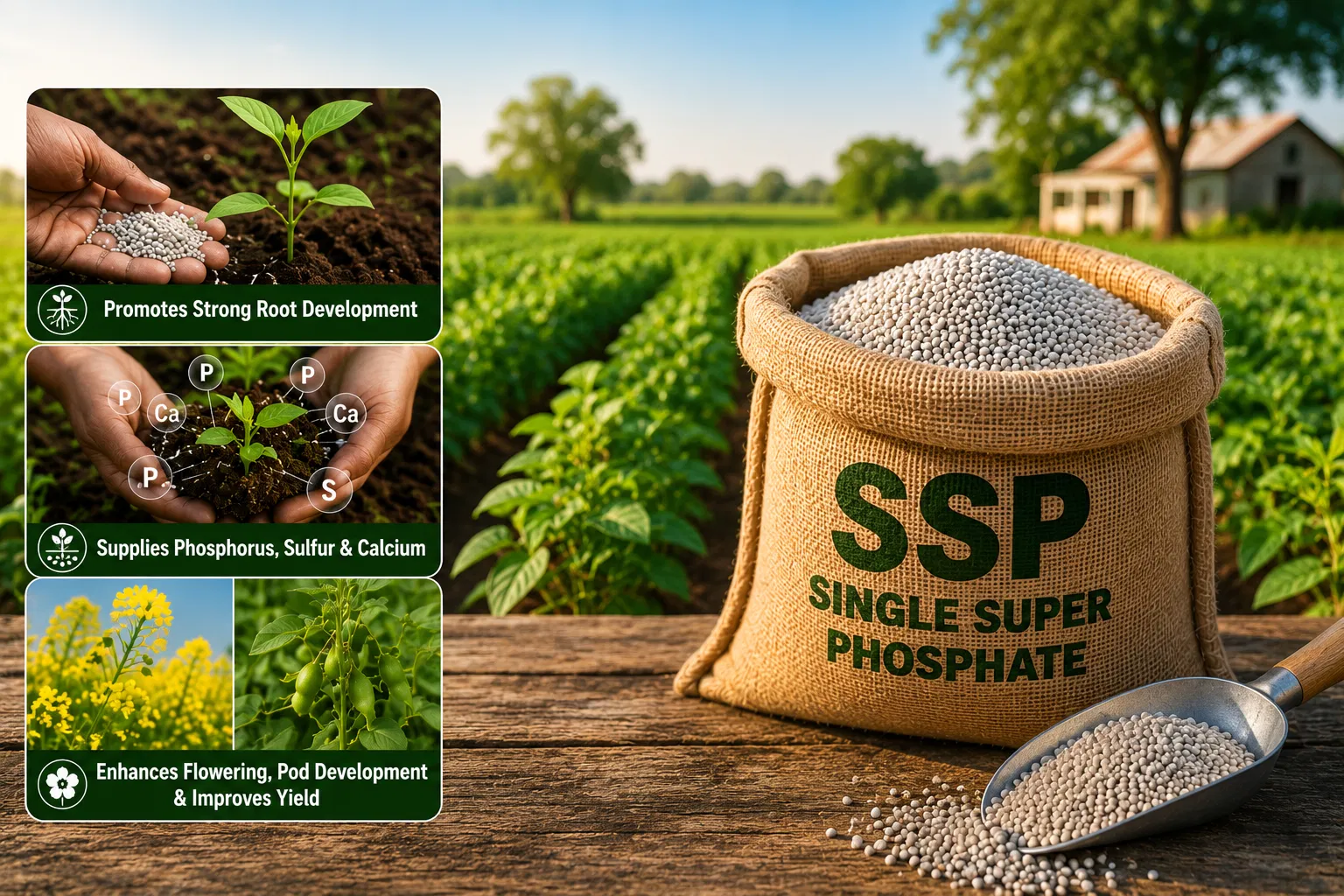
SSP is a granular fertilizer that typically supplies phosphorus, sulfur, and calcium. That combination is especially valuable for crops that respond strongly to balanced nutrition during early growth and reproductive stages. Phosphorus helps drive root expansion and energy transfer, sulfur supports protein and oil synthesis, and calcium contributes to cell development and soil health.
Unlike some concentrated phosphorus fertilizers, SSP provides nutrients in a form that is well suited to many crop systems. Its sulfur content is a major advantage for oilseed and pulse crops, both of which have relatively high sulfur demand compared to many cereals.
SSP is ideal for oilseed and pulse crops because it delivers three key benefits at once: phosphorus for roots and flowering, sulfur for quality and protein, and calcium for overall plant strength.
Why Oilseed Crops Respond Well to SSP
Oilseed crops need more than just basic fertility. They require strong nutrient support to build biomass, set flowers, and fill seeds properly. Phosphorus is essential for energy movement within the plant, while sulfur plays a direct role in oil formation and protein metabolism. That is why SSP is such a strong fit for this crop group.
1. Supports Strong Root Growth
Healthy roots are critical in oilseed crops because they improve water uptake and nutrient absorption. SSP provides phosphorus in the root zone, encouraging early root expansion and helping seedlings establish quickly. This is especially valuable in cool soils or fields where phosphorus fixation can limit crop access to nutrients.
2. Improves Oil Content and Seed Quality
Oilseed crops such as mustard, sunflower, and groundnut depend heavily on sulfur for oil synthesis. SSP supplies sulfur in a plant-available form, helping improve oil accumulation and overall seed quality. Better sulfur nutrition often translates into more uniform pods, fuller seeds, and improved market value.
3. Enhances Flowering and Seed Setting
Phosphorus is closely linked to flowering and energy transfer during reproductive stages. By supplying phosphorus early, SSP helps oilseed crops maintain vigor through flowering and seed development. This can contribute to better pod set and more consistent yields.
Why Pulse Crops Benefit from SSP
Pulses are known for their ability to fix nitrogen, but that does not mean they can thrive without phosphorus and sulfur. In fact, pulse crops are highly responsive to both nutrients, especially when soil fertility is marginal. SSP gives these crops the support they need for healthy growth and stronger grain formation.
1. Boosts Nodulation and Nitrogen Fixation
Phosphorus is essential for root development and energy supply, both of which support nodulation in pulses. Better nodulation means more efficient nitrogen fixation, which improves plant growth and reduces dependence on external nitrogen inputs. SSP helps create favorable conditions for this process.
2. Encourages Early Vigour
Pulse crops often need a strong start to compete well with weeds and establish a uniform stand. SSP provides readily available phosphorus near the root zone, helping seedlings grow faster and stronger. This early vigour can have a lasting effect on plant health and yield performance.
3. Improves Protein Formation
Sulfur is a key nutrient for amino acid and protein synthesis. Since pulses are valued for their protein content, sulfur nutrition plays a direct role in crop quality. SSP helps support the protein-building process, making it a smart fertilizer choice for grain quality as well as yield.
Additional Advantages of SSP for Farm Use
Beyond its crop nutrition benefits, SSP offers several practical advantages that make it attractive for farmers and agronomists alike.
- Balanced nutrient supply: SSP delivers phosphorus along with sulfur and calcium.
- Suitable for many soils: It works well where sulfur deficiency is common.
- Cost-effective option: SSP is often a practical choice for field-scale use.
- Compatible with crop rotations: It supports both oilseed and pulse-based farming systems.
- Helps improve nutrient efficiency: Better root growth can lead to improved uptake of other nutrients.
For many growers, the real value of SSP lies in its simplicity. It is a straightforward fertilizer that meets multiple crop needs in one application, making nutrient planning easier and more efficient.
How SSP Compares with Other Phosphorus Fertilizers
Many phosphorus fertilizers are available on the market, but not all of them offer the same nutrient profile. Some are highly concentrated in phosphorus but do not supply sulfur or calcium. That can be a limitation in oilseed and pulse production, where sulfur demand is often significant.
SSP may contain less phosphorus per unit than some alternatives, but it compensates by adding sulfur and calcium. For crops that respond strongly to these nutrients, that broader package can be more valuable than a higher phosphorus concentration alone.
This is why SSP is often preferred in systems where soil testing shows sulfur deficiency, or where crop performance depends on balanced nutrient availability rather than phosphorus alone.
Best Situations for Using SSP
SSP is especially useful in the following situations:
- Sulfur-deficient soils where crops need an immediate sulfur source.
- Fields planted to oilseeds such as mustard, sunflower, groundnut, or soybean.
- Pulse-growing areas where nodulation and protein content are important goals.
- Low to medium phosphorus soils that need a reliable basal fertilizer.
- Integrated nutrient management programs looking for a balanced, practical input.
Using SSP as part of a soil-test-based fertility plan can help farmers match nutrient supply with crop demand more accurately. That often leads to better returns on fertilizer investment and more consistent crop performance.
Application Tips for Better Results
To get the most from SSP, timing and placement matter. It is generally best applied at sowing or as a basal dose near the seed zone, where young roots can access the nutrients quickly. Since phosphorus movement in soil is limited, placement close to the root zone improves efficiency.
Farmers should also consider soil test results, crop type, and expected yield targets when deciding how much SSP to apply. In many cases, combining SSP with other nutrient sources may be the best strategy for achieving balanced fertility.
- Apply SSP at planting for early nutrient availability.
- Use soil testing to determine actual phosphorus and sulfur needs.
- Avoid blanket recommendations when crop-specific needs differ.
- Integrate SSP with organic matter and other fertilizer sources when appropriate.
Conclusion
SSP is ideal for oilseed and pulse crops because it delivers exactly what these crops need most: phosphorus for rooting and flowering, sulfur for oil and protein formation, and calcium for overall plant support. Its balanced nutrient profile makes it especially valuable in soils where sulfur is limited or where crop quality is just as important as yield.
For growers focused on stronger establishment, better reproductive growth, and improved harvest outcomes, SSP remains a reliable and effective fertilizer choice. If you want to optimize performance in oilseed and pulse production, start with a soil test, plan your basal nutrition carefully, and consider SSP as a key part of your fertilizer strategy.