Soybean Yellow Mosaic Virus can quietly reduce plant vigor, distort leaves, and cut into yield before many growers realize what is happening. Because its symptoms can resemble nutrient problems, herbicide injury, or other viral diseases, early identification is essential. If you grow soybeans, knowing how to spot soybean yellow mosaic virus symptoms and prevent spread can help protect both productivity and profit.
What Is Soybean Yellow Mosaic Virus?
Soybean Yellow Mosaic Virus is a plant virus that infects soybean crops and disrupts normal growth and development. Once a plant is infected, there is no cure. The virus spreads through infected seed, insect vectors, and contaminated plant material, making prevention the most effective management strategy.
The disease is especially concerning during early growth stages, when infection can have the greatest impact on plant establishment, flowering, and pod formation. Because soybeans are a major commercial crop, even moderate outbreaks can create significant losses across a field.
Common Symptoms of Soybean Yellow Mosaic Virus
Recognizing soybean yellow mosaic virus symptoms early is one of the best ways to limit damage. Symptoms may vary depending on plant age, environmental conditions, and the specific virus strain, but the most common signs are easy to watch for during routine field scouting.
1. Yellow mosaic or mottling on leaves
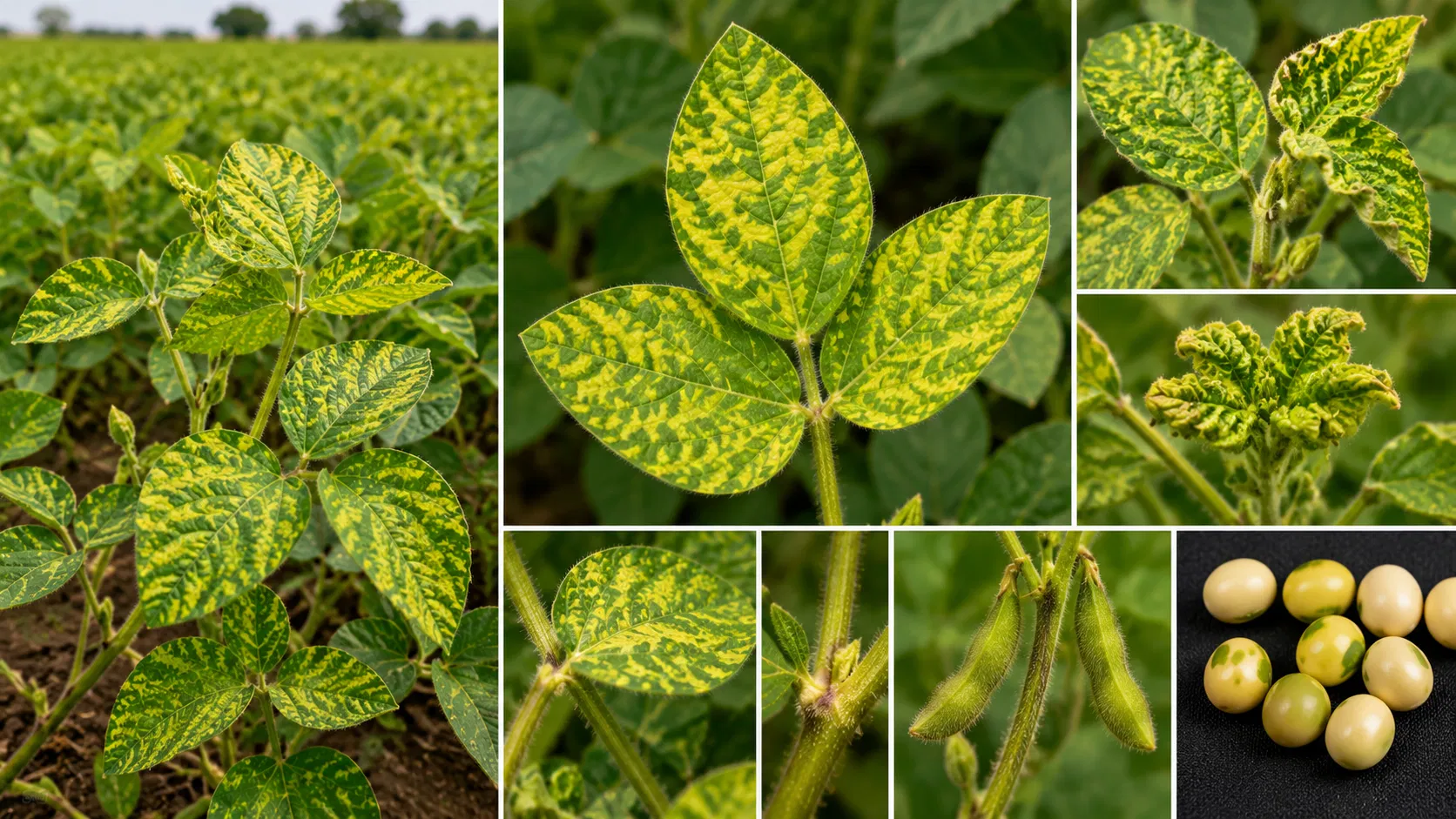
The most noticeable symptom is a patchy yellow-green pattern on the leaves. This mosaic appearance often starts as light yellow spotting and may become more pronounced as the disease develops. The discoloration may appear uneven across the leaf surface and can affect both young and mature leaves.
2. Leaf curling and distortion
Infected leaves may curl, twist, or become misshapen. New growth is often more severely affected, and the plant may look stunted or irregular compared with healthy soybeans nearby.
3. Stunted growth
Virus-infected plants often grow more slowly than healthy plants. Reduced internode length, smaller leaves, and poor canopy development are common. Severe infections can leave plants noticeably shorter and less vigorous.
4. Reduced flowering and pod set
Because the virus interferes with normal plant development, infected soybeans may produce fewer flowers and pods. This can directly reduce yield potential, especially if infection occurs early in the season.
5. Poor seed fill and lower yield
Plants affected later in the season may show reduced seed size and lower grain quality. Even if the visual symptoms appear mild, the virus can still impact final yield and harvest value.
Important: Soybean yellow mosaic virus symptoms can be confused with other issues such as nutrient deficiency, herbicide injury, or weather stress. Accurate diagnosis matters before taking management decisions.
How Soybean Yellow Mosaic Virus Spreads
Understanding how the virus spreads helps growers focus on the most effective prevention steps. The disease can move through a field in several ways:
- Infected seed: Planting infected seed can introduce the virus into a field from the start.
- Insect vectors: Sap-feeding insects, especially aphids and other carriers depending on the virus strain and region, may transmit the virus from plant to plant.
- Contaminated plant material: Infected volunteers, weeds, or leftover crop debris can serve as sources of infection.
- Mechanical movement: While not the main route for many viral diseases, contaminated tools or handling can contribute to spread in some situations.
Because the virus is systemic, once a plant is infected it becomes a source of infection for the rest of the crop if vectors are active.
Best Ways to Prevent Soybean Yellow Mosaic Virus
Prevention is the most practical and cost-effective approach. Since infected plants cannot be cured, growers should focus on reducing introduction and spread.
1. Use certified disease-free seed
Start with clean, certified seed from reputable suppliers. Seed testing and traceability can significantly reduce the risk of bringing the virus into a field.
2. Scout fields regularly
Routine scouting is essential, especially during early vegetative growth and periods of heavy insect activity. Look for mosaic patterns, curling, and stunted plants in patches or along field edges. Early detection helps you identify whether the problem is spreading.
3. Control insect vectors
Managing aphids and other potential virus-carrying insects is a key prevention step. While insect control does not always eliminate virus transmission, it can reduce the chances of rapid spread.
- Monitor insect populations frequently
- Use integrated pest management practices
- Apply insecticides only when thresholds justify treatment
- Encourage beneficial insects when possible
4. Remove volunteer soybeans and weeds
Volunteer plants and susceptible weeds can act as virus reservoirs between growing seasons. Keeping field borders, ditches, and nearby areas clean helps reduce sources of infection.
5. Rotate crops
Crop rotation can help interrupt disease cycles by reducing host availability. While rotation may not completely prevent virus problems, it is an important part of a broader disease management plan.
6. Practice good field hygiene
Clean equipment, avoid moving plant material between fields unnecessarily, and manage infected residues properly. Good sanitation reduces the chance of carrying pathogens from one area to another.
7. Plant resistant or tolerant varieties when available
If local breeding programs or seed companies offer soybean varieties with improved virus tolerance or resistance, those varieties can be a valuable part of your strategy. Always match variety choice to your region’s disease pressure and agronomic conditions.
How to Differentiate Soybean Yellow Mosaic Virus from Other Problems
Accurate field diagnosis is critical because several issues can look similar. Here are a few common comparisons:
- Nutrient deficiency: Often follows a more uniform pattern related to soil conditions or drainage, rather than scattered mosaic blotches.
- Herbicide injury: May cause leaf twisting or discoloration, but symptoms often match spray patterns or application timing.
- Fungal diseases: Usually create spots, lesions, or necrotic tissue rather than a clean yellow mosaic pattern.
- Environmental stress: Drought, heat, or waterlogging may stunt plants, but mosaic symptoms are less typical.
If symptoms are unclear, submit plant samples to a plant disease diagnostic lab for confirmation. Laboratory testing can help identify the virus and rule out other causes.
Why Early Prevention Matters
Viruses spread quickly once vectors are active, and infected plants cannot recover. That means the earlier you identify a problem, the more you can limit field-wide losses. Infected soybeans may not only yield less, but they may also create uneven maturity, complicate harvest, and reduce overall crop quality.
For commercial growers, prevention is also an economic decision. Investing in seed quality, scouting, weed control, and vector management is often far less expensive than dealing with a widespread infection after symptoms appear.
Practical Field Management Checklist
- Plant certified, disease-free seed.
- Scout fields regularly, especially early in the season.
- Watch for yellow mosaic, curling, and stunting.
- Control insect vectors using integrated pest management.
- Remove volunteer plants and weeds that may host the virus.
- Use resistant or tolerant varieties if available.
- Confirm suspicious cases with lab testing.
Conclusion
Soybean Yellow Mosaic Virus is a serious threat because it can reduce plant health and yield without warning. The most effective defense is a proactive one: start with clean seed, scout often, manage insect vectors, and keep fields free of alternate hosts. By learning to recognize soybean yellow mosaic virus symptoms early, you can respond faster and protect the long-term productivity of your crop.
Final insight: In soybean production, prevention is always more powerful than cure. Make virus scouting and field hygiene a routine part of your management plan, and you’ll be better positioned to keep your crop healthy and profitable.