When pasture dries up and fresh forage becomes scarce, silage can keep your livestock fed, healthy, and productive. Silage making is one of the most reliable ways to preserve fodder for the dry season, helping farmers store nutritious feed for months without major losses. Whether you manage cattle, goats, sheep, or dairy animals, learning how to make good silage can reduce feed shortages and protect farm profitability.
In this guide, you'll learn what silage is, why it matters, how to make it properly, and how to avoid common mistakes that affect quality. If you want a dependable dry-season feeding strategy, silage is a smart solution worth mastering.
What Is Silage?
Silage is preserved green fodder made by storing chopped fresh forage in airtight conditions so it ferments naturally. This fermentation process creates acids that prevent spoilage and keep the feed edible for a long time. In simple terms, silage is a way to "pickle" animal feed while retaining much of its nutritional value.
Common materials used for silage include:
- Maize or corn
- Sorghum
- Napier grass
- Guinea grass
- Legume crops such as cowpea or alfalfa
- Crop residues mixed with green fodder
Because silage can be made from abundant farm crops during the rainy season, it is especially valuable for bridging the feed gap during drought or dry months.
Why Silage Making Is Important for the Dry Season
Dry-season feeding is a major challenge for livestock farmers. Natural pasture often becomes scarce, low in nutrients, or unavailable altogether. As feed quality drops, animals lose weight, milk production declines, and growth slows. Silage helps solve this problem by allowing farmers to preserve high-quality fodder when it is plentiful.
Key benefits of silage include:
- Reliable feed supply: Provides fodder when grass and forage are limited
- Better nutrition: Helps maintain animal health and productivity
- Reduced feed costs: Uses home-grown crops instead of expensive purchased feed
- Less wastage: Preserves surplus fodder that might otherwise spoil
- Improved farm resilience: Supports livestock during weather stress and seasonal shortages
For dairy farmers, good silage can help maintain milk output. For beef and small ruminant farmers, it supports weight gain and body condition during feed scarcity.
Best Crops for Silage Making
Choosing the right crop is one of the most important steps in making high-quality silage. The best forage has enough moisture, good sugar content, and a structure that packs well in the silo or storage container.
1. Maize
Maize is one of the most popular silage crops because it produces high yields and ferments well. It has the right balance of energy and moisture when harvested at the proper stage.
2. Sorghum
Sorghum is drought-tolerant and works well in dry areas. It is a strong option for farmers with limited rainfall.
3. Napier Grass
Napier grass grows quickly and is commonly used in tropical farming systems. It is best harvested before it becomes too mature and fibrous.
4. Legumes
Legumes such as cowpea or alfalfa improve protein content. They are often mixed with grasses or maize to create more balanced silage.
5. Crop Residues
Some farmers use crop residues like maize stover or sorghum stalks, but these usually need to be combined with greener, wetter materials for proper fermentation.
How to Make Good Silage
Successful silage making depends on timing, moisture control, packing, and airtight storage. If any of these steps are done poorly, the feed may rot instead of fermenting properly.
Step 1: Harvest at the Right Stage
Harvest the crop when it has the best combination of sugar and moisture. For maize, this is often at the milk to dough stage. For grasses, harvest before they become too mature and woody.
Step 2: Chop the Fodder
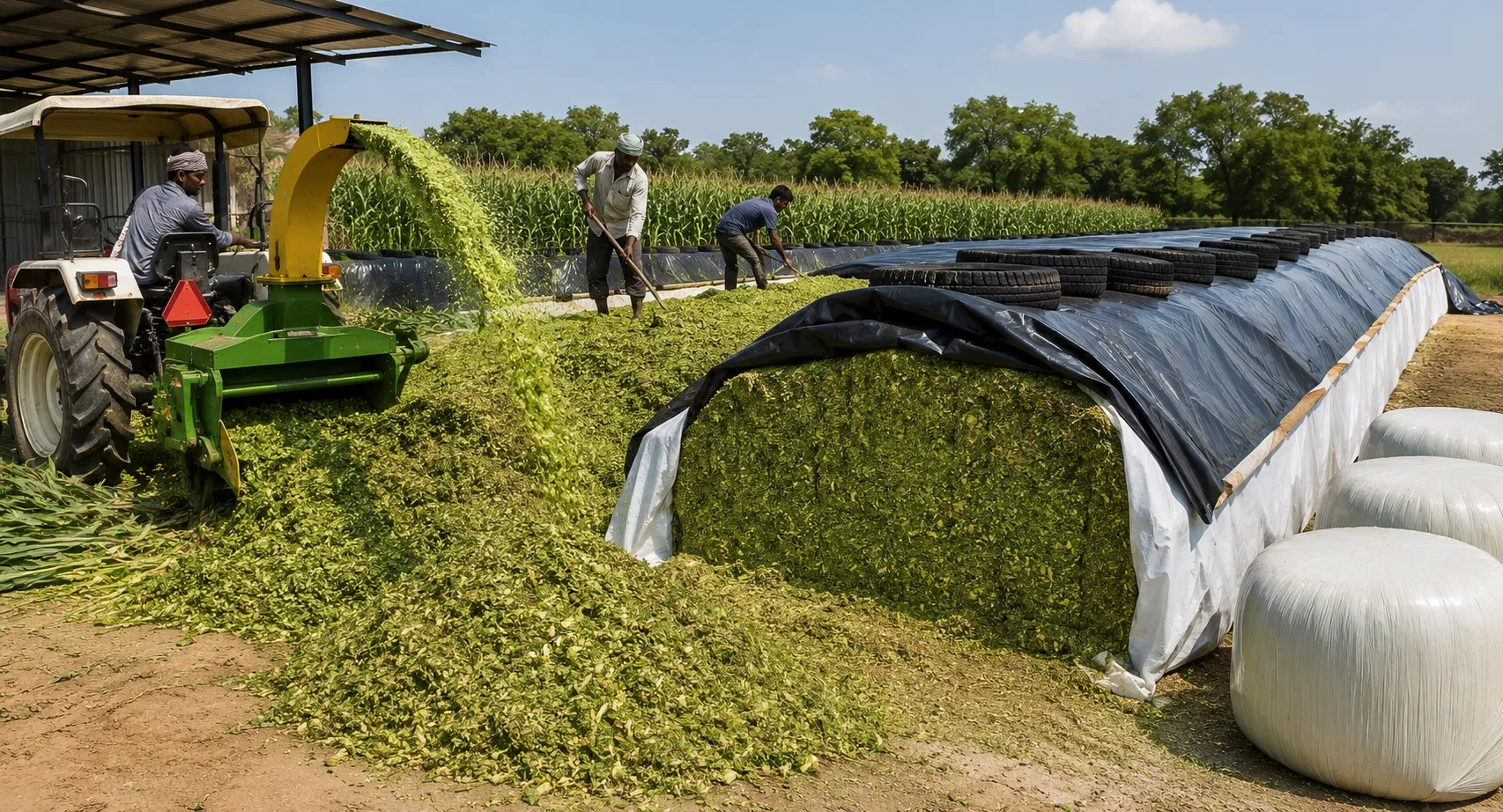
Chop the forage into small pieces, usually around 1 to 3 centimeters long. Smaller pieces pack more tightly and reduce air pockets, which helps fermentation.
Step 3: Adjust the Moisture
Ideal silage moisture is important. If the fodder is too wet, it can become slimy and produce bad odors. If it is too dry, it will not compact well and may trap air. Aim for forage that feels fresh but not dripping wet.
Step 4: Pack Tightly
Place the chopped material into a silo, drum, bag, pit, or plastic-lined container. Pack it firmly to remove air. Oxygen is the enemy of good silage because it encourages spoilage.
Step 5: Seal Airtight
Once the container is filled and compacted, seal it tightly with plastic or an airtight lid. The goal is to stop air from entering so fermentation can occur properly.
Step 6: Allow Fermentation
Leave the silage undisturbed for several weeks. During this time, natural bacteria produce acids that preserve the feed. After fermentation is complete, the silage can be opened and fed gradually.
Good silage depends on one simple rule: keep air out, moisture balanced, and the forage fresh at harvest.
Signs of High-Quality Silage
Not all silage is good silage. Quality can be judged by smell, color, texture, and the presence or absence of mold. Farmers should inspect silage before feeding it to animals.
Good silage usually has:
- A pleasant, slightly sweet or acidic smell
- Greenish, brownish, or light olive color
- Soft but not slimy texture
- No visible mold or rot
- No strong foul or putrid odor
Bad silage may smell rotten, appear black or excessively wet, or contain mold. This type of feed can reduce animal intake and may harm livestock health.
Common Mistakes to Avoid
Even experienced farmers can make errors that reduce silage quality. Avoiding these mistakes can save time, labor, and money.
- Harvesting too late: Overmature forage is low in quality and harder to ferment
- Using too much moisture: Wet silage can spoil quickly
- Poor chopping: Long stalks trap air and reduce compaction
- Incomplete sealing: Air leaks lead to mold and decay
- Opening too early: Silage needs enough time to ferment properly
- Feeding spoiled material: Moldy silage should not be given to animals
Where and How to Store Silage
Silage can be stored in several ways depending on farm size, budget, and available materials. The most important thing is to protect it from air and water.
Common storage options include:
- Silage pits: Dug into the ground and lined with plastic
- Drums or barrels: Useful for small-scale farmers
- Plastic bags: Convenient for smaller batches
- Above-ground bunkers: Suitable for larger operations
Choose a dry, shaded, and secure location. Keep the storage area protected from rain, rodents, and punctures that may allow air to enter.
How to Feed Silage to Livestock
Introduce silage gradually into the diet so animals can adjust to the new feed. Start with small amounts and increase slowly while continuing to provide clean water and other feed sources as needed.
Feeding tips:
- Open only the portion you plan to use immediately
- Remove spoiled top layers before feeding
- Mix silage with other feeds if necessary for balanced nutrition
- Monitor animal response, intake, and body condition
Silage works best as part of a broader feeding plan that includes minerals, protein sources, and access to water.
Final Thoughts on Silage Making
Silage making for the dry season is a practical, cost-effective way to preserve fodder and keep livestock well-fed when pasture is limited. By harvesting at the right time, chopping properly, packing tightly, and sealing out air, farmers can produce nutritious feed that supports animals through seasonal shortages.
If you want to improve herd performance and reduce dry-season feed stress, start planning your silage production before the forage becomes scarce. The best time to prepare for the dry season is during the abundant season. Make silage early, store it well, and your livestock will thank you later.