Spray timing can make the difference between effective crop protection and wasted product. When rain is in the forecast, many farmers ask the same question: should farmers spray before rain? The answer depends on the product, crop, weather conditions, and how soon rainfall is expected.
Spraying too close to rain can reduce product performance, wash active ingredients from plant surfaces, and increase runoff into surrounding areas. Understanding rainfastness and checking the weather forecast before application can help farmers avoid unnecessary costs and achieve better control of pests, weeds, and diseases.
Should Farmers Spray Before Rain?
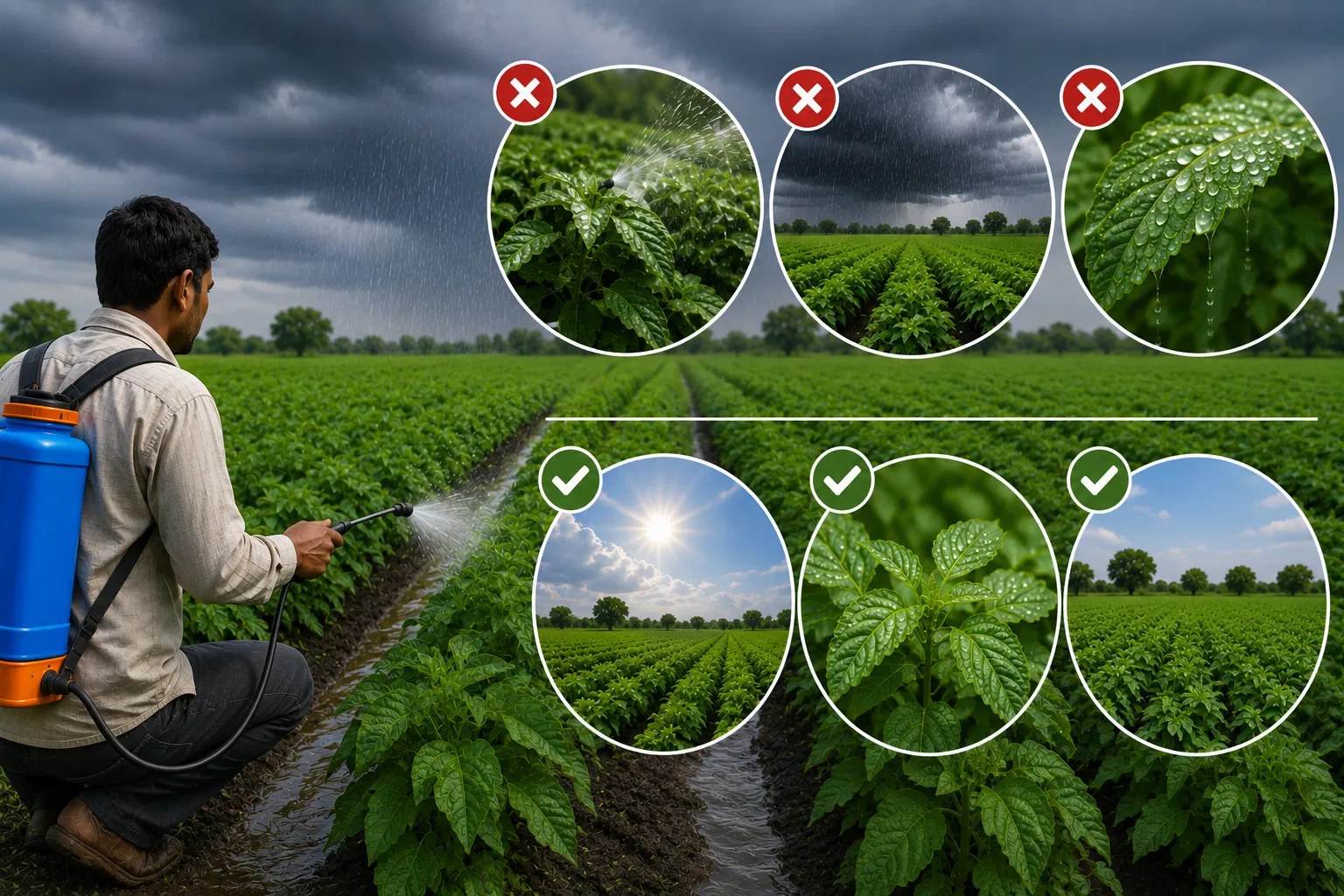
In many cases, farmers should not spray immediately before rain unless the product label confirms that there is enough time for the treatment to become rainfast.
Some herbicides, fungicides, and insecticides require several rain-free hours to dry or enter plant tissues. If rainfall occurs too soon, the treatment may lose effectiveness.
However, certain products become rainfast relatively quickly. Spraying before rain may therefore be appropriate when the label allows it, the forecast provides a sufficient dry window, and delaying treatment could allow a serious pest or disease problem to worsen.
Rule of thumb: Always check the product label for its rainfastness period before spraying ahead of rainfall.
What Is Rainfastness?
Rainfastness is the time required after application before rainfall will no longer significantly reduce a spray product’s effectiveness.
Rainfastness periods vary between products. Some treatments may become rainfast within 30 minutes, while others require several hours. Temperature, humidity, sunlight, crop condition, spray coverage, and formulation can all influence drying and absorption.
Why Rainfastness Matters
- Reduces product wash-off.
- Improves pest, weed, and disease control.
- Prevents unnecessary repeat applications.
- Protects input investments.
- Reduces runoff and environmental losses.
When It May Be Suitable to Spray Before Rain
Spraying before rainfall may be reasonable when the available dry period meets the label requirements and the crop faces an urgent threat.
Suitable Situations for Pre-Rain Spraying
- The product has a short rainfastness period.
- Rain is not expected for several hours.
- The expected rainfall is light rather than intense.
- A fast-moving pest or disease outbreak requires immediate treatment.
- The field may become inaccessible after rainfall.
- Delaying treatment could cause significant crop damage.
For example, if a registered fungicide requires two rain-free hours and rainfall is expected only after six hours, the application may still be effective, provided all other label and weather requirements are met.
When Farmers Should Avoid Spraying Before Rain
Farmers should avoid spraying when rainfall is likely to begin before the treatment becomes rainfast or when field conditions create a high risk of runoff, drift, or poor crop response.
Avoid Spraying Before Rain When:
- Heavy rainfall is expected within the rainfastness period.
- The product label advises against application before rainfall.
- The soil is saturated or waterlogged.
- Wind conditions increase spray drift.
- The crop is severely stressed.
- A storm front is approaching rapidly.
- The forecast is highly uncertain.
Spraying under these conditions can cause poor control, crop injury, off-target movement, and unnecessary expense.
How Rain Affects Different Agricultural Sprays
Herbicides
Many herbicides need time to enter weed tissues. Rainfall shortly after application may wash contact products from leaf surfaces or reduce the absorption of systemic products.
Always follow the label’s rain-free interval and avoid treating weeds that are severely stressed or covered with standing water.
Fungicides
Fungicides are commonly applied preventively before weather conditions favor disease development. Applying them before rain may help protect crops, but only when the product has enough time to dry, adhere, or enter plant tissues.
Repeated heavy rainfall may reduce protective residues and require the crop to be reassessed after the storm.
Insecticides
Some insecticides act quickly, while others require a longer dry period. Rain may wash residues from exposed plant surfaces and reduce contact with target pests.
Farmers should also consider whether the target insect will remain active before and after rainfall.
Fertilizers and Foliar Nutrients
Foliar fertilizers and nutrients require sufficient time for absorption. Rainfall before absorption may dilute or wash the treatment away, reducing its benefit.
Weather Factors That Influence Spray Decisions
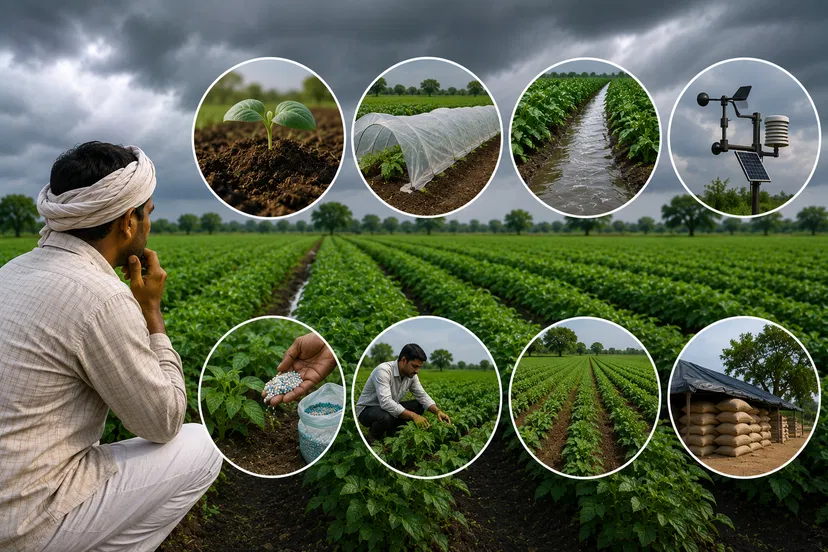
Rain is only one part of spray planning. Farmers should assess the complete weather situation before beginning an application.
- Rainfall intensity: A light shower carries a different wash-off risk than a heavy storm.
- Time until rain: A longer dry period generally gives the product more time to perform.
- Temperature: Moderate temperatures may support drying and absorption, while extreme heat can increase evaporation.
- Humidity: High humidity can slow drying, while very low humidity increases droplet evaporation.
- Wind speed: Strong or gusty winds increase drift risk.
- Wind direction: Wind may carry spray toward sensitive crops, homes, livestock, or water bodies.
- Soil moisture: Saturated fields increase runoff and compaction risks.
Best Practices for Spraying Before Rain
- Read the product label. Confirm rainfastness, dosage, application method, and weather restrictions.
- Check an hourly forecast. Daily forecasts may not provide enough detail for spray planning.
- Allow sufficient drying time. Do not assume that a short gap before rainfall is adequate.
- Assess rainfall intensity. Heavy rain creates more wash-off and runoff than a brief light shower.
- Confirm wind conditions. Avoid spraying when wind speed or direction creates drift risks.
- Use the correct spray volume. Proper coverage improves application performance.
- Avoid saturated fields. This reduces runoff, soil compaction, and equipment damage.
- Document the application. Record the product, dosage, weather, field, and application time.
Common Mistakes Farmers Make
- Ignoring the product’s rainfastness period.
- Assuming all spray products behave the same way.
- Relying only on a daily weather forecast.
- Spraying immediately before an approaching storm.
- Ignoring humidity, wind, and dew.
- Applying treatments on saturated soil.
- Prioritizing speed over proper coverage.
- Repeating an application without first assessing its effectiveness.
In crop protection, correct timing is just as important as choosing the right product.
Can Farmers Spray After Rain Instead?
Waiting until after rain may be the safer option when the pre-rain spray window is too short or uncertain. Once the crop surface has dried and the field is accessible, an application may provide better coverage and a longer rain-free interval.
Before spraying after rainfall, evaluate:
- Field trafficability and soil moisture.
- Standing water and drainage.
- Crop stress or physical damage.
- Pest, weed, or disease severity.
- Leaf wetness and dew.
- The likelihood of further rainfall.
- Whether a previous application needs to be repeated.
Do not automatically reapply a product after rain. Consider the rainfastness period, rainfall intensity, application timing, and label guidance first.
Pre-Rain Spray Planning Checklist
- Confirm the target pest, weed, or disease.
- Select a product registered for the crop and target problem.
- Read the rainfastness instructions.
- Check the hourly rainfall forecast.
- Review wind speed and direction.
- Assess temperature and humidity.
- Check soil moisture and drainage.
- Allow the full recommended dry period.
- Record the application details.
Final Verdict: Should Farmers Spray Before Rain?
Farmers may spray before rain only when the product label permits it, the forecast provides enough rain-free time, and delaying treatment creates a greater risk to the crop.
Spraying should be postponed when heavy rain is close, the field is saturated, wind conditions are unsuitable, or the required rainfastness period cannot be achieved.
Bottom line: Do not guess when rain is approaching. Compare the forecast with the product label, crop condition, target problem, and field conditions. Careful timing improves control, reduces waste, and protects both the crop and the surrounding environment.