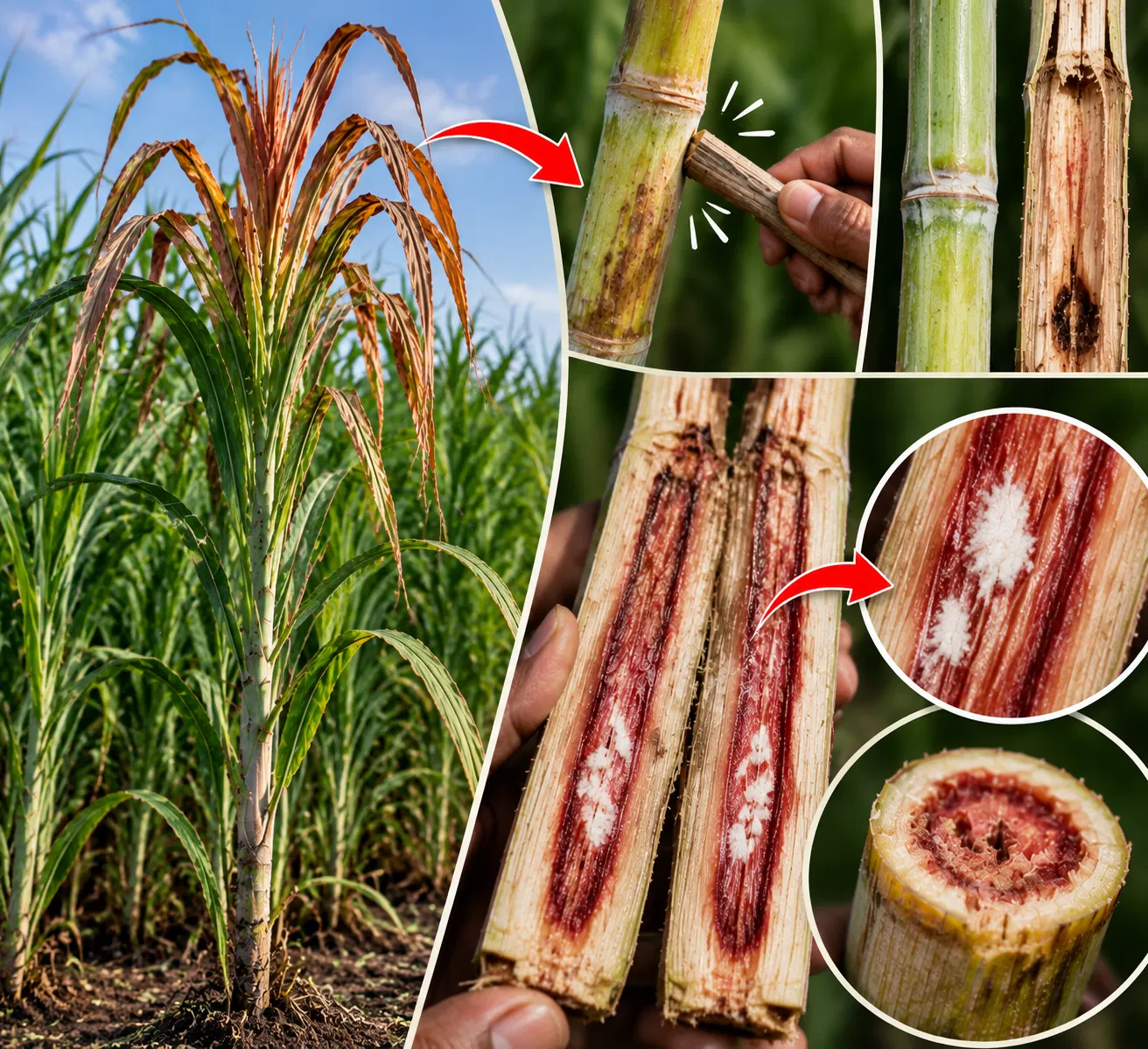
Split a stalk open and see it red and foul-smelling instead of sweet? That's red rot, and by the time you see it, the fungus is already deep inside the cane.
Spot It Early
- Leaves start drying from the top downward, even though the field looks watered fine
- Cane feels lighter and sounds hollow when tapped
- Split it open: reddish streaks inside, with a sour, alcohol-like smell
- White patches inside the red streaks are a telltale sign, not just any redness
What Makes It Worse
- Waterlogged fields with poor drainage
- Growing ratoon crop after ratoon crop without a break
- Planting setts cut from an already-infected field
- Susceptible varieties grown season after season on the same land
The Fungicide That Works
Azoxystrobin 18.2% + Difenoconazole 11.4% SC is what most growers and agronomists reach for. It hits the fungus two ways at once: Azoxystrobin blocks the fungus's ability to breathe and produce energy, while Difenoconazole stops it from building its cell wall properly. Together, that's why it holds up even when the disease pressure is heavy. Dip your setts in it before planting, or spray it the moment you see symptoms in a standing crop.
Product Recommendation
Biological Solution
EBS Pseudomonas Fluorescens is a soil-applied bio-fungicide built around a beneficial bacterium that settles around the root zone and crowds out the red rot fungus. Use it alongside your regular fungicide programme for extra protection, especially in fields with a history of the disease.
Product Recommendation
Don't Stop at the Spray
- Switch to a resistant variety if red rot keeps returning
- Rest the field with rice or another crop for a season or two before planting cane again
- Fix drainage so water doesn't sit around the roots after rain
- Pull out and burn badly infected plants instead of leaving them standing
Note: Sett treatment before planting is just as important as spraying a standing crop, since infected planting material is one of the most common ways red rot spreads to a new field in the first place.
Disclaimer: Always confirm current label registration, approved dosage, water volume, and pre-harvest interval (PHI) for your state before using any product, since labels are periodically revised by regulatory authorities.
This guide is a general advisory. Do your own research and verification before using any product. Always confirm suitability for your crop stage, region, and field conditions before making any purchase, spray, or crop-management decision.