At first glance, pumpkin seeds and pumpkin kernels may seem like the same snack with two different names. In reality, they’re closely related but not always identical in form, usage, or nutritional appeal. If you’ve ever wondered which one is better for snacking, cooking, or health benefits, you’re in the right place.
Understanding the difference between pumpkin seeds vs pumpkin kernels can help you choose the right option for your recipes, diet goals, and budget. Whether you’re looking for a crunchy topping, a nutrient-dense snack, or a versatile ingredient for baking and cooking, both offer plenty of value.
What Are Pumpkin Seeds?
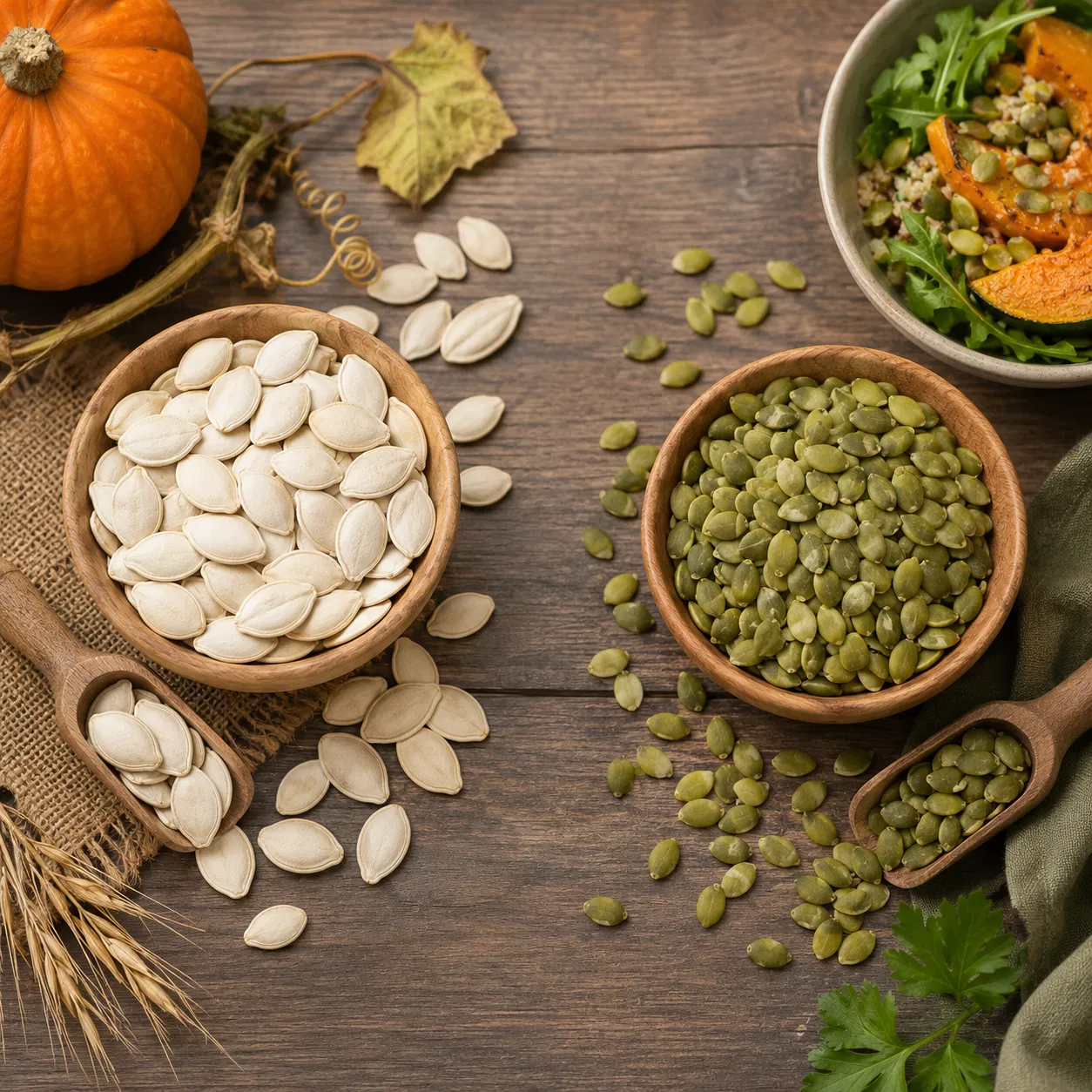
Pumpkin seeds are the edible seeds found inside a pumpkin. When harvested, cleaned, and dried, they can be eaten whole, often with the white outer shell still attached. In many countries, these are also called pepitas when they are hulled and green in color.
The whole seed can be roasted, salted, spiced, or eaten raw. Because of the outer shell, pumpkin seeds often have a firmer texture and a more fibrous bite.
What Are Pumpkin Kernels?
Pumpkin kernels are the inner part of the seed after the shell has been removed. These are the green, soft, edible pieces that many people recognize as pepitas. Kernel is the term often used for the nut-like center of the seed.
Compared with whole pumpkin seeds, kernels are usually softer, easier to chew, and more commonly used in baking, salads, granola, and trail mixes.
Pumpkin Seeds vs Pumpkin Kernels: Key Differences
While both come from the same source, there are a few practical differences worth noting.
- Form: Pumpkin seeds are usually whole and may include the shell; kernels are shelled.
- Texture: Seeds are crunchier and tougher; kernels are softer and easier to eat.
- Usage: Seeds are often roasted as a snack; kernels are more common in recipes and toppings.
- Appearance: Whole seeds are white or beige; kernels are green and flat.
- Eating ease: Kernels are more convenient for quick snacking and cooking.
Nutritional Value of Pumpkin Seeds and Kernels
Both pumpkin seeds and pumpkin kernels are nutrient-rich foods that fit into many healthy diets. They are known for being a good source of protein, healthy fats, fiber, vitamins, and minerals.
Common nutrients include:
- Magnesium
- Zinc
- Iron
- Protein
- Healthy unsaturated fats
- Antioxidants
Pumpkin kernels are especially popular because they pack concentrated nutrition in a small serving. Whole pumpkin seeds also offer fiber from the shell, which may support digestion and help you feel full longer.
Bottom line: Both options are nutritious, but pumpkin kernels are easier to eat and use in recipes, while whole pumpkin seeds provide extra fiber and crunch.
Health Benefits of Pumpkin Seeds and Kernels
Because they are rich in essential nutrients, pumpkin seeds and kernels are often linked to several health benefits.
1. Support Heart Health
The healthy fats found in pumpkin seeds and kernels may help support cholesterol balance and overall cardiovascular wellness. Magnesium also plays a role in healthy blood pressure.
2. Promote Better Sleep
Pumpkin kernels contain tryptophan, an amino acid that may support the production of serotonin and melatonin. This is one reason they are often recommended as an evening snack.
3. Help With Muscle Function
Magnesium, protein, and iron make these seeds and kernels useful for active people. They can support muscle repair, energy production, and recovery after exercise.
4. Boost Immune Support
Zinc is an important mineral for immune function, and pumpkin seeds are a natural source. Regular inclusion in the diet can help contribute to overall nutrient intake.
5. Support Digestive Health
Whole pumpkin seeds contain more fiber because of the shell, which can support digestion and help maintain fullness between meals.
Best Uses for Pumpkin Seeds
Whole pumpkin seeds are best when you want something hearty, crunchy, and satisfying. They are especially popular in traditional roasted snack form.
- Roasted snacks: Toss with olive oil, salt, and spices for a crunchy treat.
- Soup topping: Add texture to creamy soups and stews.
- Salad garnish: Sprinkle on top for extra crunch.
- Baking ingredient: Mix into bread, muffins, or savory crackers.
- Trail mix: Combine with dried fruit, nuts, and seeds.
Because they have the shell on, pumpkin seeds are more robust in texture and work well when you want a noticeable crunch.
Best Uses for Pumpkin Kernels
Pumpkin kernels are more versatile in recipes where a smoother texture and easier chewing are preferred. They blend well into both sweet and savory dishes.
- Granola and energy bars: Add protein and crunch without being too hard.
- Salads: Use as a clean, easy topping.
- Pesto: Substitute for pine nuts in sauces.
- Baking: Stir into cookies, muffins, and bread.
- Breakfast bowls: Sprinkle over oatmeal, yogurt, or smoothie bowls.
Since kernels are shelled, they are more convenient for people who want a ready-to-eat ingredient with less preparation.
Which One Is Better for Snacking?
The better choice depends on your preference and lifestyle. If you like a crunchy, filling snack and don’t mind the shell, whole pumpkin seeds are a solid option. If you want something easier to chew, quicker to eat, and more adaptable to recipes, pumpkin kernels are usually the better pick.
For most people, pumpkin kernels are the more convenient everyday snack. For those who enjoy a rustic, hearty bite, pumpkin seeds offer a more traditional experience.
Which One Is Better for Cooking?
When it comes to cooking and baking, pumpkin kernels usually win. Their shelled form makes them easier to mix into batters, sprinkle on dishes, and blend into sauces.
That said, whole pumpkin seeds still have a place in recipes where texture matters. They can add a rustic crunch to breads, roasted vegetable dishes, and savory toppings.
How to Store Pumpkin Seeds and Kernels
To keep both pumpkin seeds and kernels fresh, store them properly in a cool, dry place. For longer shelf life, an airtight container in the refrigerator or freezer works best.
- Let roasted seeds or kernels cool completely.
- Place them in an airtight jar or bag.
- Store in a pantry for short-term use.
- Refrigerate or freeze for extended freshness.
Proper storage helps preserve flavor, texture, and nutritional quality.
How to Choose Between Pumpkin Seeds vs Pumpkin Kernels
Here’s a simple way to decide:
- Choose pumpkin seeds if you want more crunch and fiber.
- Choose pumpkin kernels if you want convenience and versatility.
- Choose pumpkin seeds for roasting at home.
- Choose pumpkin kernels for salads, baking, and topping dishes.
If your priority is ease, pumpkin kernels are often the better choice. If your priority is texture and a more filling snack, pumpkin seeds may be more satisfying.
Conclusion
When comparing pumpkin seeds vs pumpkin kernels, the best option depends on how you plan to use them. Both are nutritious, flavorful, and valuable additions to a balanced diet. Pumpkin seeds offer a crunchier, more fiber-rich snack, while pumpkin kernels provide convenience and flexibility in the kitchen.
If you want the most practical everyday option, go with pumpkin kernels. If you enjoy a heartier texture and classic roasted flavor, pumpkin seeds are an excellent choice. Either way, adding them to your meals is a simple, tasty way to boost nutrition and variety.
Try both and see which one fits your routine best.