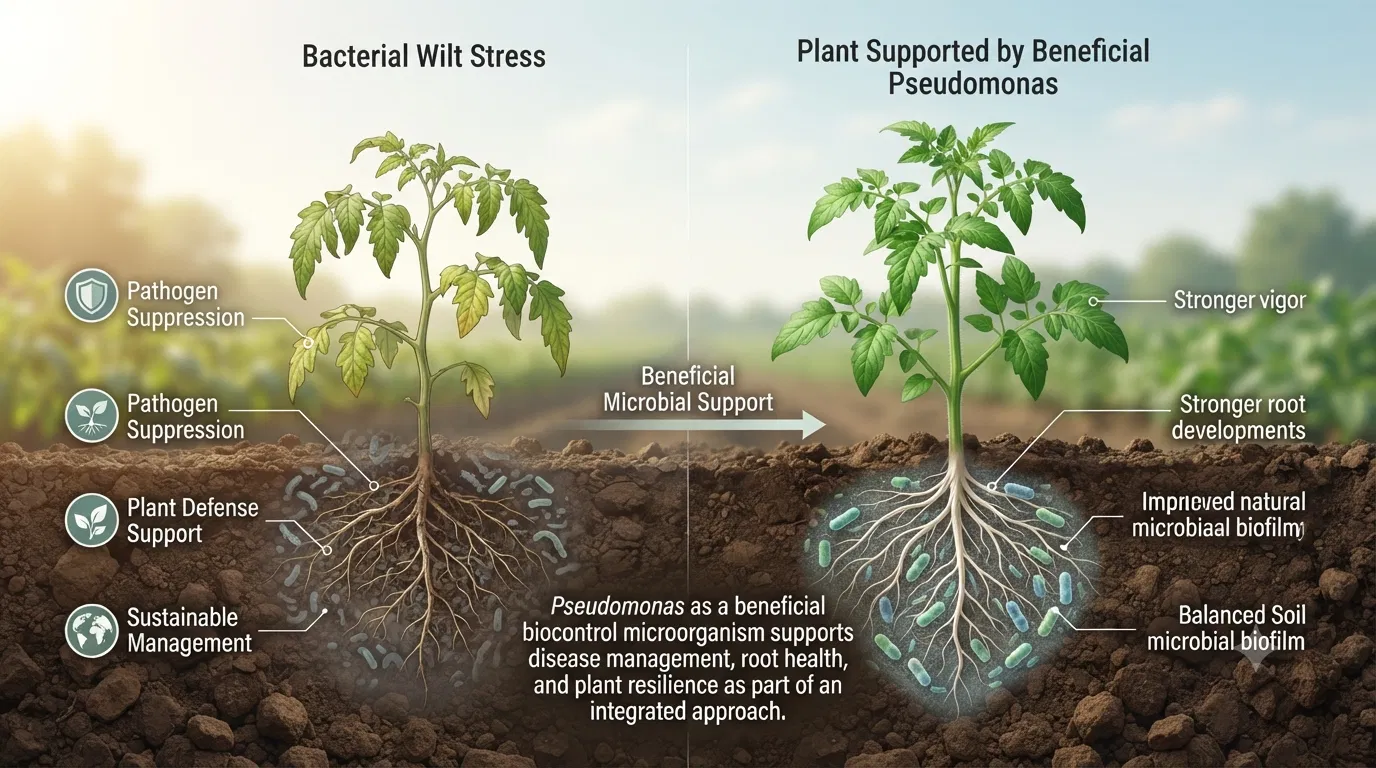
Bacterial wilt can devastate crops fast, turning healthy plants limp and unproductive in a matter of days. For growers looking for a sustainable way to fight back, Pseudomonas for bacterial wilt management has emerged as one of the most promising biological control strategies. These beneficial bacteria live in the root zone, compete with pathogens, and help plants defend themselves naturally.
As demand grows for safer, eco-friendly crop protection, Pseudomonas species are gaining attention for their ability to suppress wilt-causing bacteria while supporting stronger plant growth. If you want to reduce disease pressure without relying only on harsh chemical inputs, this approach deserves a close look.
What Is Bacterial Wilt?
Bacterial wilt is a serious plant disease caused by soilborne bacteria that invade the vascular system. Once inside, they block water movement, causing wilting, yellowing, stunting, and often plant death. The disease affects many crops, including tomato, potato, pepper, eggplant, banana, and several ornamental and vegetable species.
Common symptoms include:
- Sudden wilting during the hottest part of the day
- Leaf yellowing and drooping
- Brown discoloration inside stems
- Reduced fruit set and poor yield
- Permanent collapse in severe cases
Because bacterial wilt spreads through contaminated soil, irrigation water, tools, and infected seedlings, management is often difficult. That is why biological control options like Pseudomonas are so valuable.
Why Pseudomonas Is Important in Wilt Management
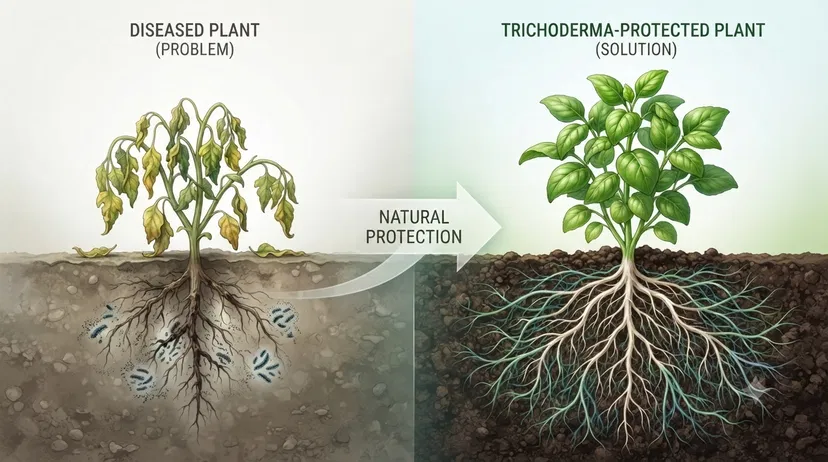
Pseudomonas is a group of naturally occurring beneficial bacteria found in soil, water, and plant root environments. Some strains are especially effective at protecting crops from pathogens. These helpful microbes colonize the rhizosphere, the narrow region around plant roots, where they interact with both the plant and harmful organisms.
In bacterial wilt management, Pseudomonas works in multiple ways at once. This multi-action approach makes it a strong fit for integrated disease management programs.
How Pseudomonas Helps Control Bacterial Wilt
Pseudomonas supports disease suppression through several biological mechanisms:
- Competition for space and nutrients: Beneficial strains occupy root surfaces and reduce opportunities for pathogens to establish themselves.
- Antibiotic production: Some strains produce natural antimicrobial compounds that inhibit disease-causing bacteria.
- Siderophore production: These molecules bind iron, limiting nutrient availability to pathogens.
- Enzyme secretion: Certain strains release enzymes that damage pathogen cells or reduce their activity.
- Induced systemic resistance: Pseudomonas can "prime" plant defenses, helping crops respond more quickly to infection.
- Root growth stimulation: Healthier root systems improve overall plant vigor and resilience.
These benefits make Pseudomonas more than just a protective agent. It can also contribute to improved plant health and productivity over time.
Key Pseudomonas Species Used for Biocontrol
Not all Pseudomonas strains are equally effective. The most widely studied and used biocontrol strains include:
- Pseudomonas fluorescens
- Pseudomonas putida
- Pseudomonas chlororaphis
Among these, Pseudomonas fluorescens for bacterial wilt management is particularly well known for root colonization and pathogen suppression. Its ability to survive in the rhizosphere and interact with plant roots makes it a strong candidate for field and nursery use.
Different strains perform differently depending on crop type, soil conditions, and pathogen pressure. For best results, growers should choose validated commercial products or research-backed isolates suited to local conditions.
Advantages of Using Pseudomonas Against Bacterial Wilt
Using Pseudomonas as part of a crop protection strategy offers several practical benefits.
1. Eco-Friendly Disease Control
Pseudomonas provides a biological alternative to heavy chemical reliance. This supports environmentally responsible farming and helps reduce residue concerns in harvested crops.
2. Improved Soil Health
Beneficial microbes contribute to a more balanced soil microbiome. Over time, healthier microbial communities can make it harder for pathogens to dominate.
3. Better Root Development
Some strains enhance nutrient uptake and stimulate root growth, giving plants a stronger foundation to withstand stress.
4. Compatibility with Integrated Management
Pseudomonas can be combined with sanitation, resistant varieties, crop rotation, organic amendments, and other disease management tools.
5. Reduced Risk of Resistance
Unlike single-site chemical treatments, biocontrol organisms use several mechanisms, which helps lower the chance of pathogen resistance.
How to Apply Pseudomonas for Best Results
Successful use of Pseudomonas depends on proper timing, formulation, and field practices. Biological products are living systems, so handling matters.
- Start with healthy seedlings: Apply beneficial microbes early, ideally in the nursery or at transplanting.
- Treat the root zone: Pseudomonas works best where it can colonize roots and surrounding soil.
- Follow label directions: Use the recommended dose, timing, and application method for the product.
- Maintain soil moisture: Moderate moisture helps beneficial bacteria establish more effectively.
- Avoid incompatible chemicals: Some fungicides and bactericides may reduce microbial survival if applied at the wrong time.
- Repeat applications if needed: In high-pressure fields, additional applications may improve persistence and protection.
Application methods may include seed treatment, root dip, soil drench, or transplant plug treatment. The right method depends on crop, disease severity, and product formulation.
Best Practices for Integrated Bacterial Wilt Management
Pseudomonas is most effective when used as part of a broader disease management plan. Biological control alone may not be enough under severe wilt pressure, but it can significantly strengthen overall control.
- Use disease-free planting material
- Rotate with non-host crops
- Disinfect tools and equipment
- Improve drainage to reduce soil stress
- Remove infected plants promptly
- Use resistant or tolerant varieties when available
- Apply organic amendments that support beneficial microbes
When these practices are combined with Pseudomonas-based biocontrol, growers can build a more durable defense against wilt outbreaks.
Challenges and Limitations
While Pseudomonas is highly promising, it is not a magic bullet. Results can vary based on strain quality, environmental conditions, soil biology, and crop susceptibility. Extremely high disease pressure may still cause losses if other controls are not in place.
Some factors that influence performance include:
- Temperature and moisture levels
- Soil pH and organic matter content
- Pathogen load in the field
- Timing of application
- Product formulation and shelf life
For this reason, growers should view Pseudomonas as a strategic tool, not a standalone cure.
Why Pseudomonas Fits the Future of Crop Protection
Modern agriculture is moving toward smarter, more sustainable solutions. Farmers need tools that protect yield while preserving soil health and environmental quality. Pseudomonas for bacterial wilt management fits this direction well because it works with nature rather than against it.
Healthy roots, active microbes, and balanced soil biology create the foundation for long-term disease suppression.
As research continues, improved formulations and strain selection will likely make Pseudomonas even more effective across a wider range of crops and growing systems.
Conclusion
Bacterial wilt remains one of the most challenging diseases in crop production, but growers are not without options. Beneficial Pseudomonas strains offer a practical, science-backed way to reduce disease pressure, support root health, and strengthen plant resilience.
If you are looking for a sustainable strategy that fits modern integrated pest management, Pseudomonas deserves a place in your toolkit. Start early, apply correctly, and combine it with strong farm hygiene and cultural practices for the best results. In the fight against bacterial wilt, smart biological control can make all the difference.