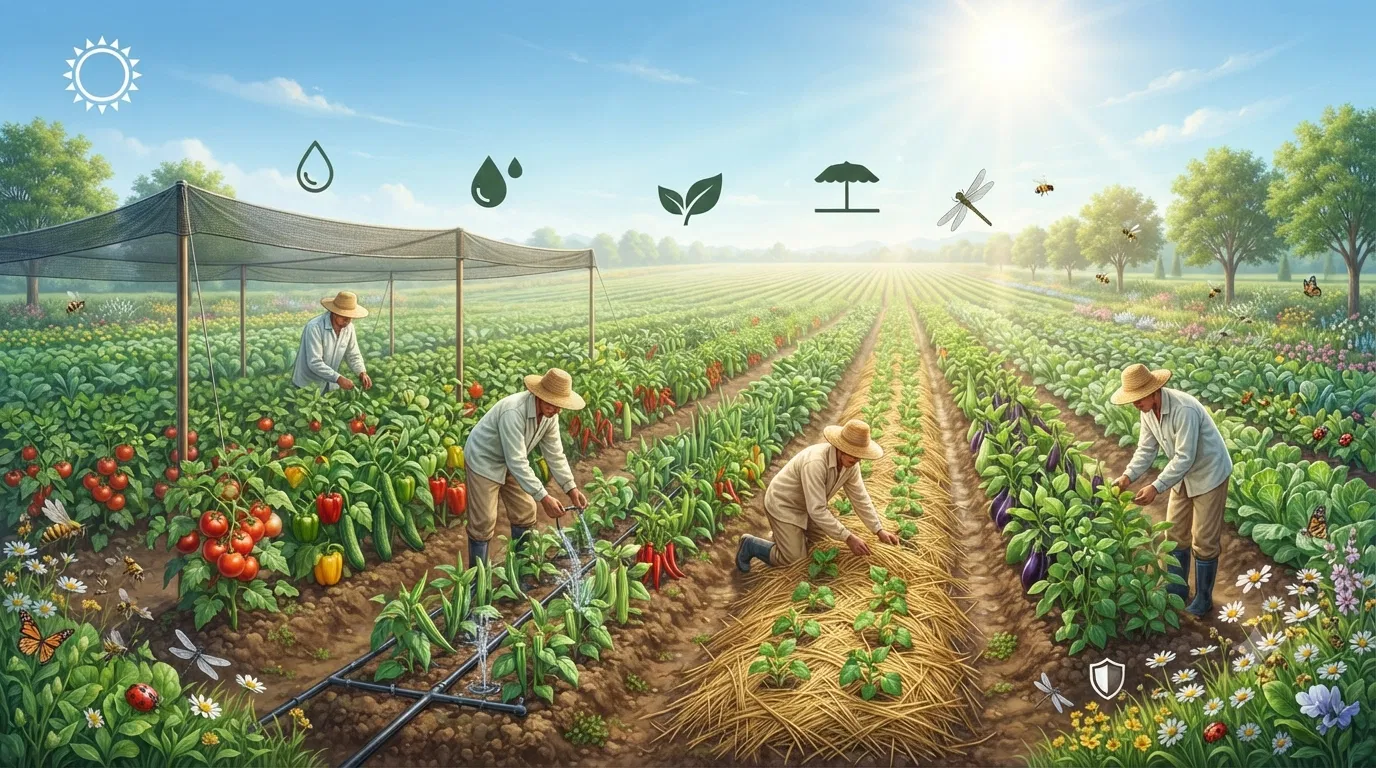
When summer temperatures climb, vegetable gardens can go from productive to stressed almost overnight. Leaves wilt by midday, blossoms drop, fruit stops forming, and once-thriving plants suddenly struggle to survive. The good news is that heat stress in vegetable crops is manageable with the right strategies. By making a few smart changes, you can protect summer vegetable crops from heat stress and keep your harvest going strong through the hottest weeks of the season.
Why Heat Stress Happens in Summer Vegetable Crops
Vegetable plants need water, sunlight, and nutrients to grow well, but extreme heat can throw that balance off. When temperatures rise too high, plants lose moisture faster than their roots can absorb it. At the same time, soil dries out quickly, flowers become less viable, and fruit development slows down.
Common signs of heat stress in vegetable gardens include:
- Wilting leaves during the hottest part of the day
- Leaf curling or drooping
- Blossom drop on tomatoes, peppers, beans, and squash
- Sunscald on fruits and vegetables
- Slowed growth or stunted plants
- Bitter or poor-quality produce
Understanding these signs early makes it easier to protect your crop before stress becomes severe.
1. Water Deeply and Consistently
One of the most effective ways to reduce heat stress in vegetable gardens is proper watering. Shallow, frequent watering encourages weak roots, while deep watering helps plants develop stronger root systems that can better handle hot weather.
Water early in the morning so plants have moisture available before the day heats up. This also reduces evaporation loss and gives foliage time to dry, which helps prevent disease.
Best watering practices for hot weather
- Water at the base of plants rather than overhead when possible
- Apply water slowly to allow deep soil penetration
- Check soil moisture before watering to avoid overwatering
- Use drip irrigation or soaker hoses for efficient delivery
- Increase watering frequency during heat waves, but avoid soggy soil
Tip: A healthy vegetable crop generally benefits from about 1 to 1.5 inches of water per week, but hot, windy conditions may require more.
2. Add Mulch to Hold in Moisture
Mulch is a simple, high-impact solution for protecting summer vegetable crops from heat stress. It acts like a barrier that helps soil stay cooler, slows evaporation, and reduces weed competition.
Organic mulches such as straw, shredded leaves, grass clippings, and compost are especially useful because they also improve soil structure over time. Apply 2 to 4 inches of mulch around plants, but keep it a few inches away from the stems to prevent rot.
Benefits of mulching in summer gardens
- Keeps root zones cooler
- Preserves soil moisture
- Reduces weed pressure
- Protects soil from crusting and erosion
- Improves plant resilience during drought and heat
For heat-sensitive crops like lettuce, spinach, cucumbers, and peppers, mulch can make a noticeable difference in both plant health and yield.
3. Use Shade Cloth During Extreme Heat
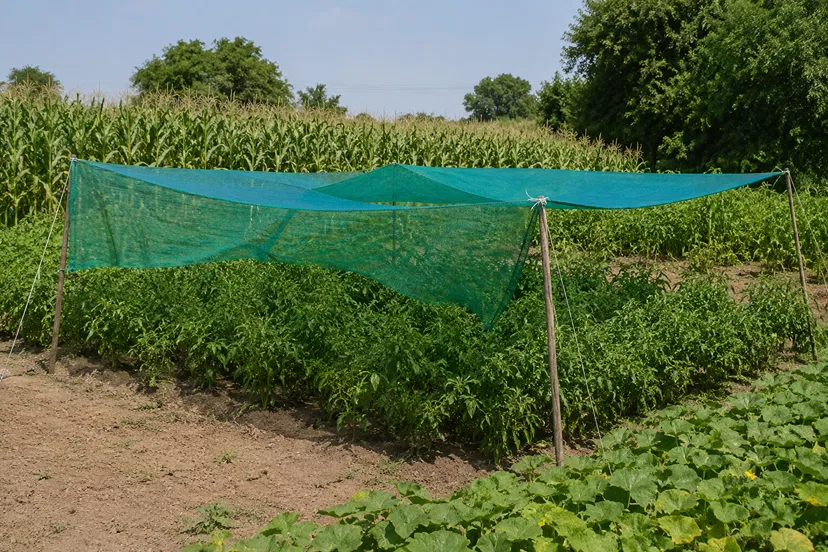
When temperatures spike for several days in a row, shade cloth can help protect summer vegetable crops from scorching sun and excessive heat. Many vegetables still need full sun, but during intense heat, a little afternoon shade can reduce stress and prevent leaf damage.
Shade cloth is available in different levels of light reduction, usually ranging from 30% to 50%. For most vegetables, 30% to 40% shade is enough to ease heat stress without limiting growth too much.
Best ways to use shade cloth
- Cover crops during the hottest part of the day
- Use hoops, stakes, or garden frames to keep cloth above foliage
- Focus on the most vulnerable crops, such as lettuce, cilantro, and young transplants
- Remove or reduce shade when temperatures return to normal
Shade cloth is especially helpful for extending the life of cool-season crops that are still growing in summer gardens.
4. Choose Heat-Tolerant Vegetable Varieties
Some vegetables naturally handle hot weather better than others. If you garden in a region with long, intense summers, selecting heat-tolerant varieties can dramatically improve your results.
Look for seed or plant descriptions that mention heat resistance, bolt resistance, or strong performance in warm climates. These varieties often produce better when regular varieties begin to fail.
Examples of heat-tolerant crops and varieties
- Heat-set tomatoes
- Southern peas
- Okra
- Eggplant
- Sweet potatoes
- Malabar spinach
- Heat-resistant lettuce mixes
Choosing the right varieties is one of the easiest ways to reduce plant stress before the season even starts.
5. Improve Soil Health for Better Moisture Retention
Healthy soil plays a major role in helping vegetable crops withstand heat stress. Soil rich in organic matter holds water more effectively, drains properly, and supports strong root growth. Poor soil, by contrast, dries out quickly and makes plants more vulnerable to temperature extremes.
Work compost into garden beds before planting and continue adding organic matter each season. This improves soil texture, boosts beneficial microbes, and increases the soil’s ability to retain moisture during hot weather.
Soil improvement tips
- Test soil to understand nutrient and pH levels
- Add compost regularly
- Avoid compacting soil around roots
- Use raised beds carefully in extreme heat, since they dry out faster
- Minimize unnecessary tilling that disrupts soil structure
Well-prepared soil gives plants a much better chance of staying productive during summer heat waves.
6. Fertilize Carefully
Too much fertilizer, especially nitrogen, can cause fast leafy growth that increases water demand and makes plants more vulnerable to heat stress. On the other hand, underfed plants may lack the energy needed to recover from hot weather.
Use a balanced fertilizer according to crop needs, and avoid heavy feeding during extreme heat unless plants clearly need it. Compost teas, slow-release fertilizers, and light side-dressing can support growth without overwhelming the plant.
Important: Don’t fertilize wilted plants in peak heat unless the soil is adequately moist. Stressing the roots further can make the situation worse.
7. Time Garden Tasks to Reduce Stress
How and when you work in the garden matters more than many gardeners realize. Hot afternoons can be hard on plants and on you. Pruning, transplanting, harvesting, and weeding all create additional stress if done during the hottest hours.
Try to handle garden tasks in the early morning or evening when temperatures are cooler. This helps plants recover more quickly and reduces the risk of damage.
Smart timing habits for summer gardening
- Transplant in the morning or on cloudy days
- Harvest regularly to encourage continued production
- Remove weeds before they compete for moisture
- Avoid pruning heavily during heat waves
- Check plants daily for early signs of stress
8. Provide Wind Protection When Needed
Hot, dry wind can make heat stress worse by increasing water loss from leaves and soil. In exposed gardens, even a moderate breeze can dry out vegetables faster than expected.
Windbreaks such as garden fencing, hedges, row covers, or temporary barriers can help reduce moisture loss and protect tender crops. This is especially useful in open areas where sunlight and wind combine to create harsh growing conditions.
9. Harvest at the Right Time
Heat-stressed vegetables often decline quickly once they reach peak ripeness, so timely harvesting is important. Picking produce as soon as it is ready reduces the load on the plant and encourages continued production.
Some crops, like cucumbers, zucchini, beans, and tomatoes, benefit from frequent harvesting during summer. Leaving mature produce on the plant too long can slow down new flower and fruit formation.
In hot weather, every extra day a vegetable stays on the vine can matter. Regular harvesting helps plants focus energy on producing the next crop.
Conclusion: Keep Summer Gardens Productive Through the Heat
Protecting summer vegetable crops from heat stress starts with understanding what plants need most during hot weather: moisture, cooler root zones, healthy soil, and less unnecessary stress. Deep watering, mulch, shade cloth, heat-tolerant varieties, and thoughtful garden timing all work together to help your vegetables stay healthier and more productive.
If summer heat is challenging your garden, start with one or two of these strategies today and build from there. Small changes can make a big difference in plant survival, fruit quality, and harvest size. With the right care, your summer vegetable garden can keep thriving even when temperatures soar.