Powdery mildew is one of the most common and easily recognisable diseases cucumber growers deal with, especially as the crop matures and the canopy thickens. It starts small — a light dusting on a leaf or two — but under favourable conditions it can spread across the entire field within a week, robbing the plant of its ability to photosynthesise and directly hitting fruit size, quality, and yield.
Here's everything you need to know about powdery mildew in cucumber and the top 5 ways to treat and prevent it.
What is Powdery Mildew in Cucumber?
Powdery mildew in cucumber is caused primarily by the fungi Podosphaera xanthii (formerly Sphaerotheca fuliginea) and Erysiphe cichoracearum. Unlike most fungal diseases, powdery mildew doesn't need free water on the leaf surface to infect — it thrives in warm, dry conditions with high humidity, which makes it especially common in the later stages of the crop and in polyhouse or protected cultivation.
Symptoms of Powdery Mildew in Cucumber
Leaf Symptoms
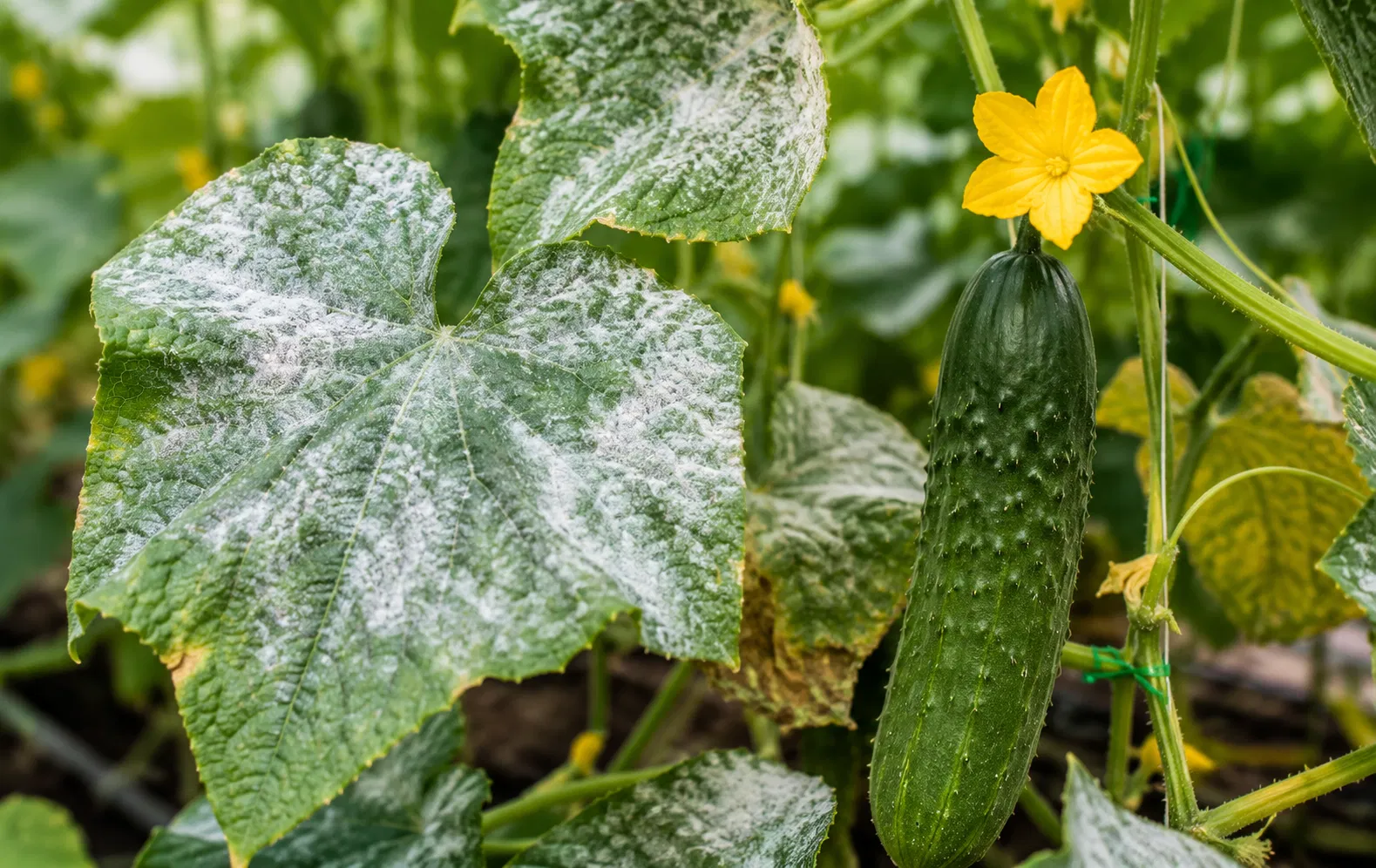
- Small, circular, white to greyish powdery patches appearing on the upper leaf surface
- Patches gradually enlarge and merge, covering the entire leaf with a talcum-like coating
- Older leaves are affected first, especially those in the lower and middle canopy
- Leaves eventually turn yellow, then brown, and dry up completely
- Severe infection can affect both leaf surfaces as well as petioles
Plant-Level Symptoms
- Premature leaf drop, leading to a thin, exposed canopy
- Reduced photosynthesis, resulting in weak vine growth
- Sunscald on fruits due to loss of leaf cover
- Smaller, poorly developed, and fewer fruits
- In severe cases, vines dry up and the plant dies back prematurely
What Causes Powdery Mildew in Cucumber
Powdery mildew development is closely tied to the weather and how the crop is managed in the field. Common triggers include:
- Warm days (20–27°C) combined with cool, humid nights — the ideal range for spore germination
- High relative humidity, even without leaf wetness
- Dense, overcrowded plant canopy with poor air circulation
- Shady conditions or overlapping foliage that restricts sunlight penetration
- Excess nitrogen application, causing soft, susceptible leaf growth
- Water or moisture stress, which weakens the plant's natural resistance
- Continuous cucurbit cultivation without rotation, allowing spores to build up
- Susceptible varieties grown without any resistance to the disease
Prevention of Powdery Mildew in Cucumber
- Choose powdery mildew-resistant or tolerant cucumber varieties where available
- Maintain proper plant spacing to ensure good airflow and sunlight penetration through the canopy
- Avoid excess nitrogen fertilization; follow a balanced nutrition schedule
- Prune excess foliage periodically to open up the canopy in dense plantings
- Avoid water stress by maintaining consistent, adequate irrigation
- Monitor the crop regularly from the flowering stage onward, when susceptibility increases
- Rotate cucurbits with non-host crops to reduce spore carry-over between seasons
- Remove and destroy volunteer cucurbit plants and weeds that can host the fungus
5 Proven Ways to Treat and Prevent Powdery Mildew in Cucumber
1. Start with Resistant Varieties and Good Canopy Management
Prevention begins before the disease even shows up. Growing resistant or tolerant cucumber varieties significantly lowers disease pressure. Combine this with proper spacing and periodic pruning to keep the canopy open — good airflow and sunlight are two of the simplest, most effective barriers against powdery mildew.
2. Biological Management
Bio-fungicides help build a protective microbial layer on the leaf surface and are best used preventively, before symptoms appear, or at the very first sign of infection.
| Product name | Technical content | Dosage |
|---|---|---|
| Anand Dr Bacto's Fluro | Pseudomonas fluorescens | Foliar: 2.5 ml/lit of water |
| Multiplex Nisarga | Trichoderma viride | Foliar: 3 gm/lit of water |
| Milk spray (organic option) | Diluted cow milk | 1:9 milk to water, foliar spray |
3. Chemical Management
Once powdery mildew is visible, a well-timed fungicide spray is the fastest way to stop it from spreading. Alternate between different chemical groups across sprays to prevent resistance build-up.
| Product name | Technical content | Dosage |
|---|---|---|
| Bayer Nativo Fungicide | Tebuconazole 50% + Trifloxystrobin 25% WG | 80–160 gm/acre |
| Cabrio Top Fungicide | Metiram 55% + Pyraclostrobin 5% WG | 3–3.5 gm/lit of water |
| Sulphur 80% WDG | Wettable Sulphur | 2–2.5 gm/lit of water |
| Syngenta Bayleton | Triadimefon 25% WP | 1 gm/lit of water |
| Hexaconazole 5% SC | Hexaconazole 5% SC | 2 ml/lit of water |
Avoid spraying sulphur-based products during very hot weather (above 32°C), as it can cause leaf scorch.
4. Cultural Practices to Reduce Disease Pressure
- Avoid overhead irrigation late in the day; irrigate early so foliage dries quickly
- Stake or trellis vines where possible to improve air movement around leaves
- Remove and destroy heavily infected leaves as soon as they're noticed to reduce spore load
- Maintain field sanitation by clearing crop debris after harvest
5. Regular Field Monitoring
- Scout the crop at least twice a week from flowering onward, checking the undersides and upper surfaces of lower leaves first
- Look for the earliest sign — small, isolated white powdery spots — and treat immediately rather than waiting for it to spread
- Early-stage intervention with a single well-timed spray is far more effective and economical than trying to control an advanced infection