Mulch can make or break a garden bed. It affects moisture retention, weed control, soil health, root temperature, and even how much time you spend maintaining your plants. When choosing between organic mulch and plastic mulch, the right option depends on your goals, climate, and crop type.
If you want healthier soil over time, organic mulch often wins. If you need maximum weed suppression and warmth, plastic mulch can be the better choice. The key is understanding how each one performs and when to use it.
What Is Organic Mulch?
Organic mulch is made from natural materials that break down over time. Common examples include wood chips, shredded bark, straw, grass clippings, compost, pine needles, and leaves.
As organic mulch decomposes, it adds nutrients and improves soil structure. This makes it a favorite for flower beds, vegetable gardens, trees, and shrubs.
Benefits of Organic Mulch
- Improves soil health by adding organic matter as it breaks down
- Retains moisture and helps reduce watering needs
- Suppresses weeds by blocking sunlight
- Regulates soil temperature by keeping roots cooler in summer and warmer in winter
- Supports beneficial soil life such as earthworms and microbes
- Enhances garden appearance with a natural look
Drawbacks of Organic Mulch
- Needs replenishing because it decomposes
- Can attract pests if applied too thickly or kept too wet
- May harbor weed seeds if sourced poorly
- May not provide the strongest weed barrier in all situations
What Is Plastic Mulch?
Plastic mulch is a thin film placed over the soil, usually made from polyethylene or biodegradable plastic. It is widely used in commercial farming and vegetable production because it creates a strong barrier against weeds and helps manage soil temperature.
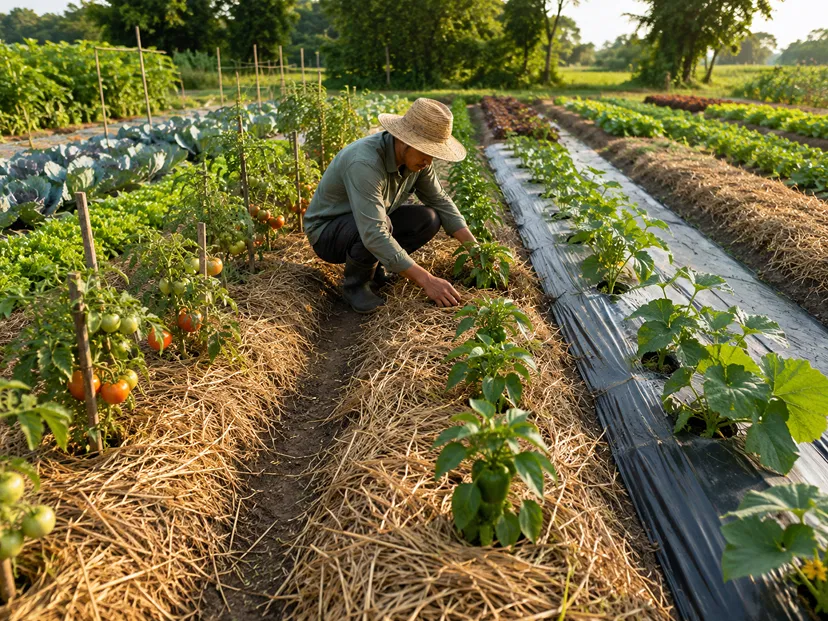
Plastic mulch is often paired with drip irrigation and used for crops like tomatoes, peppers, melons, and strawberries.
Benefits of Plastic Mulch
- Excellent weed control by blocking sunlight from reaching the soil
- Warms the soil faster, which helps early plant growth
- Reduces evaporation and conserves moisture
- Keeps fruits clean by preventing direct contact with soil
- Can increase yields in certain crops and growing conditions
Drawbacks of Plastic Mulch
- Does not improve soil health the way organic mulch does
- Must be removed or managed after use in many cases
- Can create disposal challenges and environmental concerns
- May overheat soil in hot climates if the wrong color is used
- Requires more setup than many organic mulches
Organic Mulch vs Plastic Mulch: Key Differences
The decision between organic mulch and plastic mulch comes down to function. Organic mulch is best for long-term soil improvement and general garden health. Plastic mulch is best for intensive weed control, warm-season crops, and production-focused growing.
1. Soil Health
Organic mulch is the clear winner if soil improvement matters. It feeds the soil as it breaks down, supporting microbes and improving texture. Plastic mulch, by contrast, sits on top of the soil and does not contribute nutrients or organic matter.
2. Weed Control
Plastic mulch usually provides stronger weed suppression because it forms a near-total barrier. Organic mulch also suppresses weeds, but persistent weeds may still push through if the layer is too thin.
3. Moisture Retention
Both mulches help conserve water. Organic mulch slows evaporation while allowing rain and irrigation to soak in naturally. Plastic mulch reduces evaporation even more, but water must often be delivered underneath it, usually through drip lines.
4. Temperature Management
Plastic mulch warms the soil faster in spring, which can be a major advantage for heat-loving crops. Organic mulch tends to insulate more evenly and is often better for keeping roots cool during hot weather.
5. Maintenance
Organic mulch is easier to use and usually requires less installation effort. However, it must be refreshed periodically. Plastic mulch takes more setup and cleanup but can reduce maintenance during the growing season.
When to Use Organic Mulch
Organic mulch is usually the best choice for home gardens, landscape beds, perennial plantings, and areas where soil quality is a priority. It is especially useful if you want a low-input, environmentally friendly option that improves the ground over time.
Choose organic mulch if you are growing:
- Vegetables in mixed garden beds
- Flowers and ornamental plants
- Shrubs and trees
- Perennials that stay in place year after year
- Gardens in hot, dry climates where root cooling matters
Best organic mulch options: shredded bark, wood chips, straw, compost, and leaves. For vegetable gardens, straw and compost are especially popular because they are lightweight and easy to work with.
When to Use Plastic Mulch
Plastic mulch is ideal when weed control, soil warming, and high productivity are top priorities. It is commonly used in market gardens and for crops that benefit from warmer soil and cleaner fruit.
Choose plastic mulch if you are growing:
- Tomatoes
- Peppers
- Melons
- Strawberries
- Early-season crops in cooler regions
Plastic mulch works best when combined with drip irrigation and a planting plan that matches the crop’s needs. It is especially effective in raised rows and commercial-style vegetable production.
Environmental Considerations
For many gardeners, sustainability is a major deciding factor. Organic mulch is generally the more eco-friendly choice because it is biodegradable and contributes to healthier soil systems.
Plastic mulch can be effective, but it may generate waste unless it is reused, recycled, or replaced with biodegradable alternatives. If environmental impact is a concern, look into compostable films or stick with natural mulch materials.
Bottom line: Organic mulch builds the garden from the ground up, while plastic mulch focuses on performance during the growing season.
Which Should You Use?
If your main goal is healthier soil, easier long-term maintenance, and a natural gardening approach, organic mulch is the better option. If your priority is maximum weed suppression, faster soil warming, and higher productivity for specific crops, plastic mulch may be the smarter choice.
In many gardens, the best answer is not one or the other, but both in the right place. Use organic mulch for beds, borders, trees, and shrubs. Use plastic mulch for crops that need extra heat and strict weed control.
Final Takeaway
There is no single best mulch for every situation. The right choice depends on what you are growing, how much maintenance you want, and whether you value soil improvement or short-term performance more.
If you want a garden that gets better every season, go with organic mulch. If you want a crop-specific tool that helps you control weeds and boost warmth, plastic mulch can deliver strong results. Choose based on your goals, and your garden will reward you.