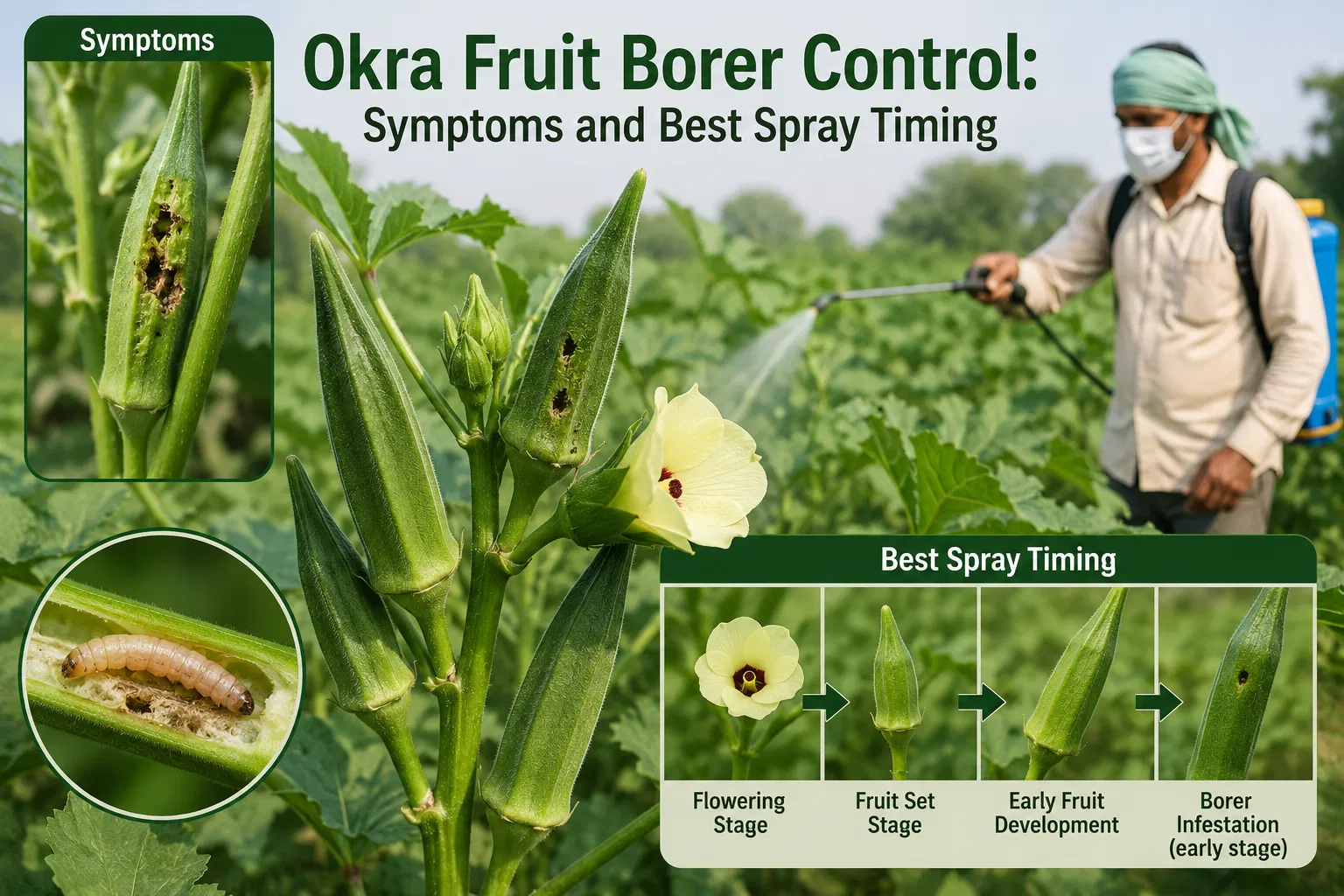
Few garden pests are as frustrating as the okra fruit borer. One day your okra pods look healthy and ready to pick, and the next you notice tiny holes, soft spots, or pods that have started rotting from the inside. If you want to protect your harvest, the key is learning how to spot the symptoms early and knowing the best spray timing before the caterpillars cause serious damage.
In this guide, you’ll learn how to identify okra fruit borer damage, understand the pest’s life cycle, and use the most effective spray schedule for better control. Whether you grow a few backyard plants or manage a larger vegetable plot, timely action can make a big difference.
What Is Okra Fruit Borer?
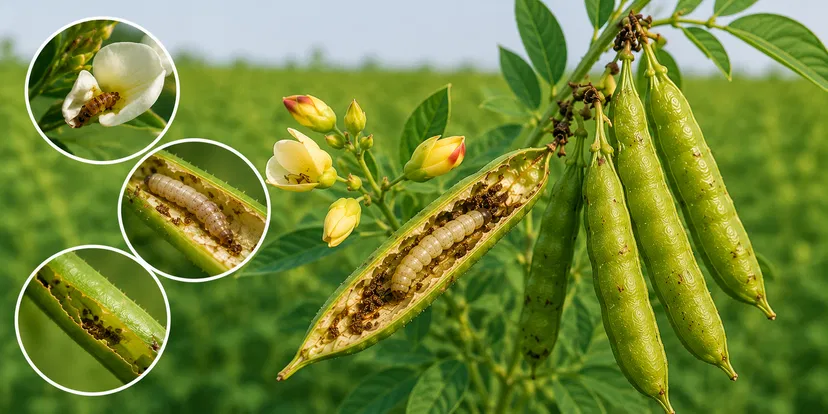
The okra fruit borer is a caterpillar pest that attacks okra pods and sometimes flower buds and tender shoots. The larvae bore into the pod, feed on the interior, and leave behind holes, frass, and damaged tissue. Because the insect feeds inside the fruit, it often goes unnoticed until the damage is already done.
The pest is commonly active during warm weather and can spread quickly when okra is flowering and forming pods. Since the larvae are protected inside the pod after entry, prevention and early spray timing are more effective than waiting for severe infestation.
Symptoms of Okra Fruit Borer Damage
Recognizing the early symptoms is the first step in control. Check your plants often, especially during pod formation.
1. Small Holes on Pods
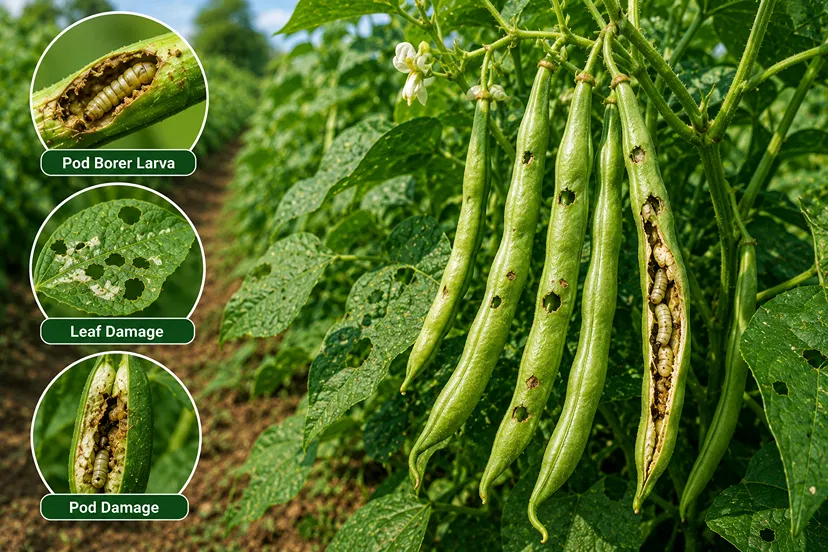
One of the earliest signs is tiny round holes on young or developing pods. These holes are made when the larva enters the pod. Even a small opening can lead to major internal damage.
2. Frass Near Entry Points
Frass is the pellet-like insect waste often found near the hole or around the pod surface. If you notice dark specks or loose debris near a pod opening, fruit borer activity is likely.
3. Soft or Rotten Patches on Pods
As the larva feeds inside, the pod may develop soft, watery, or rotten-looking areas. These patches may appear yellowish or brown and can spread quickly.
4. Premature Pod Drop
Severely infested pods may dry up, stop developing, or fall off the plant early. This is a common result when feeding damage becomes too intense.
5. Damaged Flowers or Tender Shoots
Although the main target is the fruit, young larvae may also damage flower buds or soft shoots. This reduces pod formation and lowers overall yield.
6. Webbing or Caterpillar Presence
In some cases, you may spot the caterpillar itself near the pod surface or inside the damaged fruit. The larvae are often greenish, brownish, or striped depending on the species.
Tip: Check your okra plants early in the morning or late in the afternoon when pest activity and visible damage are easier to notice.
Why Okra Fruit Borer Is Hard to Control
Fruit borers are tricky because they attack inside the pod. Once the larva enters, sprays may not reach it effectively. That is why the timing of control measures matters more than repeated spraying after damage has already occurred.
The best control approach combines:
- Regular field scouting
- Removal of damaged pods
- Proper spray timing
- Rotation of control products
- Good sanitation and crop monitoring
Best Spray Timing for Okra Fruit Borer Control
The most effective spray timing is before the larvae bore into the pod. That means spraying when moths are laying eggs or when very small larvae have just hatched and are still exposed on the plant surface.
1. Spray at Early Flowering Stage
Start monitoring closely when okra begins flowering. This is often the stage when moths begin laying eggs on buds, flowers, and young pods. An early protective spray can reduce egg hatch and prevent larvae from entering pods.
2. Spray at First Pod Formation
When the first pods appear, fruit borer pressure usually increases. This is the most important time to protect plants because young pods are highly vulnerable. A well-timed spray at this stage offers better coverage before larvae bore inside.
3. Repeat at 7- to 10-Day Intervals if Needed
If pest pressure is high, repeat applications every 7 to 10 days, depending on pest activity, rainfall, and product label instructions. Consistent coverage is more effective than waiting until damage becomes severe.
4. Spray in the Evening or Early Morning
Spraying during cooler parts of the day often gives better results. In the evening, caterpillars may be more active, and spray residue may stay on the plant longer without drying too quickly in strong sunlight.
5. Spray After Removing Infested Pods
Before spraying, remove and destroy heavily infested pods. This helps lower the pest population and improves the effectiveness of the spray on remaining healthy pods.
Effective Spray Options for Okra Fruit Borer
The best spray choice depends on your growing method and local recommendations. Always follow the label directions for rates, timing, and safety precautions.
Biological and Botanical Options
- Neem-based sprays can help reduce egg-laying and early larval feeding.
- Bacillus thuringiensis (Bt) works best on young caterpillars before they enter the pod.
- Spinosad is effective against caterpillars when applied early and thoroughly.
Chemical Control Options
In some cases, synthetic insecticides may be used for heavy infestations. These should be selected carefully and used according to local agricultural guidance. Spray rotation is important to reduce resistance and maintain effectiveness.
Important: Any spray is most effective when applied before the larva is protected inside the pod. Once the fruit is bored into, control becomes much harder.
How to Improve Control Beyond Spraying
Spraying alone is rarely enough for long-term okra fruit borer management. Combine spray timing with other control methods for better results.
1. Inspect Plants Regularly
Walk through your okra crop every few days and check flowers, young pods, and growing tips. Early detection prevents the pest from spreading unnoticed.
2. Remove Damaged Fruit
Pick off and destroy infested pods as soon as you find them. Do not leave damaged fruit on the plant or compost it unless your compost system reaches high enough temperatures to kill larvae.
3. Keep the Area Clean
Weeds and leftover plant debris can shelter pests. Clean growing areas reduce hiding places for moths and larvae.
4. Harvest Frequently
Frequent harvesting encourages continued pod production and reduces the time pests have to damage mature fruit. It also helps you spot trouble earlier.
5. Use Pest-Resistant Practices
Where possible, rotate crops, avoid overcrowding, and maintain healthy soil. Strong plants tolerate pest pressure better and recover more quickly from minor damage.
Common Mistakes to Avoid
Many growers lose okra pods because they react too late. Avoid these common mistakes:
- Waiting until pods are badly damaged before spraying
- Spraying only once and expecting full control
- Ignoring early flower-stage monitoring
- Not checking the undersides of pods and buds
- Using a spray without following the recommended interval
Remember, fruit borer management works best when it is preventive, not reactive.
Conclusion
Okra fruit borer can quickly reduce yield, but early action makes control much easier. Watch for the warning signs such as small holes, frass, soft spots, and premature pod drop. Most importantly, time your spray applications at early flowering and first pod formation, before the caterpillars bore into the pods.
If you combine proper spray timing with regular scouting, sanitation, and prompt removal of damaged pods, you can protect your okra crop and enjoy a healthier harvest. Stay alert, act early, and keep your okra plants one step ahead of the borer.