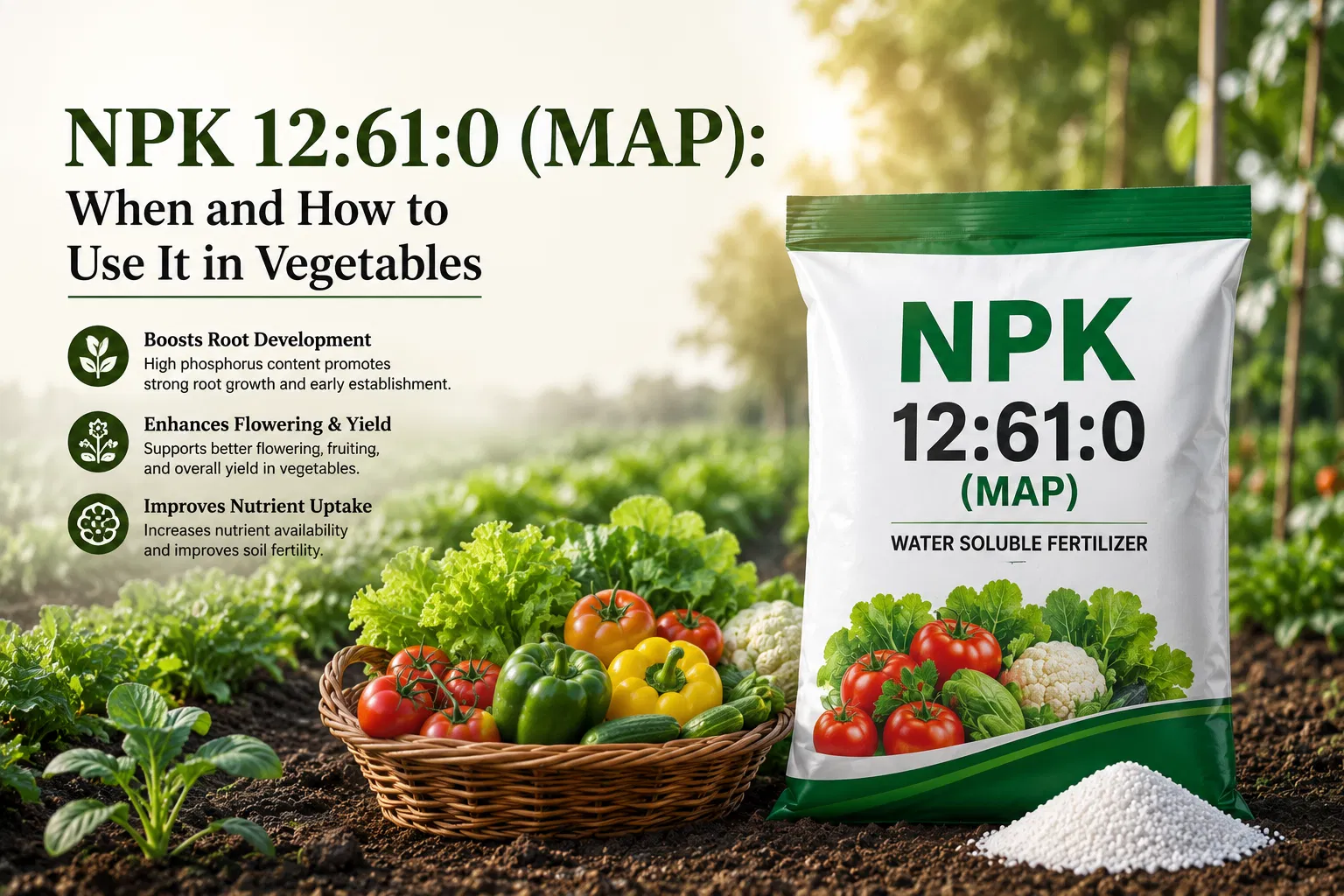
If your vegetable crop is struggling to establish roots, lagging in early growth, or showing poor flowering and fruit set, phosphorus may be the missing piece. NPK 12-61-0, commonly known as MAP or monoammonium phosphate, is one of the most effective fertilizers for giving vegetables a powerful early boost. Used correctly, it can support vigorous root development, stronger seedlings, and better overall crop performance.
What Is NPK 12-61-0 (MAP)?
NPK 12-61-0 is a high-phosphorus fertilizer that contains 12% nitrogen, 61% phosphorus, and 0% potassium. MAP stands for monoammonium phosphate. It is widely used in vegetable production because phosphorus is highly important during the early stages of plant growth.
The relatively low nitrogen content helps support early growth without pushing excessive leafy development, while the high phosphorus level encourages strong root formation, faster establishment, and improved flowering in many vegetable crops.
Key idea: MAP is best used when vegetables need strong rooting, early vigor, and a phosphorus boost, especially at planting or during early growth stages.
Why Vegetables Benefit from MAP
Vegetables are often sensitive to phosphorus shortages, especially in cool soils or newly transplanted crops. When phosphorus is limited, plants may appear stunted, slow to establish, and dull green or purplish in color. MAP helps correct this by supplying readily available phosphorus in a form plants can absorb efficiently.
Vegetables benefit from MAP because it can:
- Promote faster root growth
- Improve transplant establishment
- Support early vegetative growth
- Encourage flowering and fruit initiation in fruiting vegetables
- Help crops recover from early stress
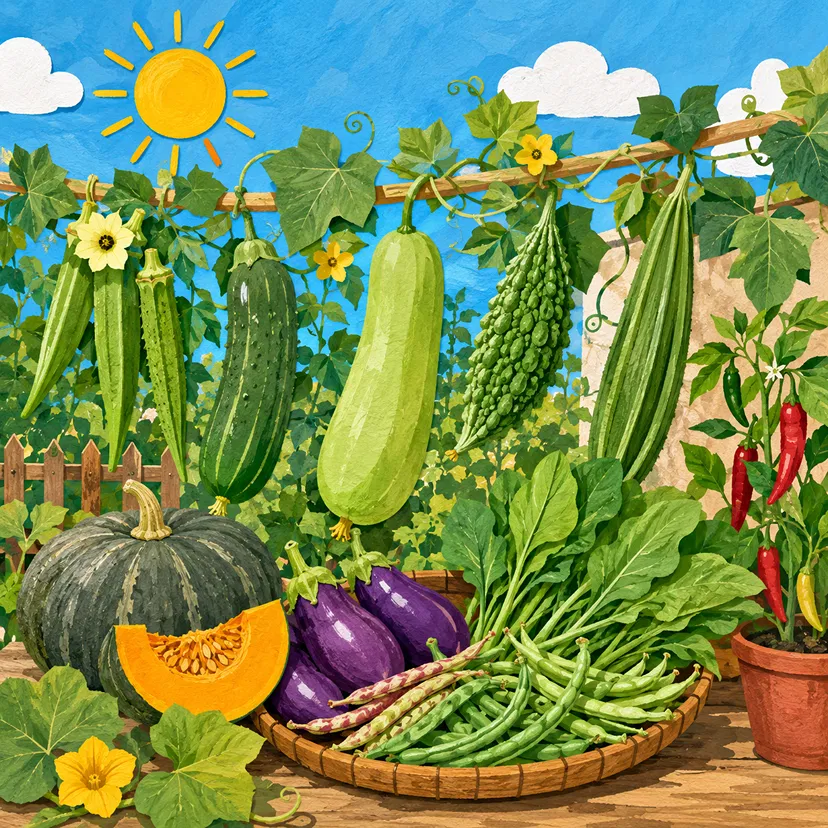
For crops like tomatoes, peppers, cucumbers, onions, carrots, lettuce, cabbage, and beans, phosphorus is especially important during the first stages after sowing or transplanting.
When to Use NPK 12-61-0 in Vegetables
1. At Planting or Transplanting
The best time to use MAP is at planting or transplanting, when young roots need immediate access to phosphorus. Applying it near the root zone helps vegetables establish quickly and grow more evenly.
This is especially useful for:
- Transplanted tomatoes and peppers
- Seedlings in poor or cold soils
- Direct-seeded vegetables with slow early growth
- Crops grown in soils low in phosphorus
2. During Early Growth Stages
If vegetable plants are slow to develop after emergence or transplanting, a MAP application can help correct early phosphorus deficiency. This is often most effective when plants are still young and actively forming roots.
3. Before Flowering in Fruiting Vegetables
Phosphorus plays a role in flowering and energy transfer within the plant. Fruiting vegetables such as tomatoes, peppers, eggplants, and cucumbers may benefit from MAP before flowering if the crop needs an early phosphorus push.
4. In Cool Soils
Phosphorus uptake drops in cool conditions. That is why MAP is often useful in early spring plantings or in regions where soil temperatures remain low. It gives seedlings a more accessible phosphorus source when root activity is naturally slower.
How to Use MAP in Vegetables
1. Apply It Near the Root Zone
MAP works best when placed close to the roots, but not directly against seeds or tender roots in high amounts. Band placement, side placement, or fertigation are common methods depending on the crop and system used.
Good application methods include:
- Banding: Placing fertilizer in a narrow band near the planting row
- Side dressing: Applying beside growing plants after emergence or transplanting
- Fertigation: Injecting dissolved fertilizer through irrigation systems
- Starter solution: Using a diluted solution for transplants, where appropriate
2. Avoid Overapplying
Although MAP is highly effective, too much phosphorus can cause nutrient imbalance and reduce uptake of other elements such as zinc and iron. Excess application can also be wasteful because phosphorus can accumulate in soil over time.
Always follow soil test recommendations and crop-specific fertilizer guidelines. If the soil already has adequate phosphorus, MAP may not be needed at all.
3. Use Soil Test Results as a Guide
Soil testing is the smartest way to decide whether MAP is needed. A soil test will show phosphorus levels, pH, and overall nutrient status, helping you avoid unnecessary fertilizer use.
MAP is most useful when the soil test indicates low to medium phosphorus levels, especially in soils with poor root development or low fertility.
4. Consider Fertilizer Placement Carefully
Because phosphorus does not move freely in soil, placement matters more than with nitrogen. If you spread MAP too far from the root zone, plants may not access it efficiently. For vegetables, targeted placement is usually better than broad broadcasting.
Best Vegetable Crops for MAP Use
MAP can be useful for many vegetables, but it is especially valuable for crops that need strong early growth or have high phosphorus demand during establishment.
- Tomatoes: Supports transplant establishment and early root growth
- Peppers: Helps young plants develop quickly after transplanting
- Onions: Encourages strong early root systems
- Carrots: Supports root development during early growth
- Lettuce: Improves seedling vigor and establishment
- Cabbage and broccoli: Helps transplants get off to a strong start
- Cucumbers and squash: Supports early growth and fruiting potential
Signs Your Vegetables May Need Phosphorus
Phosphorus deficiency can be difficult to spot at first, but early symptoms often show up in young plants. If your vegetables are underperforming, look for these signs:
- Slow or stunted growth
- Poor root development
- Dark green or bluish foliage
- Purple coloration on leaves or stems
- Delayed flowering or maturity
These symptoms do not always mean phosphorus is missing, but they are a strong clue that MAP may help if confirmed by soil testing or crop history.
How to Use MAP Safely and Effectively
Follow the Right Rate
The correct rate depends on crop type, soil fertility, planting method, and whether the fertilizer is being applied in bands or through irrigation. Smaller, targeted doses are usually better than heavy applications.
Keep It Separate from Seeds When Needed
In concentrated form, fertilizers can damage seeds or roots. For direct-seeded vegetables, avoid placing MAP too close unless recommendations allow it and the rate is safe for the crop.
Balance with Other Nutrients
MAP supplies phosphorus and some nitrogen, but vegetables still need a balanced fertility program. Potassium, calcium, magnesium, sulfur, and micronutrients may also be required depending on the crop and soil conditions.
Use Moist Soil for Better Uptake
Moisture helps dissolve MAP and move nutrients into the root zone. Applying fertilizer when soil is too dry can limit effectiveness, especially in field-grown vegetables.
Common Mistakes to Avoid
Many growers get good results from MAP, but a few common mistakes can reduce its effectiveness.
- Applying it without a soil test
- Using too much phosphorus
- Placing it too far from the roots
- Ignoring pH and overall soil balance
- Using it as a full fertilizer instead of a targeted phosphorus source
Remember that MAP is a specialty fertilizer for specific growth stages, not a complete solution for all nutrient needs.
Conclusion
NPK 12-61-0 (MAP) is a powerful fertilizer for vegetables when used at the right time and in the right way. Its high phosphorus content makes it especially valuable at planting, transplanting, and early crop development, when strong roots and quick establishment matter most.
If you want healthier starts, faster growth, and better vegetable performance, use MAP strategically based on soil tests and crop needs. Applied correctly, it can make a noticeable difference in crop vigor and yield potential.
For the best results, match MAP application to your soil conditions, your crop stage, and your fertility plan.