Healthy roots are the foundation of productive vegetable crops, but plant-parasitic nematodes can silently damage root systems long before symptoms appear above ground. Crops affected by nematodes often show poor growth, wilting, nutrient deficiency symptoms, and reduced yields, even when irrigation and fertilization appear adequate.
Successful nematode control in vegetable crops begins with early identification of root symptoms and adopting an integrated management approach. Timely action helps reduce crop losses, maintain healthy root systems, and improve overall productivity.
What Are Plant-Parasitic Nematodes?
Nematodes are microscopic roundworms that naturally occur in soil. While many species are beneficial, plant-parasitic nematodes feed on roots, disrupting water and nutrient uptake and weakening crop growth.
The most economically important species affecting vegetable crops include:
- Root-knot nematodes
- Lesion nematodes
- Cyst nematodes
- Stubby-root nematodes
Although each species damages plants differently, the result is often similar: weak root systems, poor plant vigour, and reduced marketable yield.
Common Root Symptoms of Nematode Damage
Since nematodes attack below ground, their symptoms are often mistaken for drought stress, nutrient deficiency, or root diseases. Examining the root system is essential for accurate diagnosis.
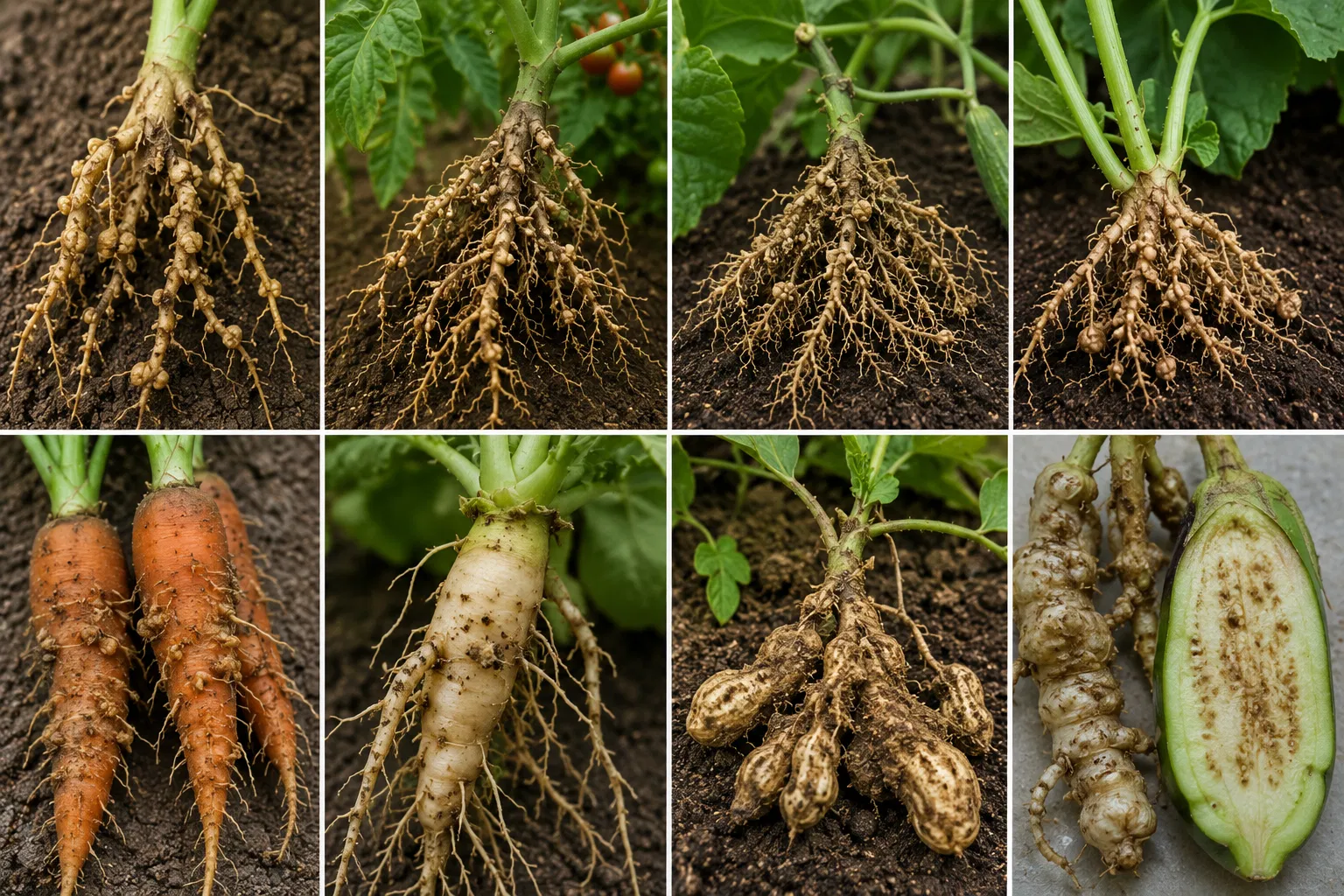
1. Root Galls or Knots
Root-knot nematodes produce swollen galls on roots that interfere with normal water and nutrient absorption. These galls are among the most recognizable symptoms of nematode infestation.
2. Reduced Root Mass
Infected plants often develop fewer feeder roots, leaving the root system sparse and poorly developed. Reduced root mass limits nutrient uptake and decreases crop vigour.
3. Dark Lesions on Roots
Lesion nematodes create dark, damaged areas on roots that resemble fungal infections. These injuries often allow secondary pathogens to enter the plant.
4. Stunted or Distorted Root Growth
Some nematode species produce short, stubby, or excessively branched roots that are less efficient at supporting healthy crop growth.
5. Poor Root Hair Development
Nematode damage reduces the formation of fine feeder roots and root hairs, making nutrient and water absorption less efficient.
Field tip: If crops wilt despite adequate soil moisture, inspect the roots before assuming the problem is caused by drought or nutrient deficiency.
Above-Ground Symptoms of Nematode Damage
Although root symptoms provide the clearest diagnosis, several above-ground symptoms commonly accompany nematode infestations.
- Uneven crop growth across the field
- Yellowing despite adequate nutrition
- Wilting during warm weather even when soil moisture is sufficient
- Poor flowering and reduced fruit development
- Small fruits and reduced yields
- Poor recovery after irrigation or rainfall
- General lack of crop vigour
These symptoms often occur in irregular patches because nematode populations are rarely distributed evenly throughout the field.
How to Confirm a Nematode Problem
Visual symptoms alone are not always reliable because nematode damage resembles several other root disorders. Collect soil and root samples from affected plants and submit them for laboratory analysis whenever possible.
Accurate diagnosis identifies the nematode species involved and helps determine the most effective management strategy.
Integrated Nematode Control in Vegetable Crops
Long-term nematode management relies on combining multiple practices rather than depending on a single solution.
1. Practice Crop Rotation
Rotate susceptible vegetable crops with non-host or poor-host crops to reduce nematode populations over time. Avoid growing the same susceptible crop repeatedly in the same field.
2. Plant Resistant Varieties
Many vegetable varieties have been developed with resistance or tolerance to specific nematode species. Selecting resistant vegetable seeds can significantly reduce root damage and improve yields.
3. Improve Soil Health
Healthy soils encourage stronger root systems and beneficial microorganisms that help suppress nematode activity.
Incorporate compost and organic matter to improve:
- Soil structure
- Water-holding capacity
- Beneficial microbial activity
- Root development
- Nutrient availability
4. Grow Cover Crops
Certain cover crops, including sunn hemp, mustard, and marigold, can help reduce nematode populations when properly incorporated into crop rotations.
Besides suppressing nematodes, cover crops improve soil fertility and reduce erosion.
5. Maintain Field Sanitation
Nematodes spread through contaminated soil, seedlings, irrigation water, tools, and machinery.
Good sanitation practices include:
- Cleaning field equipment before moving between fields
- Removing severely infested crop residues
- Using healthy planting material
- Avoiding movement of contaminated soil
6. Soil Solarization
In warm regions, covering moist soil with transparent plastic during the hottest months can significantly reduce nematode populations in the upper soil layer.
Solarization is particularly useful in nursery beds and high-value vegetable production.
7. Chemical Management
Where economic thresholds justify treatment, registered nematicides may be used as part of an integrated crop protection programme.
Always follow label recommendations and integrate chemical control with crop rotation, resistant varieties, and improved soil health for sustainable management.
Preventing Nematode Problems
Preventing nematode establishment is generally easier and more economical than attempting to eliminate heavy infestations.
Good preventive practices include:
- Testing soil before planting
- Using healthy seedlings
- Selecting resistant varieties where available
- Practising crop rotation
- Maintaining healthy soil biology
- Monitoring root systems regularly
Best Practices for Healthy Vegetable Roots
Strong root systems help vegetable crops tolerate environmental stress and minor nematode infestations more effectively.
- Maintain consistent irrigation.
- Apply balanced fertilizers based on soil-test recommendations.
- Improve drainage where necessary.
- Mulch to stabilize soil moisture and temperature.
- Control weeds that may host nematodes.
- Inspect roots regularly throughout the season.
Managing Secondary Diseases
Nematode-damaged roots are more susceptible to fungal pathogens that cause root rot and wilt diseases. Where fungal infections are confirmed, timely application of appropriate fungicides can help reduce secondary disease pressure as part of an integrated disease management programme.
Final Thoughts
Nematode control in vegetable crops begins with early diagnosis and a well-planned integrated management strategy. Root galls, poor feeder-root development, lesions, and stunted growth are warning signs that should never be ignored.
By combining crop rotation, resistant varieties, improved soil health, sanitation, and appropriate crop protection practices, farmers can reduce nematode populations and protect crop productivity over the long term.
Healthy roots support healthier plants, stronger yields, and better farm profitability.