Plant hormones shape everything from seed germination to flowering, fruit development, and stress response. But when it comes to choosing between natural vs synthetic plant hormones, the decision is not always simple. Some growers prefer naturally derived options for their gentler approach, while others rely on synthetic plant hormones for precision, consistency, and faster results.
If you want healthier plants, bigger yields, or better control over growth, understanding the difference between natural and synthetic plant hormones is essential. In this guide, we'll break down how they work, where each one fits best, and what to consider before using them.
What Are Plant Hormones?
Plant hormones, also called phytohormones, are chemical messengers that regulate growth and development. They are produced naturally by plants in very small amounts, yet they influence major processes such as cell division, root formation, flowering, fruit ripening, and leaf drop.
The five major types of plant hormones are:
- Auxins – promote root growth and stem elongation
- Gibberellins – support seed germination and flowering
- Cytokinins – encourage cell division and shoot growth
- Ethylene – triggers fruit ripening and aging
- Abscisic acid – helps plants respond to stress and conserve water
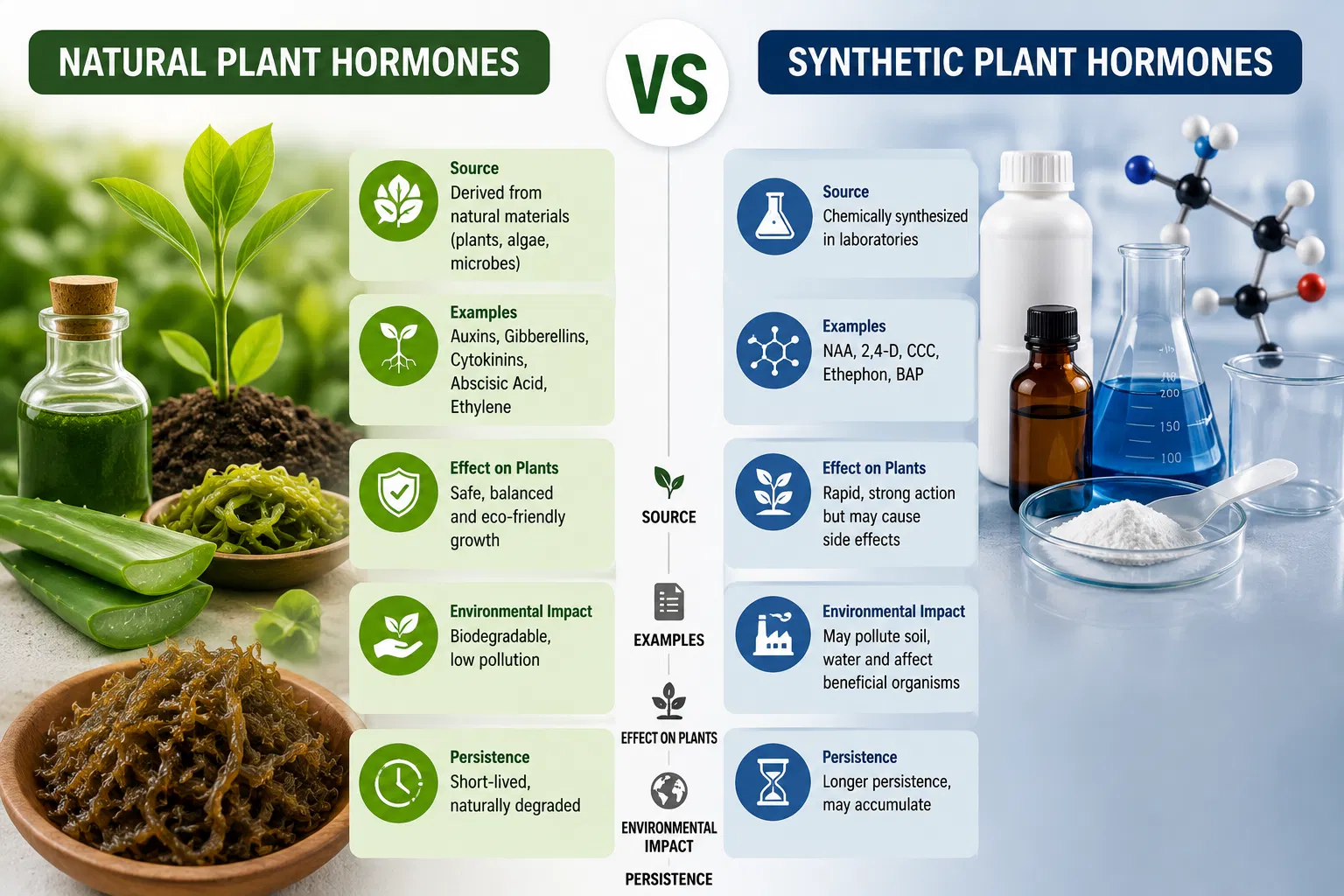
Both natural and synthetic plant hormones are designed to influence these same processes, but they differ in origin, formulation, and how predictably they perform.
Natural Plant Hormones: What They Are
Natural plant hormones are produced by plants themselves or derived from natural sources such as seaweed, compost extracts, humic substances, and plant tissues. They often contain hormone-like compounds along with vitamins, amino acids, and trace minerals that may support overall plant health.
Examples include:
- Seaweed extracts rich in natural cytokinins and auxin-like compounds
- Willow water, sometimes used for rooting support
- Compost teas and botanical extracts that contain growth-stimulating substances
Natural options are often favored in organic gardening and sustainable agriculture because they tend to work in a more balanced, gradual way.
Advantages of Natural Plant Hormones
- Gentler action – they usually support growth without forcing dramatic changes
- Organic-friendly – many are suitable for organic growing systems
- Improved soil health – natural inputs may contribute to microbial activity and nutrient cycling
- Multi-benefit formulas – often include additional nutrients and bioactive compounds
Limitations of Natural Plant Hormones
- Less consistency – concentration can vary from batch to batch
- Slower results – effects may take longer to appear
- Lower precision – harder to control exact hormone levels
Synthetic Plant Hormones: What They Are
Synthetic plant hormones are laboratory-made compounds designed to mimic natural plant hormones. They are engineered for stability, potency, and repeatable performance. In commercial agriculture and horticulture, synthetic hormones are often used to control plant growth with greater precision.
Common synthetic plant hormones include:
- IBA (Indole-3-butyric acid) – widely used for rooting cuttings
- NAA (Naphthaleneacetic acid) – used for fruit thinning and rooting
- GA3 (Gibberellic acid) – used to improve germination and fruit development
- 2,4-D – used in some plant growth regulation and weed control applications
These compounds are popular because they can deliver fast, measurable results when used correctly.
Advantages of Synthetic Plant Hormones
- Highly consistent – predictable concentration and performance
- Fast acting – often produce visible effects quickly
- Precise application – useful in research, nurseries, and commercial crop production
- Effective in small doses – powerful even at low concentrations
Limitations of Synthetic Plant Hormones
- Risk of overuse – too much can stress or damage plants
- Not always organic – may not fit organic certification rules
- Can require careful handling – dosage and timing matter a lot
Natural vs Synthetic Plant Hormones: Main Differences
The biggest difference between natural and synthetic plant hormones is not just where they come from, but how they behave in real-world growing conditions.
- Source: Natural hormones come from plants or natural extracts; synthetic hormones are manufactured in labs
- Consistency: Synthetic products are more standardized
- Speed: Synthetic hormones often act faster
- Complexity: Natural products may contain multiple beneficial compounds beyond hormones
- Application: Synthetic hormones are often used where exact control is needed
In practice, the "better" option depends on your goals. A home gardener raising herbs may prefer a natural seaweed-based product, while a commercial nursery rooting thousands of cuttings may choose a synthetic auxin for uniform results.
The best plant hormone is the one that matches your crop, your growing system, and your level of control.
Which One Is Better for Rooting?
Rooting is one of the most common uses for plant hormones, especially when propagating cuttings. Both natural and synthetic options can help, but they serve different needs.
Natural rooting aids may work well for beginners, small-scale gardeners, or those who want a gentler approach. They can encourage root development without pushing growth too aggressively.
Synthetic rooting hormones, especially IBA and NAA, are often preferred when consistency and success rate matter most. They are especially useful for woody cuttings and difficult-to-root plants.
If your priority is reliable propagation, synthetic hormones often have the edge. If you want a more holistic, organic-friendly method, natural alternatives are a solid choice.
How Plant Hormones Affect Growth and Yield
Whether natural or synthetic, plant hormones can influence key growth outcomes:
- Stronger root systems for improved water and nutrient uptake
- Better flowering in some species when hormone balance is optimized
- Improved fruit set and development in commercial crops
- Controlled plant height for more manageable growth
- Enhanced stress response when used as part of a broader care strategy
However, plant hormones are not magic. They work best when plants already have the basics covered: light, water, nutrients, temperature, and healthy growing media.
Are Natural Plant Hormones Safer?
Many growers assume natural automatically means safer, but that is only partly true. Natural plant hormones are often perceived as milder and more environmentally friendly, yet they still need to be used correctly. Too much of a natural product can still disrupt growth.
Synthetic plant hormones are not inherently dangerous when used properly, but they demand more attention to dosage and timing. Misapplication can lead to abnormal growth, poor flowering, reduced yields, or plant stress.
In short, safety depends more on how a hormone is used than whether it is natural or synthetic.
How to Choose the Right Plant Hormone
When deciding between natural vs synthetic plant hormones, ask yourself these questions:
- What is my goal? Rooting, flowering, ripening, or stress recovery?
- How precise do I need to be? Do I need exact control or broad support?
- Am I growing organically? If yes, natural products may be a better fit.
- What crop am I growing? Different plants respond differently to hormone treatments.
- How experienced am I? Beginners may prefer simpler, gentler formulations.
For many growers, a balanced approach works best. Natural inputs can support long-term plant vigor, while synthetic hormones can be reserved for targeted tasks that require accuracy.
Conclusion: Choose Based on Purpose, Not Labels
The debate over natural vs synthetic plant hormones is not about one being universally better than the other. It is about matching the right tool to the right task. Natural plant hormones offer a softer, often more sustainable approach, while synthetic plant hormones provide precision, reliability, and speed.
For the best results, focus on your plant's needs, your growing method, and your desired outcome. When used wisely, both natural and synthetic plant hormones can help plants grow stronger, root faster, and perform better.
Final insight: The smartest growers do not choose based on trend alone—they choose based on results, responsibility, and the specific needs of the plant.