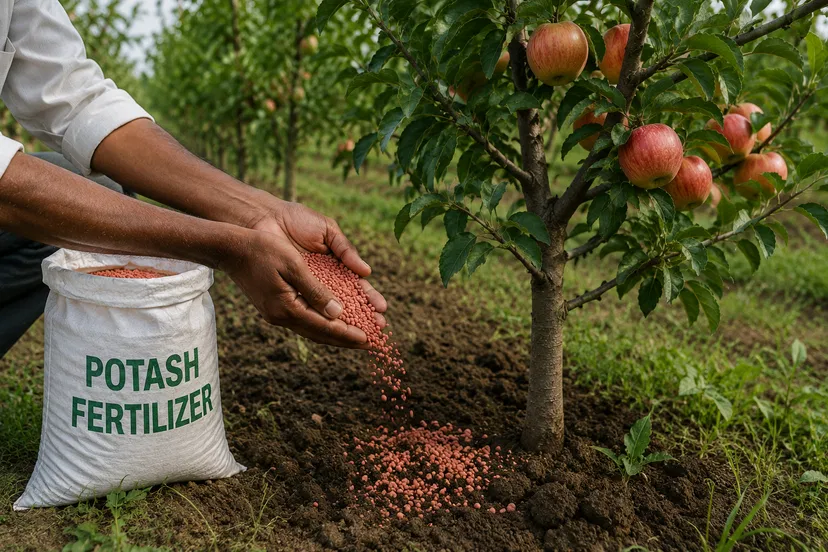
Choosing between MOP and SOP is one of the most practical decisions you can make when planning a fertilization program. Both are potassium fertilizers, both help plants grow stronger, and both can boost yield. But they are not interchangeable. The best choice depends on your crop, soil conditions, water quality, and budget.
If you’ve ever wondered whether to use MOP (muriate of potash) or SOP (sulfate of potash), this guide breaks down the differences in a simple, crop-focused way so you can make a smarter decision.
What Is MOP?
MOP, or muriate of potash, is potassium chloride. It is the most widely used potassium fertilizer in agriculture because it is highly concentrated and usually the most affordable source of potassium.
Its main nutrient is potassium, typically around 60% K2O. That makes it an efficient option for supplying large amounts of potassium to many crops.
What Is SOP?
SOP, or sulfate of potash, is potassium sulfate. It also supplies potassium, usually around 50% K2O, but it includes sulfur as well. That makes it valuable for crops that need extra sulfur or are sensitive to chloride.
SOP is often preferred in high-value agriculture where crop quality matters as much as yield, such as fruits, vegetables, nuts, and specialty crops.
MOP vs SOP: The Main Differences
Although both fertilizers provide potassium, their composition and crop effects are quite different.
- MOP contains chloride.
- SOP contains sulfur and no chloride.
- MOP is usually cheaper.
- SOP is often better for chloride-sensitive crops.
- MOP is ideal for many broad-acre crops.
- SOP is commonly used for premium-quality produce.
The right choice is less about which one is “better” overall and more about which one fits your crop and soil situation.
When to Choose MOP
MOP is a strong choice when your goal is to provide potassium economically. It is widely used in crops that tolerate chloride well and in situations where fertilizer cost is a major factor.
Best Uses for MOP
- Cereals such as wheat and corn
- Oilseeds like canola and sunflower
- Forage crops
- Large-scale row crops
- Soils with low chloride risk
MOP works well when chloride is not a concern and when the crop does not require sulfur from the fertilizer program. Because it is more affordable, it can be a practical choice for farmers applying potassium over large acreages.
If your crop is chloride-tolerant and your budget matters, MOP is often the most cost-effective potassium fertilizer.
When to Choose SOP
SOP is the better option when crop quality, chloride sensitivity, or sulfur nutrition matters. It provides potassium without chloride, which helps reduce the risk of yield loss or quality issues in sensitive crops.
Best Uses for SOP
- Fruits such as grapes, citrus, apples, and berries
- Vegetables such as potatoes, tomatoes, onions, and lettuce
- Nuts such as almonds and walnuts
- Chloride-sensitive greenhouse crops
- Fields with saline or chloride-rich soils
SOP is especially valuable when sulfur deficiency is also a concern. The sulfate in SOP gives plants an added sulfur source, supporting protein formation, enzyme activity, and overall plant health.
How Chloride Affects Crop Choice
One of the biggest differences between MOP and SOP is chloride. Chloride is not always harmful, and many crops use it in small amounts. However, some crops react poorly to high chloride levels, especially when grown under dry conditions or in soils already containing salts.
Chloride-sensitive crops may show reduced quality, lower yields, or stress symptoms if MOP is used heavily. In these cases, SOP is the safer choice.
On the other hand, chloride-tolerant crops can often use MOP with no issue, making it the more economical option.
How Soil Conditions Influence the Decision
Your soil plays a major role in deciding between MOP and SOP. Sandy soils, saline soils, and fields with poor leaching can accumulate chloride more easily. In those cases, repeated MOP applications may increase stress on sensitive crops.
Soil sulfur status also matters. If tests show low sulfur, SOP can solve two problems at once: potassium supply and sulfur supplementation.
Soil testing is the smartest starting point. It helps determine not only potassium needs, but also whether chloride or sulfur should influence your fertilizer choice.
Cost Comparison: MOP vs SOP
Cost is one of the clearest differences between the two fertilizers. MOP is usually significantly cheaper per unit of potassium. That makes it attractive for bulk use in commodity crops.
SOP costs more, but the higher price may be justified if it improves crop quality, protects sensitive crops, or corrects sulfur deficiency. In high-value farming, even small gains in quality can offset the extra fertilizer cost.
The real question is not which fertilizer costs less upfront, but which one delivers the best return on investment for your crop.
Which One Gives Better Yield?
There is no universal winner. Yield response depends on crop type, soil conditions, and nutrient balance.
For tolerant crops, MOP can produce excellent yields at a lower cost. For sensitive crops, SOP may deliver better yields and better marketable quality because it avoids chloride stress.
In many cases, the yield difference comes not from potassium itself, but from the added effects of chloride or sulfur.
Quick Decision Guide
Use this simple guide to narrow down your choice:
- Choose MOP if your crop is chloride-tolerant and you want the most economical potassium source.
- Choose SOP if your crop is chloride-sensitive or you need sulfur along with potassium.
- Choose SOP if you grow high-value fruits, vegetables, or nuts where quality is critical.
- Choose MOP for broad-acre crops where cost efficiency matters most.
- Base the final decision on soil testing and crop-specific nutrient requirements.
Best Practices for Using Potassium Fertilizer
Whether you choose MOP or SOP, proper application matters just as much as product selection.
- Apply based on soil test recommendations
- Match fertilizer choice to crop sensitivity
- Avoid excessive potassium applications
- Consider split applications where appropriate
- Watch irrigation water and soil salinity levels
- Consult local agronomy guidance for crop-specific rates
Balanced nutrition leads to better results than relying on potassium alone. Nitrogen, phosphorus, sulfur, and micronutrients all influence how well crops respond to potassium fertilization.
Final Verdict: MOP vs SOP
If you want the cheapest and most widely used potassium fertilizer, MOP is usually the best fit. If you need chloride-free potassium with added sulfur, SOP is the better choice.
In simple terms:
- MOP = budget-friendly, high potassium, chloride included
- SOP = premium, chloride-free, includes sulfur
The best fertilizer is the one that matches your crop’s needs, your soil’s conditions, and your production goals. For large-scale, tolerant crops, MOP often wins on value. For sensitive, high-value crops, SOP usually wins on performance.
Before you buy, test your soil, check your crop requirements, and compare cost against expected return. That small step can make a big difference in yield, quality, and profitability.