Microgreens have become one of the most exciting opportunities in modern agriculture. They grow fast, need very little space, and can be sold at premium prices to restaurants, grocery stores, farmers' markets, and health-conscious consumers. If you're looking for a small business with low startup costs and strong return potential, a microgreens business is worth serious attention.
What makes microgreens especially attractive is their quick turnaround. In many cases, you can harvest within 7 to 21 days, which means faster cash flow compared to traditional crops. With the right setup, smart pricing, and consistent sales channels, microgreens can become a highly profitable small-scale business.
Why Start a Microgreens Business?
A microgreens business is appealing because it combines simplicity with strong market demand. Microgreens are young edible greens harvested just after the first true leaves develop. They are popular for their flavor, nutrition, and visual appeal.
- Low space requirement: You can start in a spare room, garage, basement, or small greenhouse.
- Fast harvest cycle: Most crops are ready in 1 to 3 weeks.
- High market value: Microgreens often sell at a premium compared to mature greens.
- Year-round production: Indoor growing allows consistent output regardless of weather.
- Flexible business model: Sell to chefs, retailers, subscription customers, and local markets.
For entrepreneurs seeking a practical business with measurable returns, microgreens offer an ideal mix of low risk and high potential.
How to Set Up a Microgreens Business
Starting a microgreens business does not require a huge farm or expensive equipment. The focus should be on creating a clean, efficient growing system that supports repeatable production.
1. Choose Your Growing Space
You need a controlled indoor environment with enough room for shelving, trays, lights, and airflow. Common options include:
- A spare room
- A garage
- A basement
- A small greenhouse
- A rented commercial grow space
The space should be dry, clean, and easy to sanitize. Good ventilation is important to reduce mold and maintain plant health.
2. Select Microgreens to Grow
Some varieties are easier and more profitable for beginners than others. Popular options include:
Start with a few high-demand crops that germinate reliably and have short growing cycles. Radish, broccoli, and sunflower are often good starting points because they are relatively easy to grow and sell well.
3. Gather the Basic Equipment
A microgreens setup is simple, but quality matters. Your core equipment will likely include:
- Growing trays
- Seed starting mix or growing medium
- High-quality seeds
- LED grow lights
- Shelving racks
- Misters or watering tools
- Fans for airflow
- Labels and packaging supplies
Using durable trays and reliable lights can improve consistency and reduce crop failure. Seed quality is especially important because poor seeds lead to poor germination and lower yields.
4. Build a Production Routine
Success in microgreens depends on consistency. Set up a weekly production schedule so that new trays are seeded regularly and harvests are staggered. This keeps your supply steady and helps you build dependable customer relationships.
A simple routine might include:
- Seed trays on Monday
- Water and monitor crops daily
- Move trays under light after germination
- Harvest the first batch in 7 to 21 days
- Clean and reset trays for the next cycle
This rhythm allows you to generate income more consistently rather than waiting for one large harvest.
Microgreens Business Startup Costs
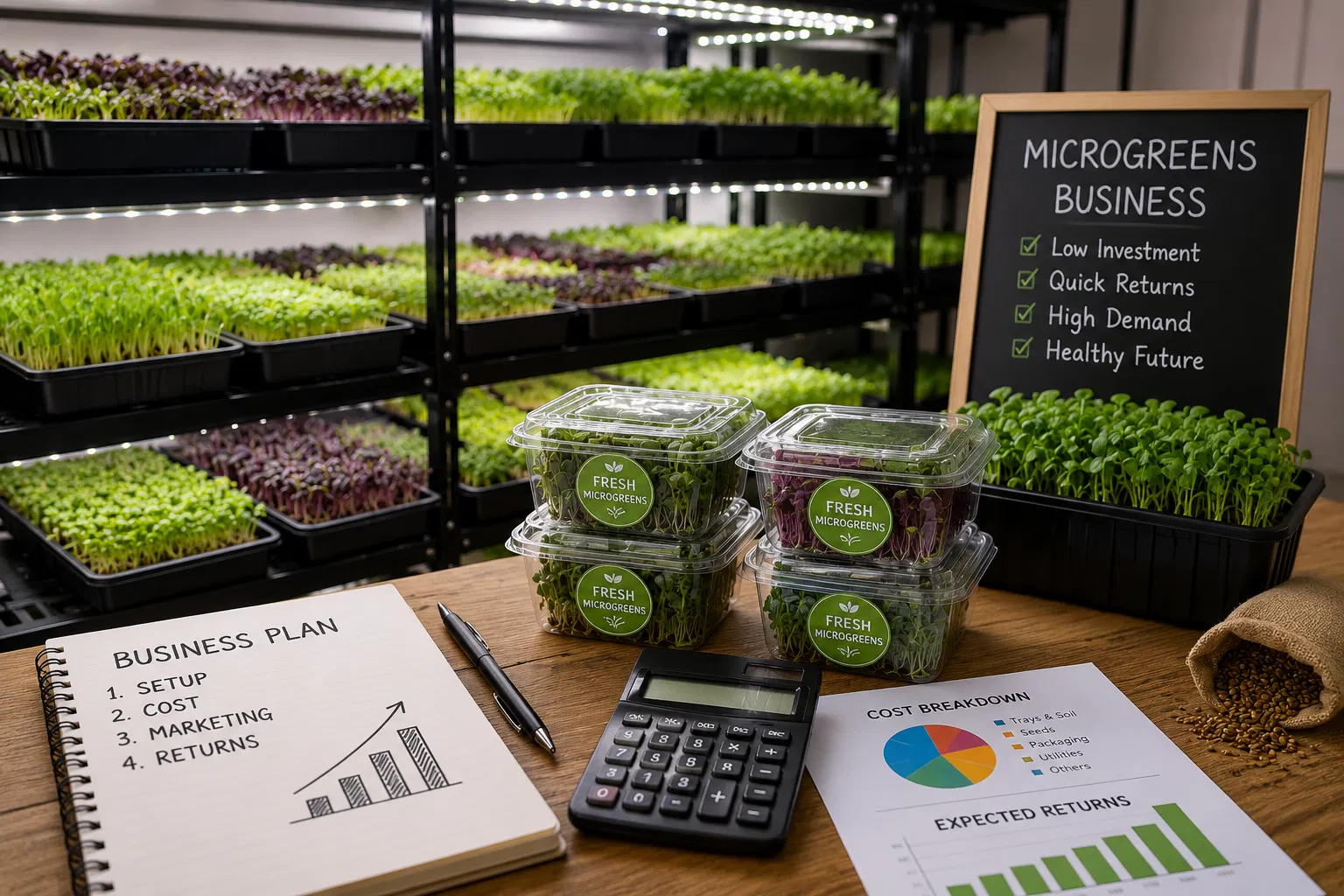
One of the biggest advantages of this business is affordability. Startup costs vary depending on your scale, but a small home-based operation can begin with a modest investment.
Typical Startup Cost Breakdown
- Trays and shelving: $100 to $500
- LED grow lights: $100 to $600
- Seeds: $50 to $300
- Growing medium: $30 to $150
- Fans and ventilation: $30 to $150
- Watering tools and supplies: $20 to $100
- Packaging and labels: $50 to $200
- Business registration and permits: Varies by location
A very small home setup may cost as little as $300 to $800 to get started. A more professional setup with better lighting, larger shelving, and higher output capacity may require $1,500 to $5,000 or more.
Important note: The biggest ongoing costs are usually seeds, packaging, water, electricity, and delivery. Because microgreens grow quickly, inventory turnover is fast, which helps offset expenses.
Microgreens Profit Margins and Returns
Microgreens can be highly profitable when grown and sold efficiently. Since the crop is lightweight, fast-growing, and sold at premium prices, margins can be strong.
Retail prices often range from $20 to $40 per pound or more, depending on the variety and market. Some chefs and specialty buyers may pay even higher rates for fresh, locally grown product.
The most profitable microgreens businesses are built on repeat customers, not just harvest volume.
What Affects Profitability?
- Crop selection: High-demand varieties sell faster and often command better prices.
- Yield per tray: Higher yields improve revenue without significantly increasing labor.
- Sales channel: Direct sales usually bring better margins than wholesale.
- Labor efficiency: A streamlined workflow reduces time and waste.
- Crop consistency: Repeatable quality builds trust and recurring orders.
For example, if one tray costs a few dollars to produce and sells for much more as packaged greens, the margin can be attractive. A small grower producing 20 to 50 trays per week may generate meaningful monthly income, especially with direct-to-chef or direct-to-consumer sales.
Expected Return Potential
Returns depend on scale, pricing, and sales strategy. Many small growers focus first on reaching break-even, then expanding production as demand increases. Once a business has established customers and efficient production, microgreens can deliver strong cash flow relative to the initial investment.
A realistic goal for a beginner is to build a small but stable customer base and gradually increase weekly output. This reduces risk while improving long-term returns.
How to Sell Microgreens
Growing the crop is only half the business. Selling consistently is what turns a hobby into a real business.
Best Sales Channels
- Restaurants: Chefs value freshness, flavor, and local sourcing.
- Farmers' markets: Great for direct customer feedback and premium pricing.
- Grocery stores: Smaller local stores may carry fresh packaged greens.
- Subscription boxes: Offer weekly or biweekly delivery to households.
- Health stores and juice bars: Strong fit for nutrient-rich produce.
- Online and social media: Useful for local ordering and brand building.
Direct sales usually provide the best profit margins. Restaurants can become especially valuable if you can deliver reliable quality on a regular schedule.
Tips for Success in the Microgreens Business
To build a sustainable business, focus on systems rather than guesswork. Small improvements in process can have a major impact on profit.
- Test crops before scaling: Grow small batches to identify best sellers.
- Keep records: Track seed cost, yield, sales price, and waste.
- Maintain cleanliness: Sanitation reduces mold and crop loss.
- Use staggered planting: This ensures regular harvests and cash flow.
- Build relationships: Repeat buyers create predictable revenue.
- Package professionally: Good presentation improves perceived value.
It is also smart to learn your local food safety requirements and labeling rules before expanding. Compliance protects your business and builds customer trust.
Conclusion
A microgreens business is one of the most practical low-cost food ventures for aspiring entrepreneurs. With a simple setup, manageable startup costs, and strong profit potential, it offers a real path to income for growers who value consistency and quality.
If you are ready to start small, test your market, and build a repeatable growing system, microgreens can become a profitable business with room to grow. The key is to begin with a focused setup, sell strategically, and reinvest in better production as demand increases.
Start with a few trays, a few crops, and a clear sales plan—and let fast-growing microgreens build your business one harvest at a time.