If you want a simple, low-cost way to reduce pest pressure in your vegetable garden, marigold may be one of the smartest plants you can grow. More than just a bright border flower, marigold can work as a trap crop in vegetable farming, helping lure harmful insects away from your main crops and making pest management easier without relying heavily on chemicals.
Used correctly, marigolds can support healthier vegetables, improve garden diversity, and fit neatly into an integrated pest management plan. Whether you grow tomatoes, peppers, beans, cucumbers, or leafy greens, marigolds can be a valuable companion plant with real practical benefits.
What Is a Trap Crop?
A trap crop is a plant grown to attract pests away from a more valuable crop. Instead of allowing insects to feed on your vegetables, you offer them a preferred "sacrifice" plant nearby. Once pests gather on the trap crop, you can monitor, remove, or treat them more easily.
In vegetable farming, trap crops are used to:
- Reduce damage to main crops
- Concentrate pests in one area
- Improve pest monitoring
- Lower pesticide use
- Support more sustainable farming practices
Marigold is especially popular because it is easy to grow, fast to establish, and produces strong scents and bright flowers that can influence insect behavior.
Why Marigold Works as a Trap Crop
Marigolds are not magical pest-proof plants, but they can help in several ways. Their scent, color, and flower structure may attract certain insects while discouraging others. In some cases, marigolds draw pests away from vegetables. In other situations, they confuse pests or attract beneficial insects that help reduce pest populations naturally.
Marigold as a trap crop is commonly associated with helping manage:
- Whiteflies
- Aphids
- Thrips
- Root-knot nematodes
- Some beetles and other soft-bodied insects
One of the best-known uses of marigold in vegetable farming is against root-knot nematodes. Certain marigold varieties release compounds that can suppress nematode populations in the soil, making them especially valuable in beds where tomatoes, peppers, okra, or other susceptible crops are grown repeatedly.
Best Marigold Types for Vegetable Gardens
Not all marigolds are equally useful in pest management. The most commonly recommended types include:
French Marigold (Tagetes patula)
French marigolds are often used for nematode suppression and companion planting. They are compact, easy to manage, and ideal for edging beds or filling gaps between rows.
African Marigold (Tagetes erecta)
African marigolds grow taller and produce larger blooms. They can be effective as perimeter plants and are highly attractive to pollinators and some pest insects, depending on the garden setup.
Signet Marigold (Tagetes tenuifolia)
Signet marigolds are smaller and more delicate, with finely divided foliage and edible flowers. They are useful in mixed plantings and smaller garden spaces.
Tip: If your main goal is nematode control, French marigolds are often the first choice. If you want visible border plantings and insect diversity, African marigolds can be a strong option.
How to Use Marigold as a Trap Crop in Vegetable Farming
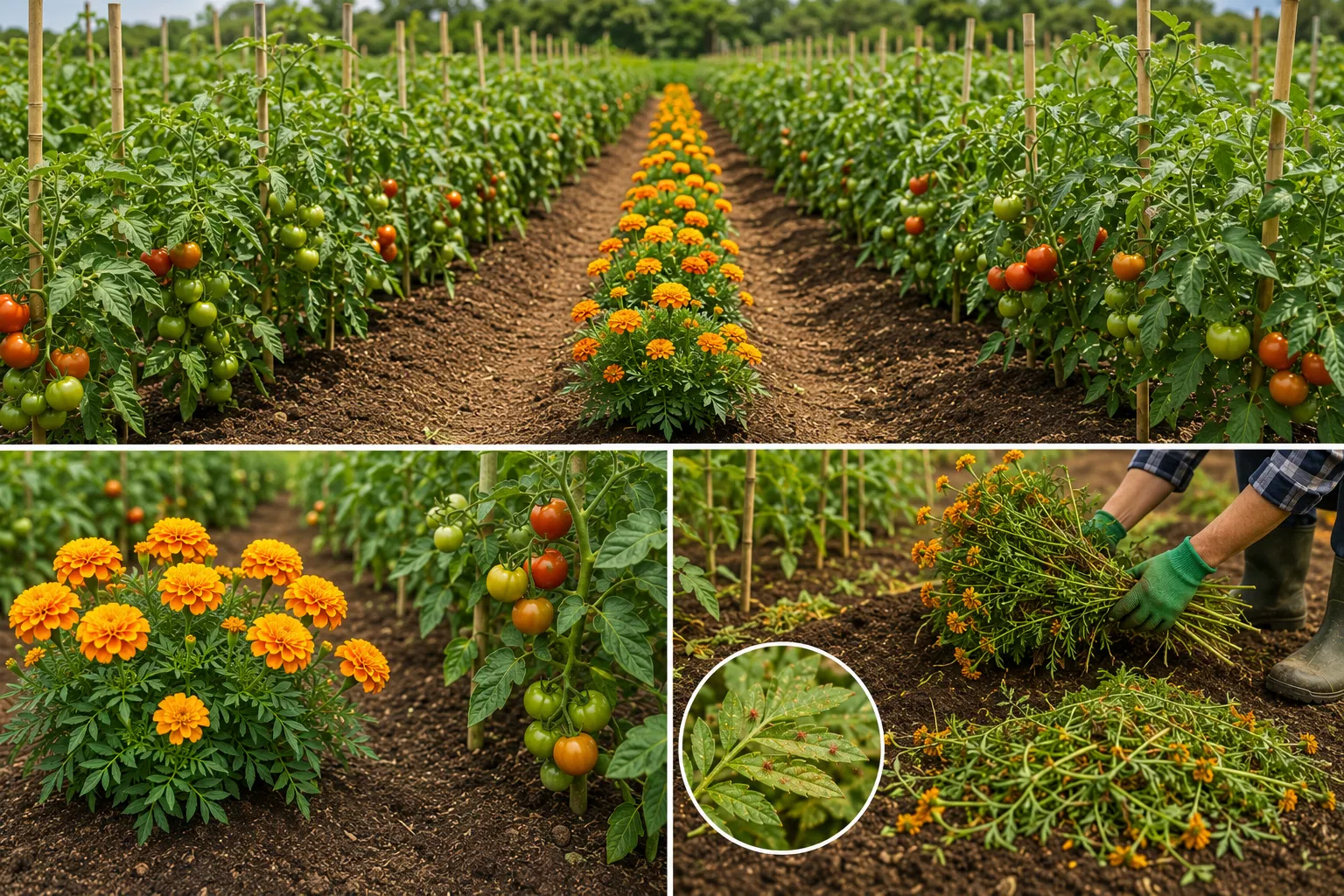
To get the most from marigold as a trap crop, placement matters. The goal is not just to plant marigolds anywhere in the garden, but to position them where pests are likely to encounter them first.
- Plant marigolds around the perimeter of vegetable beds to create a protective border.
- Place them at row ends where pests often enter or travel through the field.
- Use them in blocks or clusters rather than scattering them randomly.
- Combine them with regular scouting so you can check where pests are concentrating.
- Remove heavily infested marigolds if they begin to act as pest reservoirs instead of trap crops.
For best results, marigolds should be planted early enough to become established before pest pressure peaks. Healthy, vigorous plants are more attractive and more effective in supporting a balanced garden environment.
Vegetables That Benefit Most from Marigold Trap Cropping
Marigolds can be useful in many vegetable systems, but they are especially helpful around crops that are prone to insect pressure or soil-borne pest problems.
- Tomatoes – Often affected by nematodes, whiteflies, and aphids
- Peppers – Benefit from reduced soil pest pressure and insect diversion
- Beans – Can be supported by border plantings that interrupt pest movement
- Eggplants – Often susceptible to flea beetles and aphids
- Cucumbers and squash – May benefit from better pest monitoring and habitat diversity
- Leafy greens – Can gain protection from certain flying insects and improved beneficial insect activity
Marigolds are not a complete pest control solution on their own, but they can reduce pressure enough to make a noticeable difference in plant health and yield.
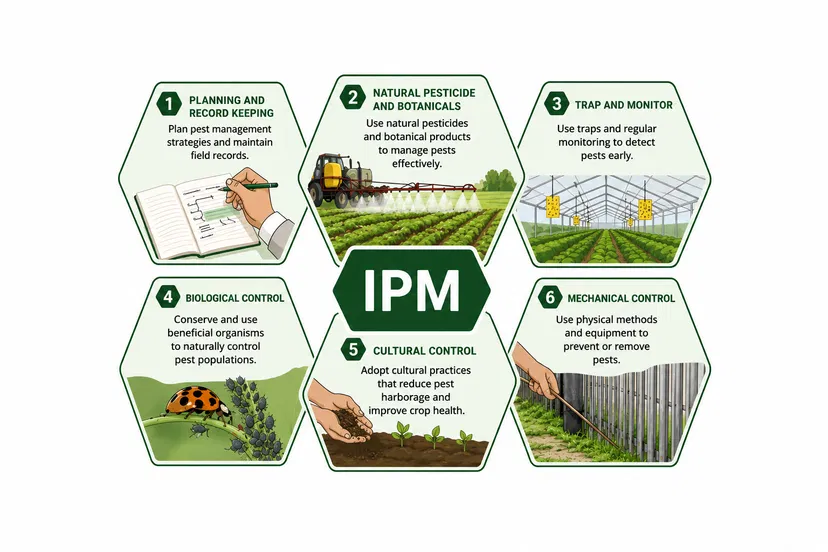
Marigold and Integrated Pest Management
The most effective use of marigold as a trap crop comes when it is part of an integrated pest management strategy. That means combining biological, cultural, and physical methods instead of relying on a single tactic.
Useful complementary practices include:
- Crop rotation
- Hand-picking pests
- Using row covers on young plants
- Encouraging beneficial insects
- Maintaining healthy soil
- Watering properly to avoid plant stress
When marigolds are paired with these methods, they become part of a stronger and more resilient pest management system.
Healthy vegetable farming is not about eliminating every insect. It is about creating a system where pests are less likely to overwhelm your crops.
Common Mistakes to Avoid
Marigolds are easy to grow, but a few mistakes can limit their usefulness as trap crops.
Planting Too Few
A single marigold plant in a large vegetable bed will not create much pest diversion. Use enough plants to form a meaningful border or cluster.
Poor Placement
If marigolds are hidden in the middle of the garden with no strategy, they may not intercept pests effectively.
Ignoring Pest Monitoring
Trap crops work best when you inspect them regularly. If pests build up on marigolds, you may need to remove affected plants or apply treatment to prevent spread.
Expecting Complete Pest Control
Marigolds can help reduce pest pressure, but they do not replace good gardening practices. Think of them as a support tool, not a stand-alone solution.
How to Grow Marigolds for Maximum Effect
To make marigold a strong trap crop in vegetable farming, give it the right growing conditions.
- Sunlight: Full sun for best flowering
- Soil: Well-drained soil with moderate fertility
- Water: Regular watering until established, then moderate care
- Spacing: Enough room for airflow and strong bloom production
- Maintenance: Deadhead flowers to keep plants blooming longer
Healthy, flowering marigolds are more likely to attract and influence insect activity than weak or stressed plants. The more vigorous the plant, the better its chances of serving its role in the garden.
Final Thoughts on Marigold as a Trap Crop
Marigold is more than a decorative flower. In vegetable farming, it can be a practical, attractive, and sustainable tool for reducing pest problems and supporting healthier crops. When used thoughtfully, marigold as a trap crop can help protect tomatoes, peppers, beans, and other vegetables while improving the overall balance of the garden.
If you are looking for a natural way to strengthen your pest management strategy, start by planting marigolds along bed edges, near vulnerable crops, or in targeted clusters. Combine them with regular monitoring and good farm practices, and you may see fewer pest issues and more productive vegetables throughout the season.
Try marigolds in your next planting plan and see how much difference a smart companion crop can make.