If aphids are damaging your garden plants or household pests keep coming back, you may be looking for a fast-acting solution. Malathion is a commonly used insecticide that can help control a range of pests, including aphids and certain household invaders, when applied correctly. But like any pesticide, it works best when you understand what it does, where it fits, and how to use it safely.
In this guide, we’ll cover how malathion works for aphids and household pests, where it can be effective, and the most important precautions to keep in mind before spraying.
What Is Malathion?
Malathion is an organophosphate insecticide designed to kill insects by disrupting their nervous system. It is used in some agricultural, ornamental, and public health settings to manage pest infestations. Depending on the formulation, malathion may be available as a concentrate, ready-to-use spray, or dust.
Because it targets a broad range of insects, malathion is often considered when gardeners or homeowners need a quick knockdown treatment for active pest problems. However, it should always be used according to label directions.
How Malathion Works on Aphids
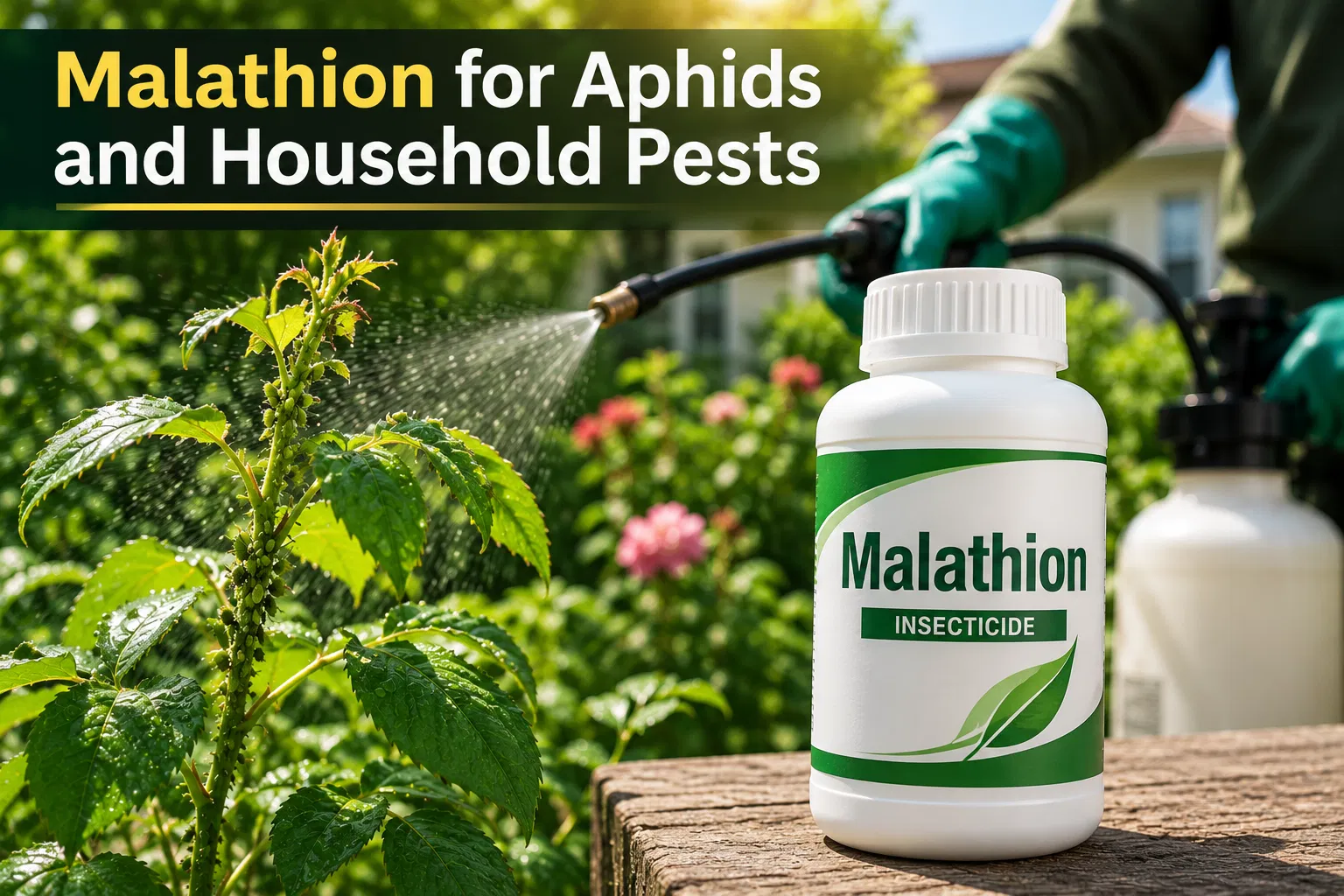
Aphids are soft-bodied insects that feed on plant sap and can multiply rapidly. They often cluster on new growth, undersides of leaves, and flower buds, causing curling leaves, stunted growth, and sticky honeydew buildup.
Malathion can help control aphids by contacting the insects directly and interfering with their nervous system. This can reduce infestations when plants are heavily affected and other methods are not enough.
Best Uses for Aphid Control
- Ornamental plants with active aphid infestations
- Garden plants showing visible leaf curling or honeydew
- Situations where rapid reduction of aphid numbers is needed
For best results, spray when aphids are actively present and ensure thorough coverage of affected areas, especially the undersides of leaves where aphids hide.
Tip: Malathion is most effective when it makes direct contact with pests. Missed coverage can leave aphids alive and allow populations to rebound quickly.
Can Malathion Be Used for Household Pests?
Malathion may be used for certain household pests, but only when the product label specifically allows it. It is not a general-purpose indoor spray for every insect problem. Some formulations are intended for outdoor use, gardens, or specific pest situations only.
Common pests that may be controlled with approved malathion products include selected flies, mosquitoes, and other nuisance insects, depending on the label. It is important to identify the pest first and confirm that malathion is labeled for that use.
Household Pest Situations Where It May Be Considered
- Outdoor areas with frequent flying insects
- Vegetation near the home where pests are breeding or resting
- Specific labeled applications for nuisance pest control
For indoor infestations such as ants, roaches, or bed bugs, malathion is usually not the first choice unless the label explicitly states otherwise. Always match the product to the pest and location.
Important Safety Considerations
Because malathion is a pesticide, safe handling matters. Read the label carefully before using any product, and follow all instructions exactly. Never assume a product is safe for indoor use, edible crops, pets, or children unless the label clearly says so.
Key Safety Tips
- Wear protective clothing, gloves, and eye protection when applying.
- Avoid spraying on windy days to reduce drift.
- Keep children and pets away during and after application until the area is safe.
- Do not apply more than the label recommends.
- Wash hands and exposed skin after handling the product.
If you are treating food crops or plants near harvest, check the pre-harvest interval and all food-use restrictions. Improper use can lead to unsafe residues or plant damage.
When Malathion May Not Be the Best Option
Although malathion can be effective, it is not always the best or most sustainable solution. For mild aphid infestations, insecticidal soap, neem oil, a strong stream of water, or beneficial insects may work well with less risk to non-target organisms.
For household pests, exclusion, sanitation, sealing cracks, and removing breeding sites often provide longer-term control than spraying alone. In many cases, an integrated pest management approach works better than relying on one chemical treatment.
Consider Alternatives If You Want To:
- Reduce chemical exposure
- Protect pollinators and beneficial insects
- Manage pests with a longer-term prevention strategy
- Treat low-level infestations without heavy pesticide use
How to Get Better Results
To improve results with malathion, timing and coverage are critical. Apply only when the target pest is present, and repeat only if the label allows it. Avoid spraying during peak pollinator activity, especially on flowering plants.
Check plants and problem areas after treatment to see whether pest activity is dropping. If the infestation continues, reassess the pest type, application method, and environmental conditions.
Practical Steps for Success
- Identify the pest correctly before treatment
- Use the correct formulation for the intended site
- Spray all infested surfaces thoroughly
- Monitor results and reapply only as directed
- Combine treatment with cleaning, pruning, or prevention measures
Final Thoughts
Malathion for aphids and household pests can be an effective pest-control option when used carefully and only for labeled applications. It offers a fast way to reduce active infestations, but success depends on proper identification, correct timing, and safe use.
If you’re dealing with aphids in the garden or nuisance pests around the home, start by checking whether malathion is the right product for your situation. A smart, label-driven approach will protect your plants, your home, and the people and pets around them.
Before you spray, read the label, confirm the pest, and choose the safest effective method for the job.