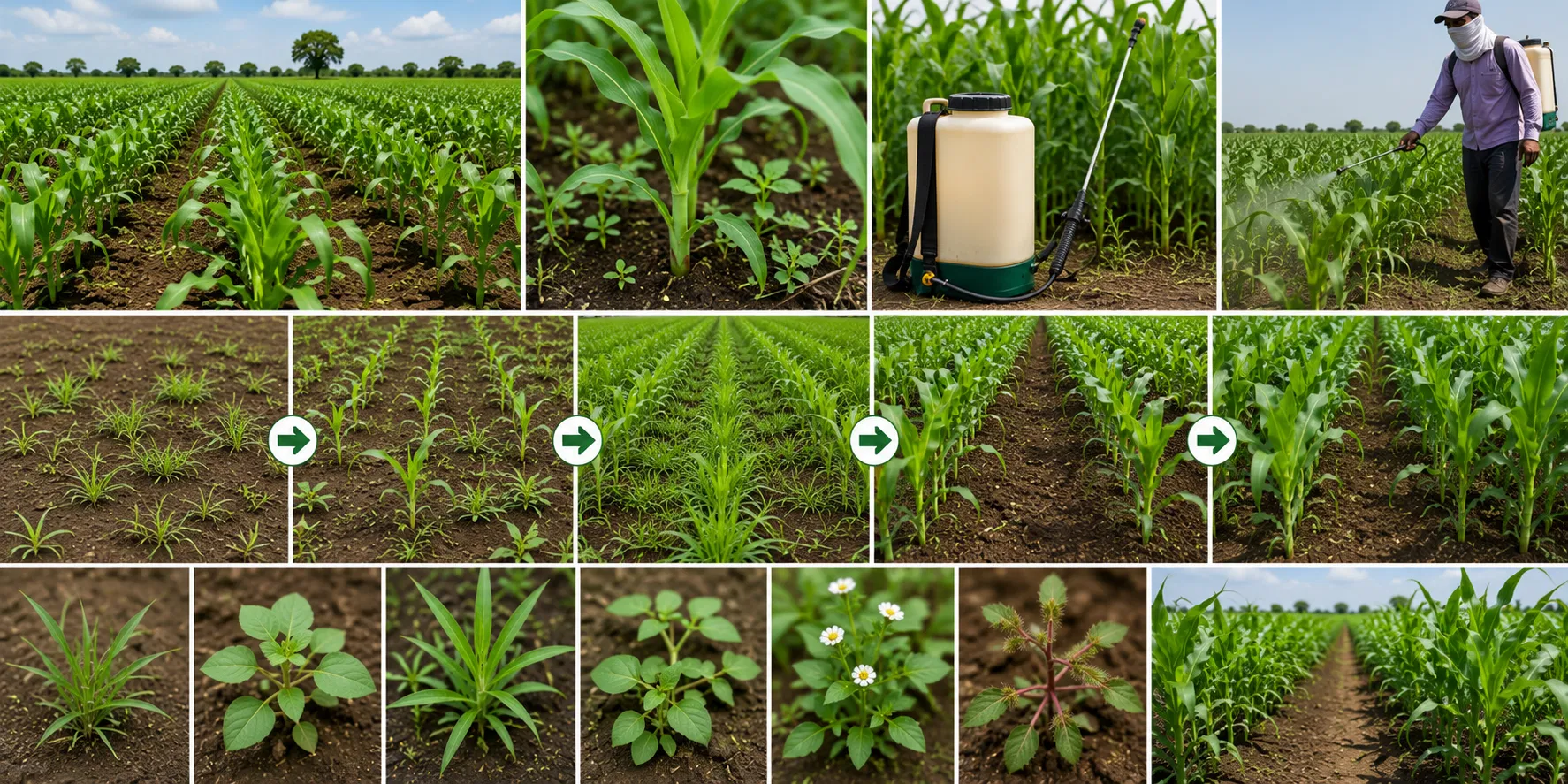
Weed pressure can take a major toll on maize yield if it is not managed early and correctly. The good news is that effective maize crop weed control is possible with the right herbicide timing, the right product selection, and careful attention to crop safety. Whether you are managing annual grasses, broadleaf weeds, or a mixed infestation, success depends on applying herbicides at the correct growth stage and following label directions closely.
This guide covers the essentials of maize weed control, including pre-emergence and post-emergence herbicide timing, safety precautions, and practical tips to protect both your crop and your return on investment.
Why Herbicide Timing Matters in Maize
Timing is one of the most important factors in weed control for maize. Weeds compete with corn plants for light, water, nutrients, and space, and early-season competition can reduce yield long before the crop looks stressed.
The earlier weeds are controlled, the better the outcome. Small weeds are easier to kill, require lower herbicide pressure, and are less likely to recover after treatment. Delayed application often leads to larger weeds, poorer control, and more crop competition.
Key rule: In maize, weed control works best when applied before weeds become well established.
Main Herbicide Timing Options for Maize
1. Pre-Plant Burndown
Pre-plant burndown herbicides are used before maize emerges to kill existing weeds and prepare a clean seedbed. This is especially helpful in no-till or reduced-till systems where winter annuals or early spring weeds are already present.
Burndown treatments help reduce early competition and can improve the effectiveness of later residual herbicides. Always check planting intervals and observe any restrictions on tank mixes or soil conditions.
2. Pre-Emergence Herbicides
Pre-emergence herbicides are applied after planting but before maize and weeds emerge. These products create a soil barrier that prevents weed seedlings from establishing.
They are especially valuable for controlling early flushes of annual grasses and broadleaf weeds. For best results:
- Apply to a well-prepared seedbed
- Use adequate soil moisture for activation
- Follow label requirements for rainfall or irrigation activation
- Choose products suited to the weed species present
Residual herbicides can provide extended control, but they should still be part of a broader weed management plan.
3. Early Post-Emergence Herbicides
Post-emergence herbicides are applied after weeds and maize have emerged. This timing is ideal when weeds are small and actively growing. Maize tolerance depends heavily on crop stage and product choice, so labels must be followed carefully.
Early post-emergence applications are often more effective than waiting until weeds are large. Most herbicides perform best when applied to weeds under favorable growing conditions, such as warm temperatures, adequate soil moisture, and no stress from drought or cold.
4. Layby Applications
Layby herbicides may be used later in the season to extend weed control into the crop’s critical yield period. These applications can help manage late-emerging weeds, especially in fields with extended weed pressure.
However, layby timing must be carefully managed to avoid crop injury and to stay within application windows specified by the herbicide label.
How to Choose the Right Herbicide for Maize
Choosing the right herbicide is just as important as timing. The best program depends on the weed spectrum, soil type, planting system, and weather conditions.
Consider the following when selecting a product:
- Weed species: Annual grasses, broadleaf weeds, and perennial weeds may require different active ingredients
- Resistance risk: Rotate herbicide modes of action to slow resistance development
- Soil texture and organic matter: Some herbicides behave differently in sandy soils or high-organic-matter fields
- Rainfall and irrigation: Residual herbicides may need moisture for activation
- Maize growth stage: Always confirm crop stage restrictions before spraying
Using herbicides with overlapping residual activity can provide stronger season-long control and reduce the need for rescue treatments.
Crop Safety Tips for Maize Herbicide Applications
Crop safety should never be overlooked. Even effective herbicides can damage maize if applied incorrectly or under stressful conditions. Following a few important precautions can help avoid injury and yield loss.
Read and Follow the Label
The herbicide label is the legal and technical guide for safe use. It lists the approved application rate, timing, crop stage, adjuvant recommendations, spray volume, and environmental restrictions. Never rely on assumptions or past experience alone.
Avoid Spraying Stressed Maize
Maize under stress is more vulnerable to herbicide injury. Avoid application when the crop is:
- Cold-stressed
- Drought-stressed
- Waterlogged
- Recently damaged by hail or wind
- Showing nutrient deficiency symptoms
Healthy, actively growing maize generally tolerates herbicides better than stressed plants.
Watch the Weather
Weather has a major impact on herbicide safety and performance. Extremely hot conditions can increase the risk of volatilization or crop burn, while very cool temperatures can slow herbicide uptake and reduce weed control. Heavy rainfall soon after application may wash away foliar products or cause herbicide movement in the soil.
Try to spray during moderate conditions with minimal wind and stable weather forecasts.
Use Correct Spray Equipment
Spray coverage and drift control are important for both efficacy and safety. Calibrate equipment properly and use nozzles that produce the droplet size recommended on the label. Fine droplets may increase drift, while poor calibration can lead to uneven coverage or over-application.
Also clean the sprayer thoroughly to prevent carryover from previous crops or herbicide applications.
Be Careful with Tank Mixes
Tank mixes can improve weed control, but they can also increase the risk of crop injury if combinations are not compatible. Some herbicide mixtures may require adjuvants, while others may become harsher under certain conditions.
Before mixing products, confirm:
- Compatibility on the label or product guide
- Crop growth stage restrictions
- Recommended adjuvant type and rate
- Local extension guidance if needed
Best Practices for Effective Maize Weed Control
A successful weed control program in maize usually combines several tactics rather than relying on one spray alone. Integrated management improves control, lowers resistance risk, and supports long-term field health.
- Scout fields early to identify weed species and growth stages
- Use residual herbicides to reduce early weed emergence
- Apply post-emergence treatments early when weeds are small
- Rotate herbicide modes of action to manage resistance
- Maintain clean field edges to reduce reinfestation
- Consider cultural practices such as narrow row spacing, cover crops, and competitive maize stands
Scouting should continue after spraying so any escapes can be identified quickly. A few surviving weeds can become a major seed source for next season.
Common Mistakes to Avoid
Even experienced growers can lose control by making a few preventable mistakes. Avoid these common errors:
- Waiting too long to spray until weeds are too large
- Using the wrong herbicide for the target weed species
- Ignoring label restrictions on crop stage or application timing
- Spraying during unfavorable weather conditions
- Overlooking sprayer calibration and nozzle selection
- Relying on one mode of action year after year
Each of these mistakes can reduce control and increase the chance of crop injury or herbicide resistance.
Final Thoughts on Maize Herbicide Timing and Safety
Strong maize weed control starts with smart timing, careful herbicide selection, and a focus on crop safety. Pre-plant, pre-emergence, and early post-emergence applications each have a role, but they work best when paired with scouting, label compliance, and good spray management.
If you want cleaner fields, healthier maize, and better yield potential, make weed control a planned strategy rather than a reaction. Start early, spray wisely, and protect the crop at every step.
Next step: Review your field history, scout current weed pressure, and build a maize herbicide plan that matches your planting system, weed spectrum, and crop stage.