When pests strike, speed matters. That’s where lambda cyhalothrin stands out. Known for its fast knockdown and long-lasting residual activity, this powerful pyrethroid insecticide is widely used in agriculture, turf management, and structural pest control to quickly suppress a broad range of insects.
Whether you are managing crop damage, protecting ornamental plants, or reducing insect pressure around a property, lambda cyhalothrin is often chosen for one key reason: it works fast. In this article, we’ll explore what lambda cyhalothrin is, how it works, what pests it targets, and why it remains a trusted option for effective insect management.
What Is Lambda-Cyhalothrin?
Lambda-cyhalothrin is a synthetic pyrethroid insecticide derived from the natural pyrethrins found in chrysanthemum flowers. It is designed to disrupt the nervous systems of insects, leading to rapid paralysis and death. Because of its effectiveness at very low application rates, it is a popular choice across multiple industries.
It is commonly used against chewing and sucking insects, including many that damage crops and landscapes. Its popularity comes from a combination of fast action, broad-spectrum control, and residual performance.
How Lambda-Cyhalothrin Works
Lambda-cyhalothrin acts on the insect nervous system by interfering with sodium channels in nerve cells. This disruption causes continuous nerve firing, which quickly leads to loss of coordination, paralysis, and eventually death.
Because insects are highly sensitive to this mode of action, lambda cyhalothrin is effective in very small amounts. That makes it efficient, but it also means proper use is essential to achieve the best results while minimizing environmental impact.
Key Benefits of Lambda-Cyhalothrin
Lambda-cyhalothrin is valued for several reasons, especially in fast-moving pest situations. Here are some of the main benefits:
- Rapid knockdown of active insect populations
- Broad-spectrum control of many pest species
- Residual activity that continues working after application
- Low application rates compared to many older insecticides
- Flexible use in agricultural, ornamental, and structural settings
These advantages make it a practical tool for integrated pest management programs when used responsibly and according to label directions.
Common Uses of Lambda-Cyhalothrin
Lambda-cyhalothrin is used in a wide variety of settings. Its versatility is one reason it remains a top choice for pest professionals and growers alike.
Agricultural Use
In agriculture, lambda cyhalothrin is used to protect crops from damaging insects that can reduce yield and quality. It is applied to many crop types, including vegetables, grains, fruits, and row crops, depending on local registration and label requirements.
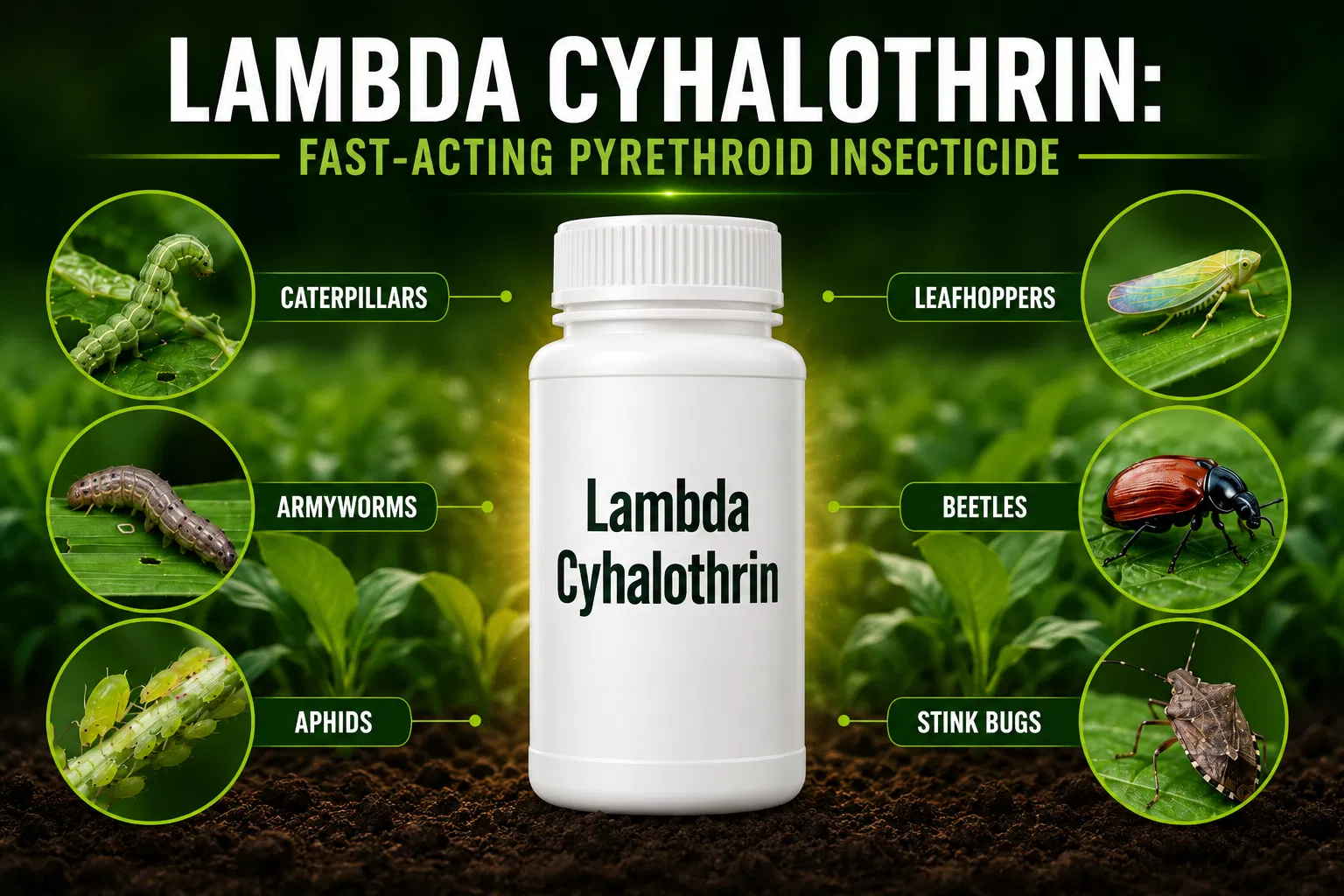
Typical target pests may include:
- Caterpillars
- Armyworms
- Aphids
- Leafhoppers
- Beetles
- Stink bugs
Landscape and Turf Management
For turf and ornamental plants, lambda cyhalothrin helps reduce insect pressure that can damage grass, shrubs, and decorative plants. It is especially useful when visible insect activity needs to be stopped quickly.
Structural and Perimeter Pest Control
In some settings, lambda-cyhalothrin is used around foundations, building perimeters, and other exterior areas to help control nuisance and invading insects. Its residual effect makes it useful for keeping pests from reestablishing quickly after treatment.
Target Pests Controlled by Lambda-Cyhalothrin
One of the biggest strengths of lambda cyhalothrin is its broad pest spectrum. It can control many insects that feed on plants or invade managed spaces. Depending on the product label, it may help manage:
- Ants
- Cockroaches
- Spiders
- Ticks
- Fleas
- Cutworms
- Weevils
- Thrips
- Hornworms
Because pest susceptibility can vary by species and region, it is important to confirm whether the product is labeled for the specific pest you need to control.
Why Speed Matters in Insect Control
Fast-acting insecticides are especially valuable when pest populations are increasing quickly or damage is already visible. Lambda-cyhalothrin provides fast knockdown, which helps stop feeding activity before more harm is done.
In pest management, early intervention can make the difference between minor damage and major loss.
This is particularly important in crop production, where insects can reduce yield in just a few days. A rapid-response insecticide like lambda cyhalothrin can help buy time and reduce pressure while broader management strategies are implemented.
Best Practices for Using Lambda-Cyhalothrin
To get the most from lambda cyhalothrin, careful application matters. Like all insecticides, it should be used according to the product label and local regulations.
- Identify the pest correctly before application.
- Use the labeled rate for the target site and pest.
- Apply at the right timing for maximum effectiveness.
- Avoid unnecessary repeat applications to reduce resistance risk.
- Rotate modes of action when possible as part of resistance management.
- Protect beneficial insects by avoiding applications during pollinator activity.
Good timing and correct coverage often make as much difference as the product itself. Even a high-performing insecticide works best when paired with smart pest monitoring and integrated pest management practices.
Resistance Management and Environmental Considerations
Because lambda-cyhalothrin belongs to the pyrethroid class, resistance can develop in pest populations that are repeatedly exposed. This is why rotation with other insecticide groups is so important.
Using lambda cyhalothrin responsibly helps preserve its effectiveness over time. It also reduces the likelihood of unwanted effects on non-target organisms. Careful application, buffer zones, and label compliance are all part of responsible insect control.
Another key consideration is its impact on beneficial insects. While lambda cyhalothrin is effective against pests, it can also affect pollinators and natural enemies if misused. For that reason, applications should be targeted, timed thoughtfully, and limited to necessary treatments.
Is Lambda-Cyhalothrin Right for Your Pest Problem?
Lambda-cyhalothrin is a strong choice when you need fast-acting control and broad-spectrum insect suppression. It is especially useful when pests are actively feeding or when a quick reduction in insect numbers is critical.
It may be the right option if you need:
- Immediate knockdown of an insect outbreak
- Residual protection after treatment
- A versatile insecticide for multiple settings
- A proven pyrethroid for common pest species
However, if resistance, pollinator sensitivity, or specific label restrictions are concerns, it may be better to combine lambda cyhalothrin with other strategies rather than rely on it alone.
Conclusion
Lambda-cyhalothrin remains one of the most recognized fast-acting pyrethroid insecticides because it delivers what many pest situations demand most: speed, reliability, and broad pest control. From agricultural fields to landscapes and perimeter treatments, its rapid knockdown and residual performance make it a valuable part of modern pest management.
If you are looking for an insecticide that works quickly and fits into a well-planned control program, lambda cyhalothrin is worth serious consideration. For the best results, always follow the product label, apply it at the right time, and use it as part of an integrated approach to long-term pest control.