Natural farming is gaining attention for one simple reason: it works with nature instead of against it. Among the most talked-about inputs in this approach are Jeevamrutha and Beejamrutha. These traditional formulations are widely used in sustainable agriculture to improve soil health, support seed germination, and reduce dependence on chemical fertilizers and pesticides.
If you are exploring natural farming inputs, understanding these two preparations is essential. They are affordable, easy to make, and central to many regenerative farming practices.
What Is Jeevamrutha?
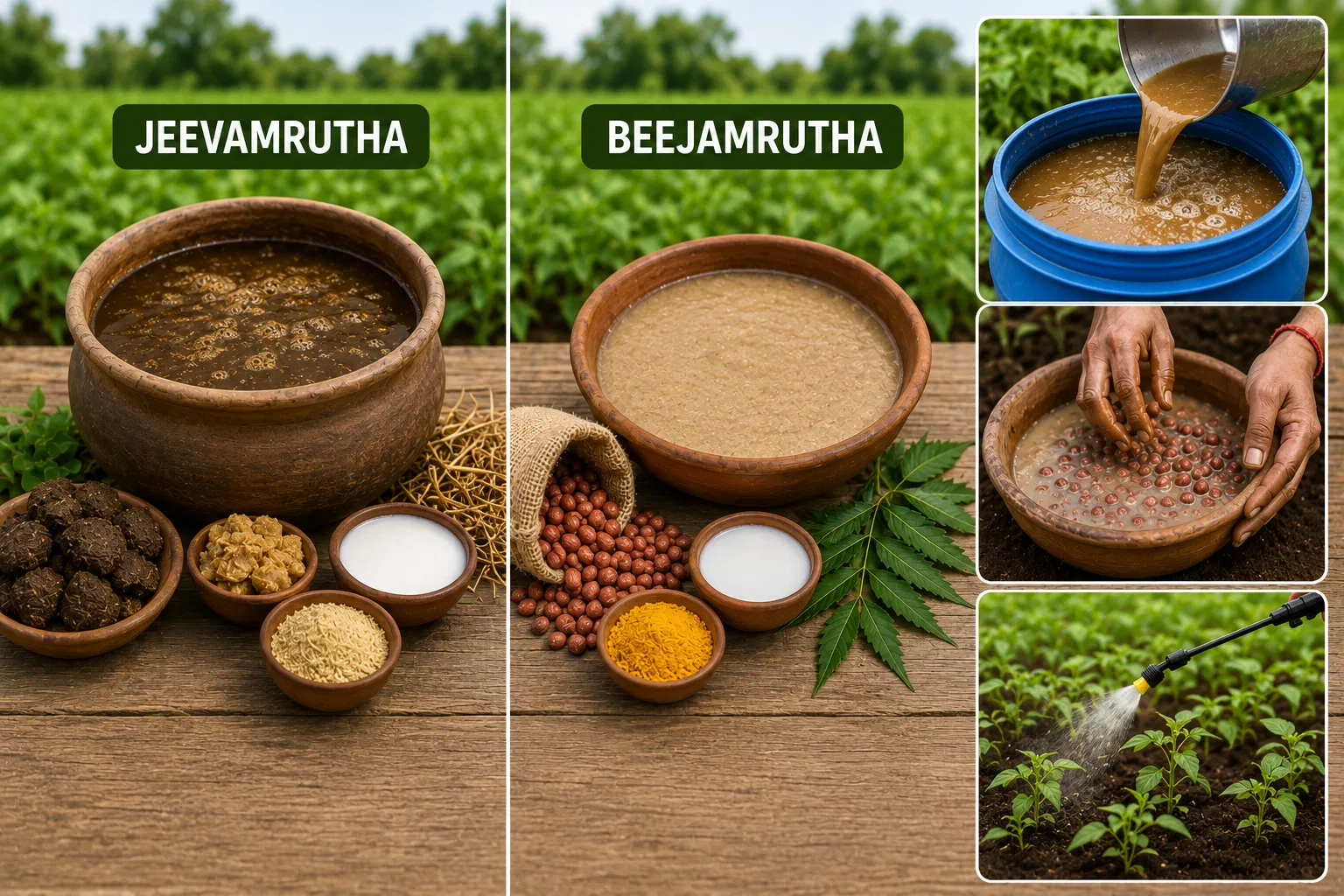
Jeevamrutha is a liquid biofertilizer used in natural farming to enrich the soil with beneficial microorganisms. It helps activate soil biology, improves nutrient availability, and supports stronger plant growth. Farmers often apply it to fields as a soil booster that encourages microbial activity and root development.
The word itself reflects its purpose: “Jeeva” means life and “mrutha” refers to nectar or life-giving fluid. In simple terms, Jeevamrutha is a living solution that feeds the soil ecosystem.
Main Ingredients of Jeevamrutha
- Cow dung from indigenous cattle
- Cow urine
- Jaggery
- Gram flour or pulse flour
- Soil from the farm bund or fertile field
- Water
These ingredients are mixed and fermented for several days. During fermentation, beneficial microbes multiply rapidly and become active in the solution.
How Jeevamrutha Works
Jeevamrutha does not work like chemical fertilizer by directly supplying nutrients in large quantities. Instead, it stimulates microbial life in the soil. These microorganisms help break down organic matter, release nutrients, and make the soil more fertile over time.
Its key benefits include:
- Improving soil microbial activity
- Enhancing nutrient cycling
- Supporting root health
- Reducing soil fatigue
- Promoting long-term soil fertility
Healthy soil is alive. Jeevamrutha helps keep that living soil active, productive, and resilient.
How to Prepare Jeevamrutha
Preparation is simple and requires very few materials. A common method is outlined below:
- Take a large container or drum.
- Add cow dung, cow urine, jaggery, gram flour, and a small amount of farm soil.
- Mix everything thoroughly in water.
- Stir the mixture well, ideally twice a day, to aerate it.
- Allow it to ferment for 5 to 7 days in a shaded place.
Once ready, the solution develops a rich, earthy smell and is used immediately or within a short period. Over-fermentation can reduce its effectiveness.
How to Apply Jeevamrutha
Jeevamrutha is usually applied to the soil rather than sprayed on leaves. Farmers often use it during irrigation or pour it near the root zone. It can also be applied before sowing and at regular intervals during crop growth.
Typical uses include:
- Mixing with irrigation water
- Applying around plant basins
- Using during land preparation
- Applying after transplanting seedlings
Regular use helps maintain biologically active soil and supports healthier crop performance.
What Is Beejamrutha?
Beejamrutha is a seed treatment solution used in natural farming. It protects seeds from soil-borne diseases, improves germination, and supports early seedling vigor. The term “Beeja” means seed, making Beejamrutha literally a seed life enhancer.
It is especially useful before sowing seeds or transplanting seedlings. Farmers use it to create a protective coating around the seed and reduce the risk of fungal and bacterial infections.
Main Ingredients of Beejamrutha
- Cow dung
- Cow urine
- Lime
- Water
- Soil from the farm or bund
These ingredients are combined to make a slurry-like mixture. Seeds are then coated or dipped in the solution before sowing.
How Beejamrutha Works
Beejamrutha creates a protective layer around seeds, helping reduce damage from pathogens and pests in the early stages of growth. It also encourages faster and healthier germination by creating favorable conditions around the seed.
Its major advantages include:
- Protecting seeds from fungal infection
- Improving germination rate
- Supporting strong early root development
- Reducing seed mortality
- Helping seedlings establish quickly
How to Prepare Beejamrutha
Beejamrutha is easy to prepare and can be made just before sowing:
- Take fresh cow dung and cow urine in a container.
- Add a little lime and a handful of farm soil.
- Mix with water to form a uniform slurry.
- Coat the seeds lightly with this mixture.
- Dry the seeds in shade for a short time before sowing.
This treatment helps seeds stay protected and supports better performance in the field.
Jeevamrutha vs Beejamrutha
Although both are important natural farming inputs, they serve different purposes.
- Jeevamrutha is mainly used for soil enrichment and microbial activation.
- Beejamrutha is used for seed treatment and early-stage protection.
Together, they form a powerful combination in natural farming. Beejamrutha gives the seed a healthy start, while Jeevamrutha supports the soil throughout the crop cycle.
Why Farmers Prefer These Natural Inputs
Farmers who adopt natural farming often choose Jeevamrutha and Beejamrutha because they are cost-effective, locally made, and environmentally friendly. They reduce reliance on synthetic inputs while helping restore soil health.
Key reasons for their popularity include:
- Low production cost
- Easy preparation with local materials
- Improved soil fertility over time
- Better seed germination and crop establishment
- Support for sustainable and regenerative farming
Best Practices for Using Jeevamrutha and Beejamrutha
To get the best results, these natural farming inputs should be prepared and used correctly. Freshness matters, and so does consistency.
- Use ingredients from healthy indigenous cattle when possible
- Prepare Jeevamrutha in shade and allow proper fermentation
- Apply Beejamrutha just before sowing
- Use Jeevamrutha regularly for soil nourishment
- Avoid storing these mixtures for too long
When used consistently, they can become part of a sustainable farming routine that improves both soil and crop health.
Final Thoughts
Jeevamrutha and Beejamrutha are more than traditional farm mixtures. They are practical natural farming inputs that support healthier soil, stronger seeds, and more resilient crops. By focusing on microbial life and early plant protection, they offer a simple yet effective path toward sustainable agriculture.
If you want to move toward natural farming, start with these two inputs. They are easy to make, economical to use, and deeply aligned with the principles of ecological farming. For farmers and gardeners alike, Jeevamrutha and Beejamrutha can be the foundation of a more balanced and productive growing system.