Insecticides are products used to manage insects that damage crops, reduce yield, transmit plant diseases, or lower produce quality. They are useful tools, but they work best as part of integrated pest management rather than as the first response to every insect seen in the field.
Choosing among available insecticides requires correct pest identification, knowledge of the crop stage, awareness of beneficial insects, and strict attention to the product label. The active ingredient, formulation, and mode of action matter more than the brand name alone.
What Is an Insecticide?
An insecticide is a biological or chemical product designed to kill, repel, disrupt, or reduce a target insect population. Some products act only when the spray contacts the pest. Others are absorbed by plant tissue and affect insects when they feed.
Insecticides may target eggs, larvae, nymphs, or adults. A product effective against caterpillars may not control mites, whiteflies, or beetles, so the target pest and life stage must be confirmed before application.
Main Types of Insecticides
Contact insecticides
Contact products must touch the pest. They are useful when insects are exposed on leaves or stems, but require thorough coverage. Hidden insects may escape treatment.
Systemic insecticides
Systemic products are absorbed and moved within plant tissues. Feeding insects receive the active ingredient through sap or treated plant material. Movement may be upward, local, or more extensive depending on the active ingredient.
Ingested insecticides
These products must be eaten. They are commonly used against chewing pests such as caterpillars and beetle larvae. Leaf coverage and feeding activity influence performance.
Insect growth regulators
Growth regulators interfere with moulting, development, egg viability, or transformation from one life stage to another. They may act more slowly but can be selective and useful in resistance-management programs.
Microbial and botanical insecticides
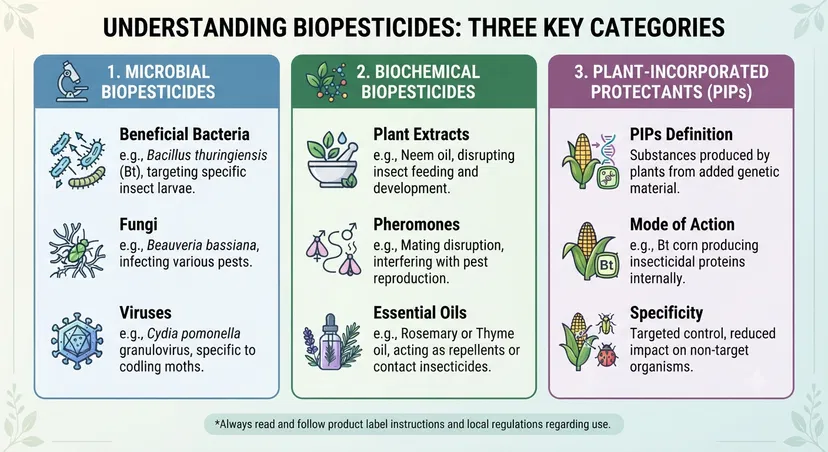
These include products based on microorganisms, toxins produced by microbes, plant extracts, or naturally derived compounds. They still require correct identification, timing, storage, and label compliance.
What Is Mode of Action?
Mode of action describes the biological process an insecticide disrupts. Some affect the nervous system, while others interfere with respiration, growth, muscle function, energy production, or feeding.
Products with the same mode of action may select for the same resistance mechanism. Repeatedly spraying different brand names will not prevent resistance if the active ingredients belong to the same group.
Common Mode-of-Action Categories
- Nerve and muscle disruptors
- Growth and development regulators
- Respiration inhibitors
- Midgut-active microbial toxins
- Feeding blockers
- Lipid or chitin synthesis inhibitors
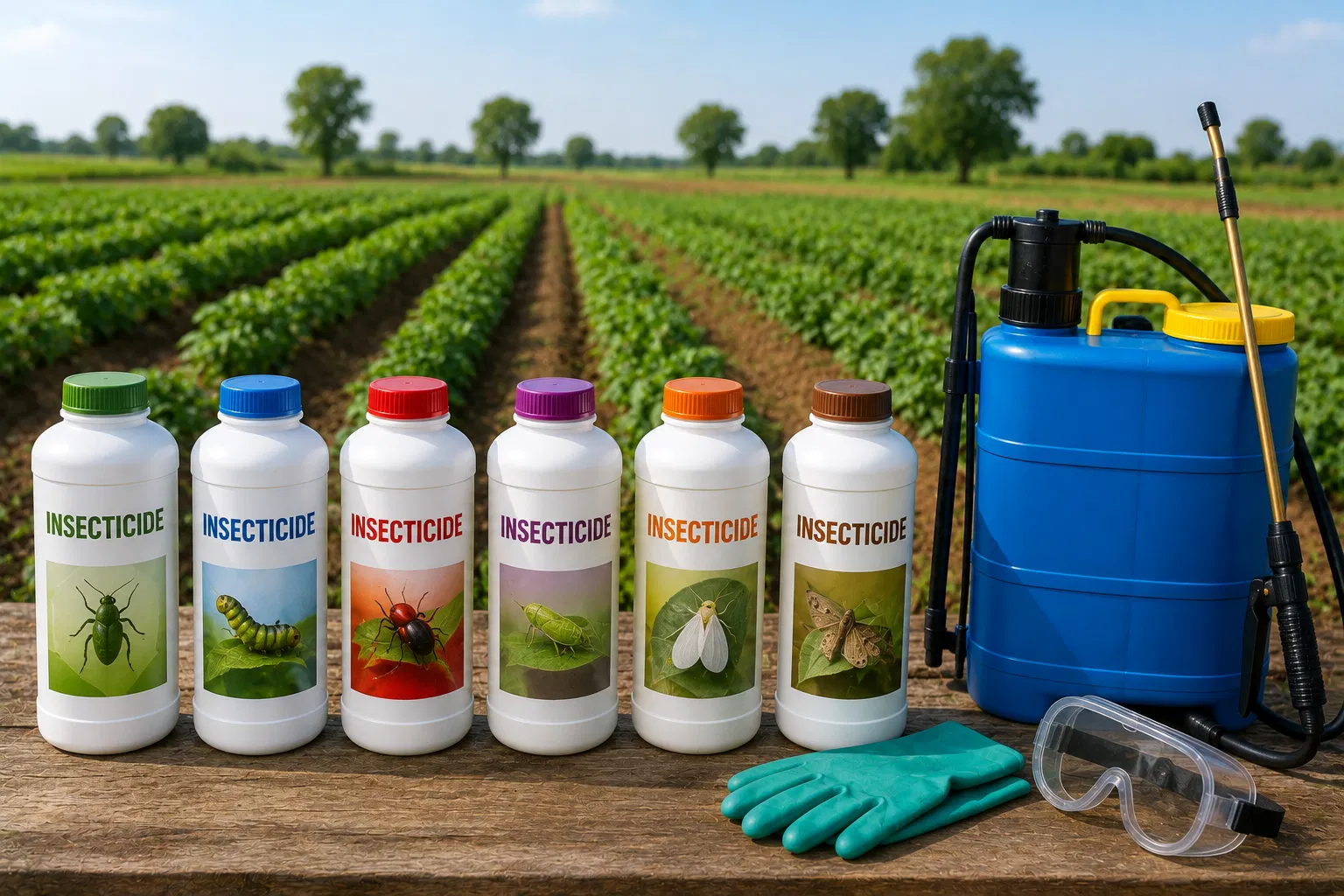
Use the mode-of-action group on the label to plan rotations. Do not rotate only by product colour, formulation, or company.
Broad Spectrum vs Selective Insecticides
Broad-spectrum products affect many insect groups and may provide rapid control during severe outbreaks. They can also kill pollinators, predators, and parasitoids.
Selective products target a narrower pest group or life stage and are generally easier to integrate with biological control. Selectivity is not absolute, so the label and local recommendations still matter.
How to Decide Whether Treatment Is Needed
Scout the field and identify:
- The pest species
- The active life stage
- The number of pests and damaged plants
- The presence of natural enemies
- The crop growth stage
- Whether the population exceeds an economic threshold
Good crop protection begins with monitoring. Unnecessary sprays increase cost, residues, resistance, and harm to beneficial organisms.
Application Equipment and Coverage
Calibrated sprayers help deliver the labelled dose evenly. Nozzle type, pressure, walking speed, water volume, canopy density, and droplet size all affect coverage.
Contact products generally need more complete coverage than systemic products. Spray the target zone rather than allowing runoff. Check for leaks, blocked nozzles, and uneven output before entering the field.
Role of Adjuvants
Some labels recommend approved adjuvants to improve wetting, spreading, sticking, or water conditioning. Do not add them automatically. An unsuitable adjuvant may increase leaf burn, drift, residues, or off-target movement.
Safe Use Principles
- Read the complete label before mixing.
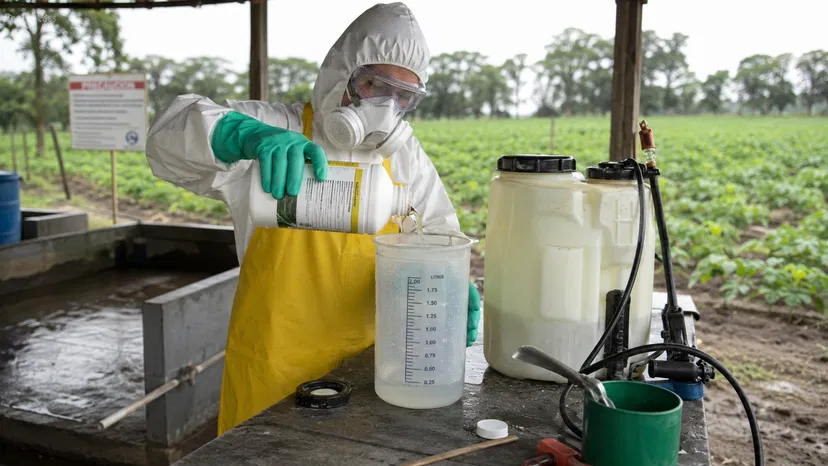
- Wear the required personal protective equipment.
- Measure accurately with dedicated tools.
- Mix in a ventilated area away from wells and food.
- Avoid spraying during strong wind or imminent rain.
- Respect the re-entry interval.
- Observe the pre-harvest interval.
- Keep people and animals away from the treated area.
Protecting Pollinators and Beneficial Insects
Avoid spraying flowering crops while bees are actively foraging. Choose selective products and targeted timings where possible. Treat only affected areas when the label allows spot application.
In crops such as cotton, conserving predators and parasitoids can help suppress sucking pests and caterpillars. Repeated broad-spectrum sprays may trigger secondary pest outbreaks by removing these natural enemies.
Resistance Management
- Rotate mode-of-action groups.
- Do not use below-label rates.
- Limit repeated applications from one group.
- Use cultural, mechanical, and biological controls.
- Treat at the susceptible pest stage.
- Remove heavily infested plant material when appropriate.
Common Mistakes
- Treating without identifying the pest
- Using an insecticide against a mite or disease problem
- Mixing several products without compatibility guidance
- Increasing the dose for faster control
- Ignoring the pre-harvest interval
- Spraying repeatedly from the same resistance group
- Using poor-quality or uncalibrated equipment
Final Thoughts
Insecticides are most effective when matched to the correct pest, crop, life stage, and mode of action. Contact, systemic, ingested, growth-regulating, microbial, and botanical products each have different strengths and limitations.
Use them only when monitoring shows a genuine need, follow every label direction, protect beneficial organisms, and rotate modes of action. Safe, informed use protects the crop today and preserves control options for future seasons.