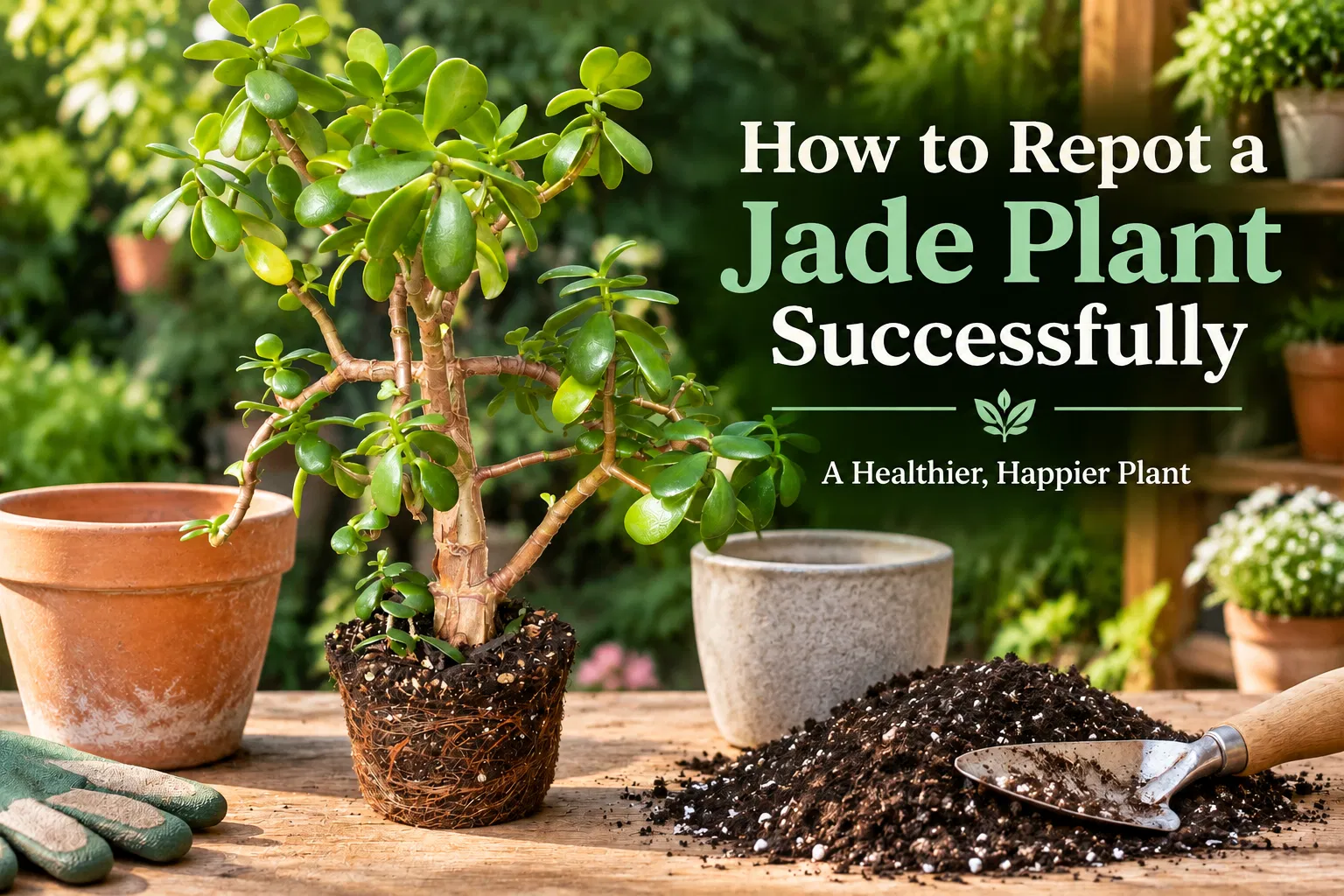
The jade plant, Crassula ovata, is a succulent that stores water in its thick leaves and stem — which makes it forgiving in many ways, but also unusually prone to root and stem rot if repotted or watered incorrectly. Getting a few succulent-specific details right makes the difference between a jade plant that barely notices the move and one that sulks or rots for months.
Why Jade Plants Need a Different Approach
Unlike leafy tropical houseplants, jade plants are adapted to store water and survive dry periods, so their roots are far more sensitive to prolonged moisture than to a slightly tight pot. Most repotting problems with jade plants trace back to one thing: soil that stays wet for too long around the roots after the move.
When to Repot a Jade Plant
Jade plants are slow growers and don't need frequent repotting — every 2–3 years is typical, or sooner if the plant has clearly outgrown its container. Signs it's time include:
- The plant looks top-heavy and tips over easily relative to the pot size.
- Roots are visible at the surface or through the drainage holes.
- Water drains through almost immediately without being absorbed.
- Growth has slowed noticeably and the lower stem looks unusually crowded with roots.
Repot in spring or early summer, when the plant is in active growth and can recover from root disturbance quickly. Avoid repotting in winter, when jade plants are semi-dormant and heal much more slowly.
Choosing the Right Pot
A jade plant's top growth can get heavy relative to its root ball, so a slightly wider, sturdier, and preferably terracotta pot helps with both stability and drainage. Terracotta's porous walls wick away excess moisture through the pot wall itself — a real advantage for a plant this sensitive to overwatering. Always use a pot with drainage holes; for jade plants, this matters more than almost anything else in the process.
Getting the Soil Mix Right
Standard potting soil retains too much moisture for a jade plant's roots. Use a fast-draining succulent or cactus-style mix — roughly 40% potting mix, 20% cocopeat, and 40% coarse sand or perlite. This higher grit ratio compared to a typical houseplant blend is specifically what keeps water from lingering around the stem base, where jade plants are most vulnerable to rot.
Step-by-Step: Repotting a Jade Plant
- Stop watering about a week before repotting — slightly dry soil is easier to remove cleanly and reduces the chance of damaging brittle roots.
- Gently tip the pot and ease the plant out; jade plant stems are brittle, so support the base rather than pulling on branches.
- Shake or gently loosen old soil from the roots and inspect them — trim any mushy, dark, or clearly rotten roots with a clean, sharp tool.
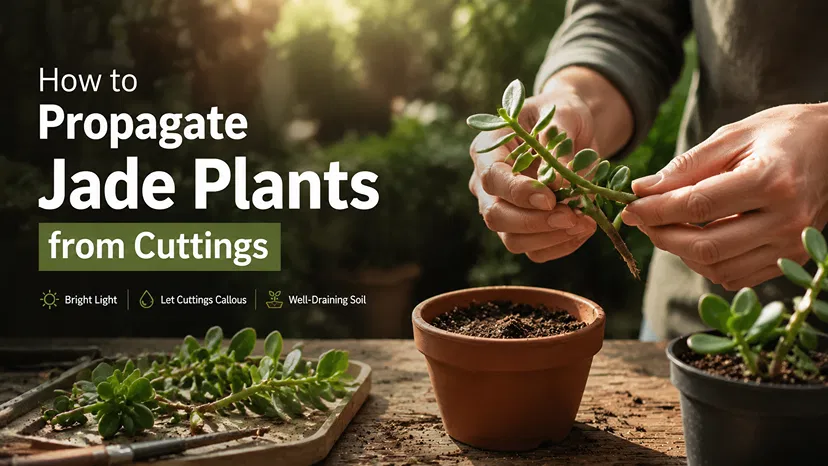
- If any leaves or small stems break off during handling, set them aside — jade plants propagate readily from a leaf or stem cutting once the wound has callused.
- Let bare-rooted plants or any trimmed cut ends sit exposed to air for a few hours to a day so wounds callus over, reducing infection risk.
- Position the plant in the new pot at the same depth as before, backfill with the succulent mix, and firm gently — do not water yet.
- Wait 5–7 days before the first watering, giving root wounds time to seal before they're exposed to moisture again.
Aftercare
Keep the freshly repotted jade plant in bright light — jade plants need strong light to maintain their compact, sturdy growth — but ease it in gradually if it was previously in lower light, rather than moving it straight into harsh direct sun. Water sparingly at first, only once the soil has dried out fully, and skip fertilizer for at least 4–6 weeks to avoid stressing the recovering root system.
Frequently Asked Questions
Why did my jade plant's leaves shrivel after repotting?
Mild leaf softening can be normal short-term stress, but ongoing shriveling usually means the plant needs more water than it's getting post-repot — check that it isn't sitting bone-dry for too long once new roots have established.
Can I water a jade plant right after repotting?
It's better to wait about a week, letting any root wounds callous over first — watering too soon significantly raises the risk of root and stem rot.
Is regular potting soil okay for a jade plant?
Not on its own — it retains too much moisture; blend it with extra sand or perlite for the fast drainage a jade plant's roots need.
Disclaimer: General care guidance for common Crassula ovata varieties; specific watering and light needs can vary by growing conditions and season.