Groundnut root rot and collar rot can wipe out a healthy crop fast if they are not caught early. These diseases attack the plant below the soil line, weakening roots, rotting the collar region, and causing sudden wilting, poor growth, and yield loss. The good news is that with timely prevention, smart field practices, and the right treatment strategy, you can significantly reduce damage and protect your groundnut crop.
What Are Groundnut Root Rot and Collar Rot?
Groundnut root rot and collar rot are serious fungal diseases that affect peanuts at different growth stages. Root rot mainly damages the roots, while collar rot affects the stem base near the soil surface. In many fields, both problems appear together, especially under warm, moist, and poorly drained conditions.
These diseases are commonly associated with soil-borne fungi such as Rhizoctonia solani, Sclerotium rolfsii, and other pathogenic organisms that survive in crop residue and soil for long periods.
Early Symptoms to Watch For
Recognizing the symptoms early is the key to saving yield. Many farmers first notice patchy plant loss before realizing the real cause is root or collar infection.
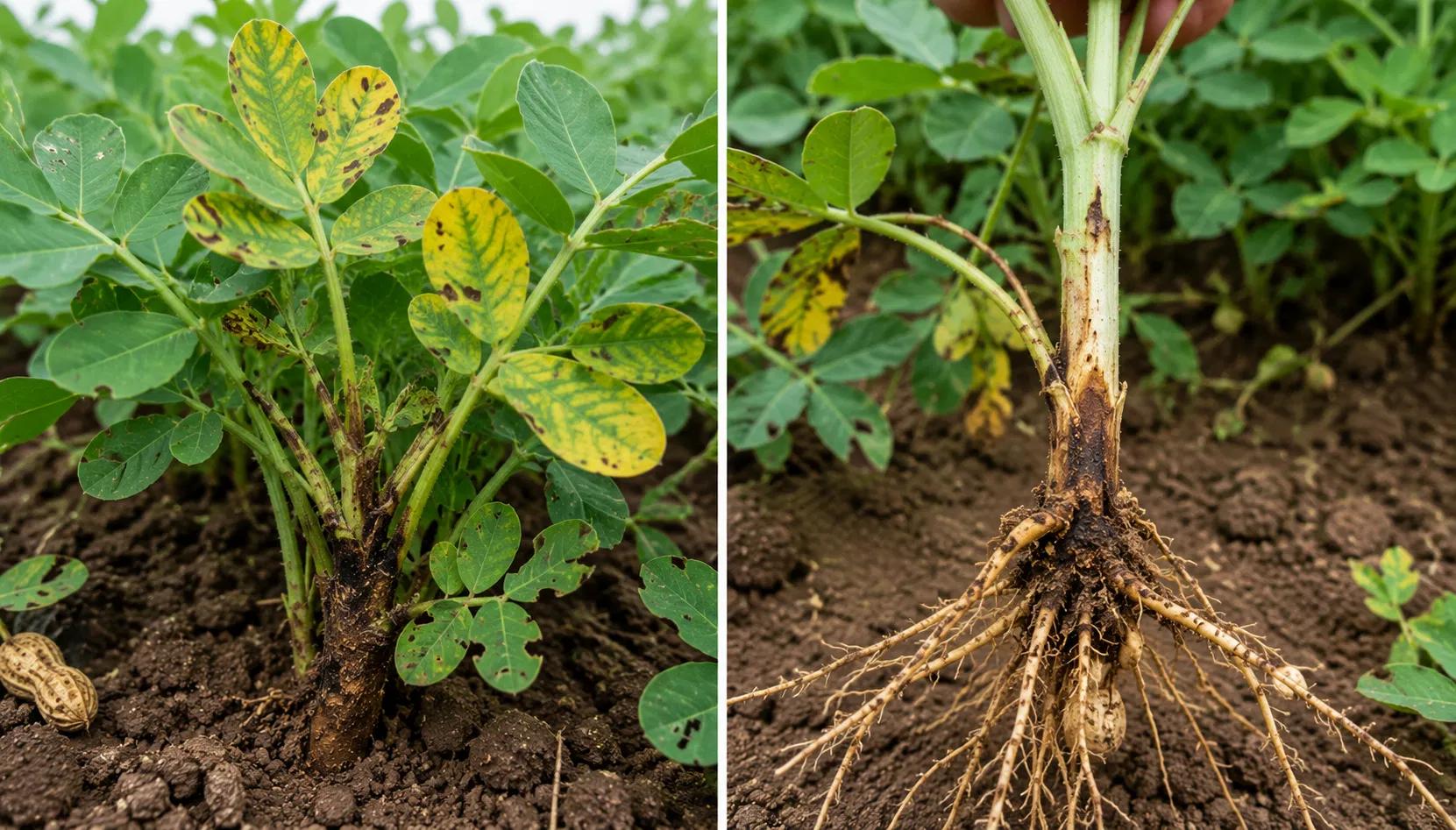
Root Rot Symptoms
- Yellowing of leaves
- Slow or stunted plant growth
- Weak plants that pull out easily
- Dark, decayed, or shriveled roots
- Poor pod development
Collar Rot Symptoms
- Water-soaked lesion near the stem base
- Soft rotting at the collar region
- Sudden wilting of the entire plant
- White fungal growth near the soil line in humid conditions
- Plant collapse after a few days of infection
Early detection matters because once the collar region is badly damaged, the plant often cannot recover.
Main Causes and Risk Factors
Groundnut root rot and collar rot are favored by specific field conditions. Knowing these risk factors helps you prevent outbreaks before they begin.
- Poor drainage: Waterlogged soils encourage fungal growth.
- Continuous groundnut cultivation: Repeated planting in the same field builds up soil-borne pathogens.
- Infected crop residues: Old plant debris can carry fungal spores.
- Dense planting: Poor airflow increases moisture around the base of the plant.
- Mechanical injury: Root or stem wounds make infection easier.
- Unbalanced nutrition: Weak plants are more vulnerable to disease.
Warm weather combined with excessive soil moisture creates ideal conditions for rapid disease spread, especially in heavy soils and low-lying fields.
Best Preventive Measures for Groundnut Root Rot and Collar Rot
Prevention is far more effective than trying to save a severely infected crop. A strong integrated disease management approach is the best long-term solution.
1. Use Certified, Disease-Free Seed
Start with healthy seed. Infected or poorly stored seed can introduce pathogens into the field and reduce germination.
2. Practice Crop Rotation
Rotate groundnut with non-host crops such as cereals to reduce the buildup of soil-borne fungi. Avoid planting groundnut repeatedly in the same land.
3. Choose Well-Drained Fields
Select fields with good drainage and avoid areas where water stands after irrigation or rainfall. Raised beds or ridges can also help reduce collar rot risk.
4. Maintain Proper Plant Spacing
Do not overcrowd the crop. Good spacing improves air circulation and reduces humidity around the plant base.
5. Remove Crop Debris
Destroy infected plant residue after harvest. Leaving diseased material in the field allows fungi to survive and infect the next crop.
6. Improve Soil Health
Apply organic matter and balanced fertilizers based on soil testing. Strong, well-nourished plants are less likely to fall victim to root and collar diseases.
Effective Chemical Control Options
When disease pressure is high, chemical protection may be needed as part of an integrated program. Seed treatment and targeted soil application are often the most effective approaches.
- Seed treatment: Treat seed with recommended fungicides before sowing to protect young seedlings from early infection.
- Soil drenching: Apply suitable fungicidal solutions around infected patches where allowed and recommended.
- Fungicide sprays: In some cases, foliar or collar-zone application may help slow spread when applied at the first sign of disease.
Always follow local agricultural recommendations, label instructions, and safety guidelines. Using the wrong product, dose, or timing can reduce effectiveness and increase costs.
Biological and Organic Management Approaches
For farmers looking for safer and more sustainable options, biological control and organic practices can help suppress disease pressure.
Beneficial Microbes
Biocontrol agents such as Trichoderma species can help reduce soil-borne fungal populations by competing with pathogens and protecting root zones.
Organic Soil Management
- Apply well-decomposed compost
- Use neem cake or other organic soil amendments where suitable
- Encourage healthy soil microbial activity
- Avoid overwatering
These methods work best when combined with field sanitation, crop rotation, and good agronomic practices.
Field Scouting and Monitoring Tips
Regular inspection helps catch root rot and collar rot before they spread across large areas. Walk through the field weekly, especially during humid periods or after heavy rains.
- Check low-lying and poorly drained spots first.
- Look for yellowing, wilting, and patchy plant death.
- Uproot a few suspected plants to inspect roots and collar tissue.
- Note whether the problem is spreading in clusters or rows.
- Act quickly if infection is expanding.
Patchy outbreaks are often easier to contain than widespread field infections, so speed matters.
How to Reduce Yield Loss
Yield loss from groundnut root rot and collar rot can be severe, but a few practical steps can make a big difference:
- Plant early in the recommended season
- Avoid excess irrigation
- Use resistant or tolerant varieties if available
- Maintain balanced fertility
- Remove and destroy heavily infected plants
- Keep field edges and irrigation channels clean
Combining preventive, biological, and chemical measures gives the best protection and improves overall crop resilience.
Final Thoughts
Groundnut root rot and collar rot control depends on early action, clean planting material, proper drainage, and consistent field management. These diseases are easier to prevent than to cure, so the smartest strategy is to reduce risk before symptoms appear.
If you want a healthier groundnut crop and better yields, focus on crop rotation, seed treatment, sanitation, and timely monitoring. A well-managed field is far less likely to suffer major losses from root rot and collar rot.
Strong groundnut disease control starts with prevention, and prevention starts before planting.