Choosing the right animal feed can make a major difference in milk production, growth rate, digestion, and overall health. When comparing green fodder vs dry fodder vs concentrates, each feed type plays a specific role in livestock nutrition. The best feeding plan is not about choosing one over the others, but about balancing them correctly for your animals' needs.
Whether you raise dairy cattle, buffaloes, goats, sheep, or other farm animals, understanding the difference between green fodder, dry fodder, and concentrates helps you improve productivity and control feeding costs. In this guide, we break down each type in simple terms so you can make better feeding decisions on your farm.
What Is Green Fodder?
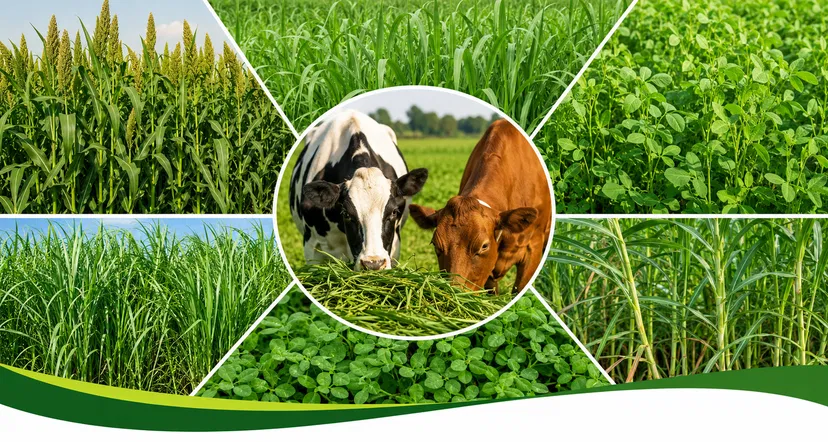
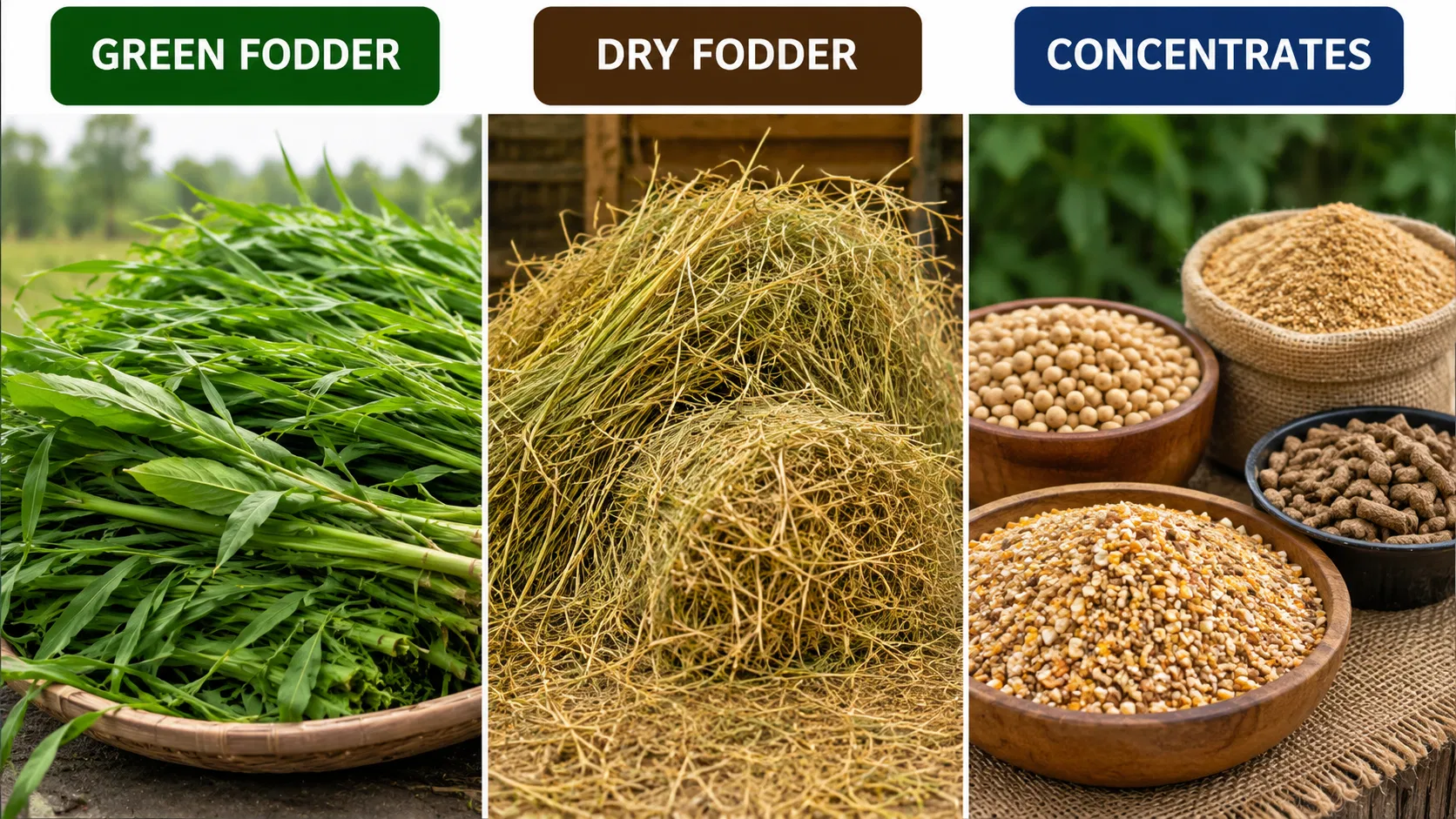
Green fodder refers to fresh, leafy, succulent plant material fed to livestock. It includes grasses, legumes, and fodder crops such as maize, berseem, oats, sorghum, and cowpea. Because it contains high moisture and natural nutrients, green fodder is highly palatable and easy to digest.
Benefits of Green Fodder
- Provides natural moisture and helps keep animals hydrated
- Improves digestion due to its fiber content
- Supplies vitamins and minerals
- Enhances feed intake because animals enjoy its taste
- Supports better milk yield and general health
Limitations of Green Fodder
- Seasonal availability can be a challenge
- High moisture means lower dry matter intake per kilogram
- Requires proper land, water, and management for cultivation
- May spoil quickly if not fed fresh
Green fodder is often considered the foundation of a healthy ration, especially for dairy animals. However, on its own, it may not fully meet the energy and protein demands of high-producing livestock.
What Is Dry Fodder?
Dry fodder consists of cured or dried plant material used as roughage for animals. Common examples include straw, hay, stover, and dried grass. Compared to green fodder, dry fodder has much less moisture and is usually stored for longer periods.
Benefits of Dry Fodder
- Can be stored for long periods without spoiling easily
- Provides bulk and fiber for rumen health
- Useful during seasons when green fodder is unavailable
- Helps maintain chewing activity and saliva production
- Often more economical and easier to transport
Limitations of Dry Fodder
- Lower nutrient content than green fodder
- May be less digestible if poor in quality
- Animals may eat less due to lower palatability
- Usually requires supplementation for balanced feeding
Dry fodder is essential in livestock diets because it provides the fiber needed for proper rumen function. Still, it is usually not enough to support high milk production or rapid weight gain unless combined with better-quality feeds.
What Are Concentrates?
Concentrates are nutrient-dense feeds that contain more energy, protein, or both, with relatively low fiber. They include grains, oil cakes, bran, commercial compound feed, and protein meals. Concentrates are used to supplement roughage and fill nutritional gaps in the diet.
Benefits of Concentrates
- High in energy and/or protein
- Supports milk production, growth, and reproduction
- Improves performance of high-yielding animals
- Helps balance diets when fodder quality is low
- Allows precise nutritional formulation
Limitations of Concentrates
- More expensive than roughages
- Excess feeding can cause digestive problems
- Should not replace fiber-rich fodder completely
- Requires careful ration planning to avoid waste
Concentrates are not meant to be the entire diet. They work best when added in the right amount to green fodder and dry fodder, especially for lactating animals, growing young stock, and animals with higher nutritional demands.
Green Fodder vs Dry Fodder vs Concentrates: The Main Differences
To understand green fodder vs dry fodder vs concentrates clearly, it helps to compare them based on moisture, nutrition, digestibility, storage, and purpose.
| Feed Type | Moisture | Main Nutritional Role | Storage | Best Use |
|---|---|---|---|---|
| Green Fodder | High | Supplies vitamins, minerals, fiber, and hydration | Poor to moderate | Daily feeding for freshness and digestion |
| Dry Fodder | Low | Provides roughage and rumen support | Excellent | Long-term feeding and seasonal backup |
| Concentrates | Low | Delivers energy and protein | Excellent | Productivity boost and balanced nutrition |
In simple terms, green fodder keeps animals healthy and hydrated, dry fodder keeps the digestive system working properly, and concentrates improve performance and productivity.
Which Feed Is Best for Livestock?
There is no single "best" feed. The right choice depends on the species, age, stage of production, and availability of local feed resources. A well-balanced ration usually includes all three feed types.
For Dairy Animals
Dairy cattle and buffaloes need a combination of green fodder, dry fodder, and concentrates to maintain milk yield and body condition. Green fodder supports milk quality, dry fodder maintains rumen health, and concentrates provide the extra energy and protein needed for high production.
For Growing Animals
Young cattle, calves, lambs, and kids need nutrient-rich diets for fast and healthy growth. Concentrates are particularly important during growth stages, but roughage should still be included to support digestion.
For Maintenance Feeding
Animals that are not lactating or growing rapidly may require more roughage and fewer concentrates. In such cases, quality dry fodder combined with some green fodder may be enough, depending on the animal's condition.
How to Balance Green Fodder, Dry Fodder, and Concentrates
A proper feeding strategy ensures animals get enough fiber, energy, protein, and micronutrients without overfeeding one component. The exact ratio can vary, but a general principle is to provide enough roughage first, then add concentrates based on production needs.
- Start with good-quality roughage, including green and dry fodder
- Add concentrates to meet energy and protein requirements
- Adjust the ration based on milk yield, growth, or body condition
- Monitor feed intake, digestion, and animal performance
- Consult a livestock nutrition expert for precise ration formulation
Tip: A balanced diet is more effective than feeding large amounts of only one feed type. Too much concentrate can upset digestion, while too much low-quality fodder may reduce productivity.
Common Feeding Mistakes to Avoid
- Feeding too little fiber and too many concentrates
- Using poor-quality dry fodder as the main diet
- Ignoring the nutritional value of green fodder
- Feeding spoiled or moldy fodder
- Not adjusting feed according to animal stage and output
These mistakes can lower milk production, slow growth, and increase health risks. Consistent feed quality and proper balance are essential for profitable livestock farming.
Final Thoughts
When it comes to green fodder vs dry fodder vs concentrates, each feed type has an important role. Green fodder improves freshness and nutrition, dry fodder supports rumen function and storage needs, and concentrates provide the extra nutrients required for production and growth.
The most effective livestock feeding plan is not about choosing one feed over the others, but about combining them in the right proportions for the animal's age, health, and production goal.
If you want healthier animals, better milk yield, and improved farm efficiency, focus on a balanced ration built on quality roughage and smart concentrate supplementation. The right feed mix today can lead to stronger performance and better profitability tomorrow.