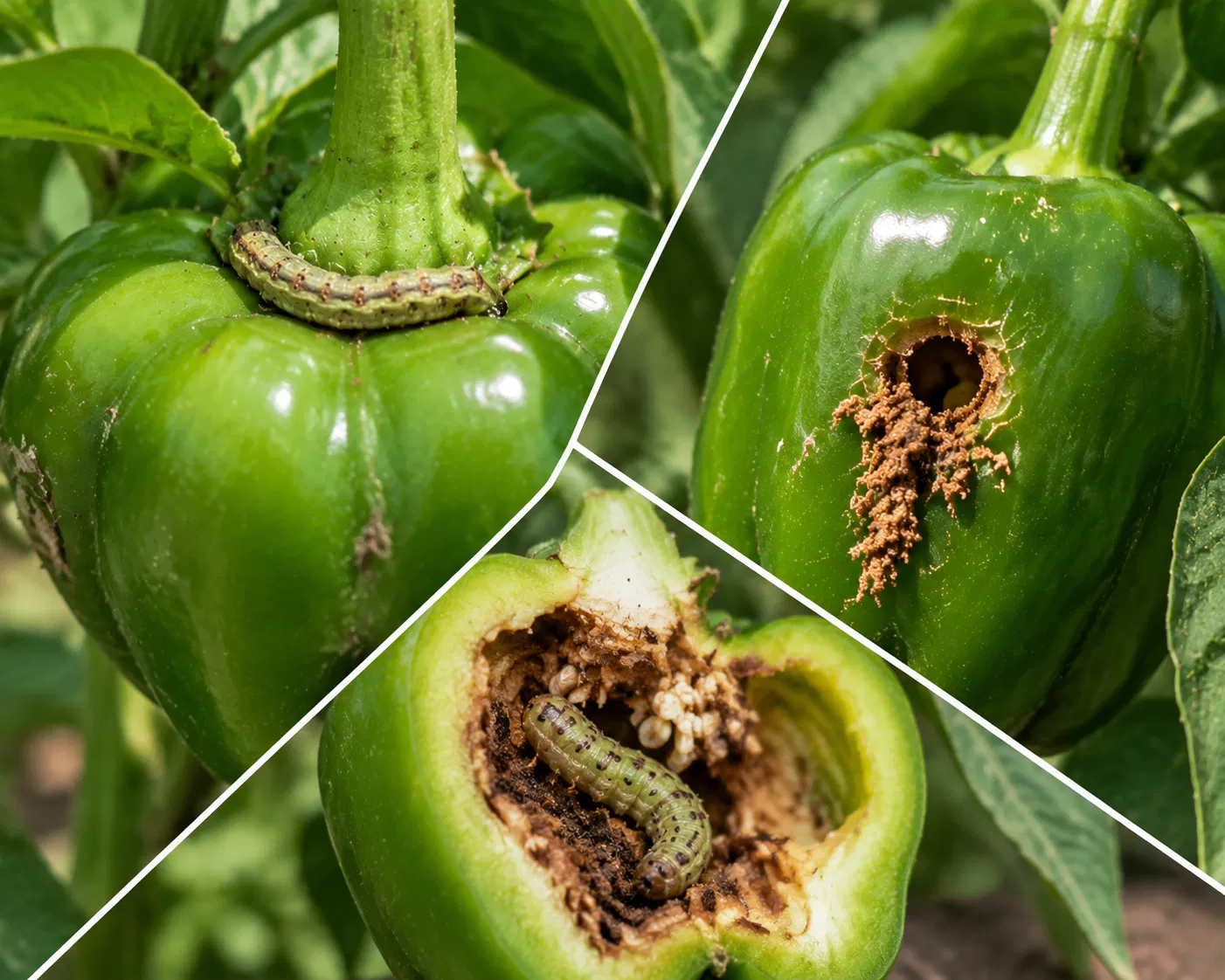
Fruit borer is one of the most damaging pests in capsicum, attacking the crop right at the fruiting stage when a single infestation can ruin a large share of the harvest. Since the larva feeds inside the fruit itself, damage is often noticed only after the fruit is already unmarketable, which makes early identification and timely control especially important.
Symptoms
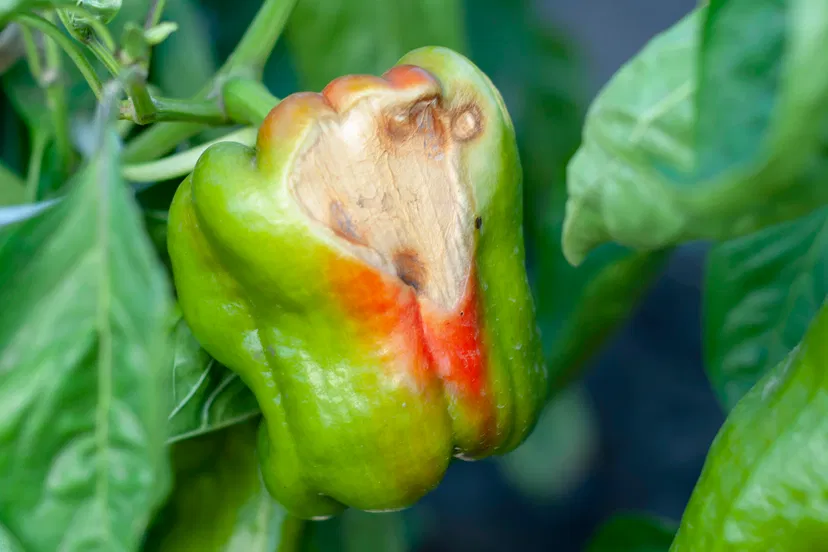
- Circular entry holes on the fruit surface, often with frass (larval excreta) visible near the opening
- Fruit rotting internally or dropping prematurely once the larva has bored in
- Pale green to brown caterpillars with dark markings occasionally visible inside damaged fruit or on the plant
- In young plants, larvae may also bore into shoots and growing tips before fruiting begins
Causes
- Warm weather during flowering and fruit set, when moth activity and egg-laying peak
- Continuous capsicum or related solanaceous cropping without rotation, which builds up carryover populations
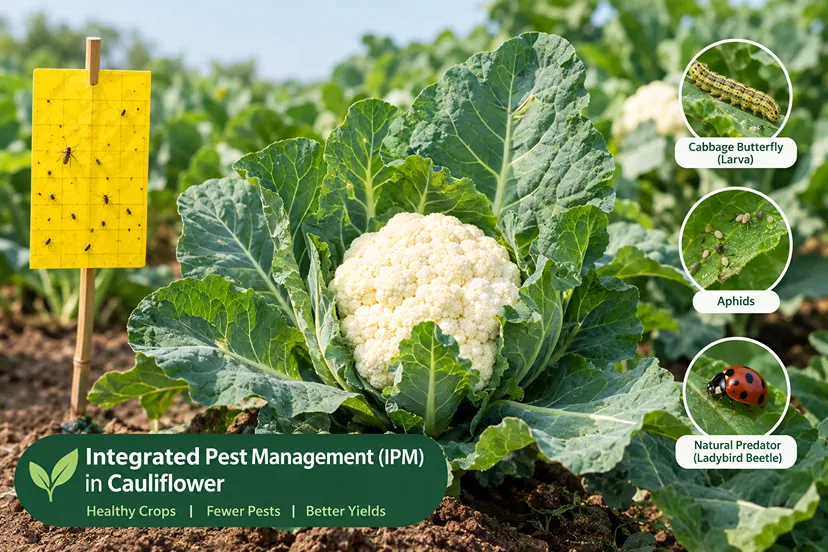
- Overuse of broad-spectrum insecticides, which wipes out natural predators and parasitoids that would otherwise keep fruit borer numbers in check
- Nearby host crops or weeds carrying an existing fruit borer population
How to Identify
Look for small, round holes on the fruit, usually with visible frass at the entry point. Cutting open an affected fruit will often reveal the larva itself or a hollowed-out feeding tunnel. Adult moths are stout-bodied and pale brown with dark speckled markings on the forewings, and are most active at dusk, so scouting is easiest by checking fruit and growing points during the day for entry holes rather than trying to spot the moths directly.
Control Methods
Chemical Control
Cyantraniliprole is a diamide insecticide that disrupts the pest's muscle function, stopping feeding within hours and leading to paralysis and death. It moves systemically within the plant, which helps protect new growth and developing fruit even after the spray has been applied.
Product Recommendation
- FMC Benevia Insecticide (Cyantraniliprole 10.26% OD)
Cultural Control
- Rotate with a non-host crop where fruit borer pressure has been high in previous seasons
- Remove and destroy damaged or dropped fruit promptly to prevent larvae from completing their life cycle in the field
- Keep field borders and bunds free of weeds that can host the pest between seasons
- Avoid excess nitrogen application, which encourages soft growth that is more attractive to egg-laying moths
Mechanical Control
Pheromone traps release a synthetic version of the female moth's sex pheromone to draw male fruit borer moths into a funnel trap, helping track moth activity and reduce mating success before eggs are laid.
Product Recommendation
- Tapas Cotton Bollworm Pheromone Lure (Helicoverpa armigera pheromone)
Conclusion
Fruit borer damage in capsicum is hard to reverse once the larva is inside the fruit, so the priority is catching it early through regular scouting and acting before entry holes turn into widespread crop loss. A well-timed spray of Cyantraniliprole, combined with cultural practices and pheromone traps for monitoring, gives capsicum growers a practical way to keep this pest under control through the season.
Disclaimer: Always confirm current label registration, approved dosage, water volume, and pre-harvest interval (PHI) for your state before using any product, since labels are periodically revised by regulatory authorities.
This guide is a general advisory. Do your own research and verification before using any product. Always confirm suitability for your crop stage, region, and field conditions before making any purchase, spray, or crop-management decision.