
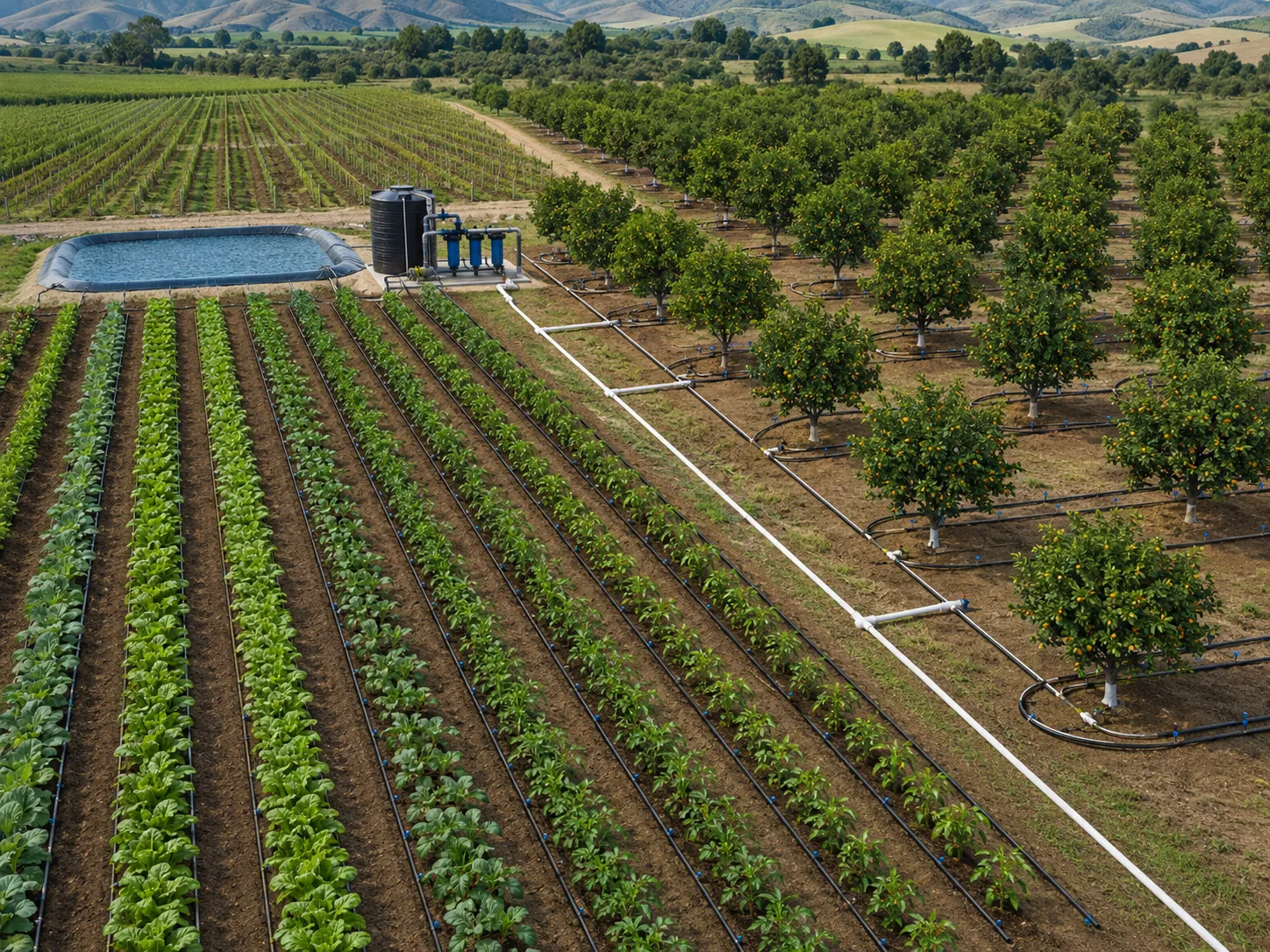
When every drop of water counts, the right drip irrigation layout can make the difference between average yields and a highly productive farm. Whether you're managing row crops like vegetables, berries, and corn, or planting an orchard with fruit trees, a well-planned system delivers water exactly where roots need it most. That means less waste, healthier plants, and more efficient farm operations.
Designing a drip system is not just about laying pipe in the field. It requires careful planning around crop spacing, root zones, soil type, water pressure, and long-term expansion. The best drip irrigation layout for row crops and orchards balances water efficiency with consistent coverage, making it one of the smartest investments for modern agriculture.
Why Drip Irrigation Layout Matters
A properly designed drip irrigation system gives growers precise control over water application. Instead of wetting the entire field, it delivers moisture directly to the root zone. This reduces evaporation, minimizes weed growth, and helps prevent fungal diseases caused by excess leaf wetting.
For row crops, the layout must match plant spacing and growth stages. For orchards, it must account for tree size, canopy spread, and root expansion over time. A layout that works at planting may need adjustments as crops mature, which is why planning ahead is essential.
Key Components of a Drip Irrigation System
Before designing the layout, it helps to understand the main parts of a drip irrigation setup:
- Water source – Well, reservoir, canal, or municipal supply
- Pump – Provides pressure for system operation
- Filter – Removes sand, debris, and particles that clog emitters
- Mainline – Carries water from the source to the field
- Submain – Distributes water to different zones
- Lateral lines – Thin tubing that runs along crop rows or tree rows
- Emitters or drip tape – Releases water slowly near plants
- Valves and pressure regulators – Control flow and maintain even distribution
Each component affects performance. If one part is undersized or poorly selected, the entire system can suffer from uneven watering or pressure loss.
Drip Irrigation Layout for Row Crops
Row crops typically include vegetables, strawberries, melons, tomatoes, peppers, and other plants grown in straight, spaced rows. For these crops, drip irrigation layout should focus on uniform water delivery and easy field management.
1. Match the Layout to Row Spacing
The drip line should generally run along each crop row or just beside it, depending on planting density and soil conditions. In wide-row crops, one lateral line per row is often the best choice. In closer-spaced crops, a single drip tape may serve two rows if the water spread in the soil is wide enough.
2. Choose the Right Drip Tape or Tubing
Drip tape is commonly used in annual row crops because it is affordable and easy to install. It works well for short-season production. For longer-term crops or fields requiring higher durability, thicker-walled drip tubing may be better.
Consider:
- Emitter spacing – Smaller spacing helps in sandy soils; wider spacing may work in heavier soils
- Flow rate – Must align with crop water demand and system pressure
- Wall thickness – Thicker tape lasts longer and resists damage
3. Design for Soil Type
Soil texture strongly influences how water moves underground. Sandy soils drain quickly and may require closer emitter spacing and shorter irrigation cycles. Clay soils hold water longer, so emitters may need wider spacing with careful scheduling to avoid overwatering.
The best drip irrigation layout is not the same for every field; it must be tailored to soil, crop, and water availability.
4. Plan for Machinery Access
Row crop fields often require equipment for planting, spraying, cultivation, and harvesting. The irrigation layout must avoid interfering with machinery. Drip tape may be buried shallowly or placed on the surface depending on the crop and cultivation system. In mechanized operations, protected placement is often essential.
Drip Irrigation Layout for Orchards
Orchards require a different approach because trees have permanent root systems and changing canopies. A good orchard drip irrigation layout should supply water efficiently during tree establishment and continue supporting mature trees as they expand.
1. Place Drip Lines Along the Tree Row
Most orchard systems use one or more lateral lines running parallel to each row of trees. For young orchards, a single line may be enough. As trees grow, additional lines or emitters may be added to cover the expanding root zone.
2. Use Multiple Emitters per Tree
Unlike small annual crops, fruit trees often benefit from more than one emitter. Multiple emitters help water spread across a wider root area and reduce stress during hot, dry periods. The number of emitters depends on tree size, soil type, and climate.
3. Account for Tree Growth
One of the most important considerations in orchard design is future expansion. The root zone of a young tree is much smaller than that of a mature tree. A flexible layout makes it easier to add emitters or lines later without rebuilding the entire system.
4. Consider Basin vs. Line Placement
Some orchards use a single line with emitters near the trunk when trees are young. Others place drip lines farther out as the canopy expands. In dry climates, dual-line systems on both sides of the tree row may improve root coverage and water distribution.
Step-by-Step Drip Irrigation Layout Planning
A practical design process helps ensure the system performs well from day one.
- Measure the field – Record row length, spacing, slope, and block size.
- Identify crop water needs – Different crops and growth stages require different amounts of water.
- Test the water source – Check flow rate, pressure, and water quality.
- Select system components – Choose filters, pipes, emitters, and regulators based on demand.
- Divide the field into zones – Group areas with similar water needs and pressure requirements.
- Map the layout – Mark mainlines, submains, and lateral lines on a field plan.
- Install and test – Flush the system, check for leaks, and confirm even distribution.
Common Mistakes to Avoid
Even a good irrigation system can fail if the layout is poorly designed. Avoid these common problems:
- Ignoring pressure loss across long runs
- Using the wrong emitter spacing for the soil type
- Failing to filter water properly, causing clogs
- Overlooking slopes that affect pressure and flow
- Installing too few zones, leading to uneven watering
- Not planning for crop maturity in orchards
Avoiding these mistakes improves reliability and reduces maintenance over time.
Best Practices for Efficient Water Use
The goal of drip irrigation is not just convenience; it is precision. To get the most from your system, follow these best practices:
- Monitor soil moisture to avoid under- or overwatering
- Irrigate based on crop stage, weather, and evapotranspiration
- Flush lines regularly to remove sediment buildup
- Inspect emitters for clogging or damage
- Use pressure-compensating emitters where terrain is uneven
- Fertigate carefully if nutrients are applied through the system
These practices help extend system life and keep crops consistently supplied with moisture.
Choosing Between Surface and Subsurface Layouts
Depending on the crop and field conditions, drip lines can be installed on the surface or below ground.
Surface Layout
Surface drip is easier to install, inspect, and repair. It is common in row crops and young orchards. However, it may be more exposed to sunlight, machinery, and animals.
Subsurface Layout
Subsurface drip irrigation places lines below the soil surface, reducing evaporation and physical damage. It can be highly efficient, but it requires excellent filtration and careful monitoring to avoid hidden leaks or root intrusion.
The right choice depends on budget, crop type, labor availability, and long-term production goals.
Conclusion
A well-planned drip irrigation layout for row crops and orchards supports healthier plants, better water efficiency, and stronger yields. From emitter spacing to line placement and zone design, every detail matters. The most successful systems are built around crop needs, soil conditions, and future growth.
If you are planning a new field or upgrading an existing system, start with a layout that matches your crops, your water source, and your long-term goals. A thoughtful design today can deliver major savings and better harvests for years to come.


