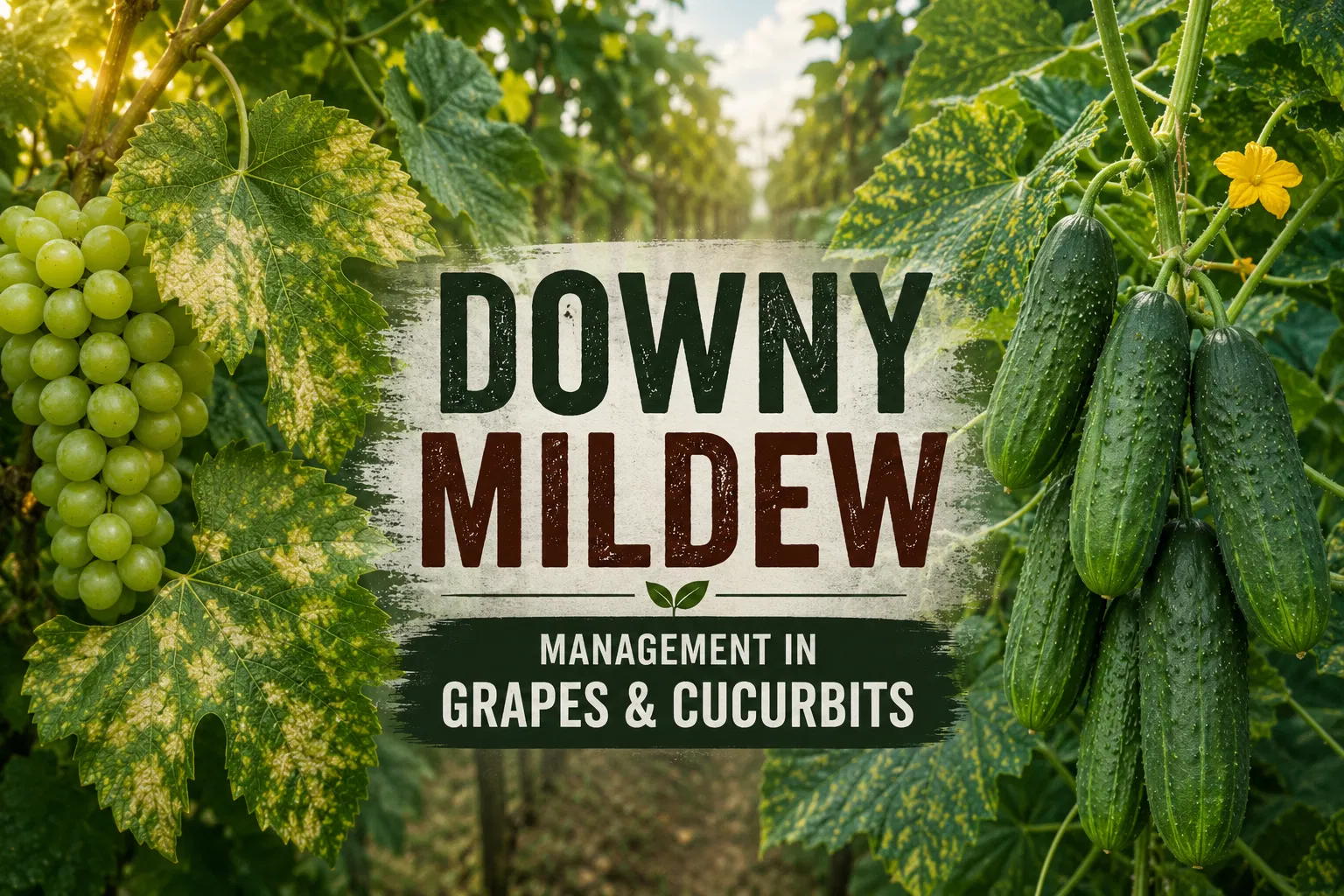
Downy mildew can move fast, damage crops quickly, and leave growers with a serious yield loss if it is not managed early. In grapes and cucurbits, this disease thrives in cool, wet conditions and can spread rapidly through leaves, vines, and fruit. The good news is that with the right downy mildew management strategy, you can reduce pressure, protect plant health, and improve crop quality throughout the season.
What Is Downy Mildew?
Downy mildew is a fungal-like disease caused by oomycetes that attack a wide range of plants. In grapes, it is caused by Plasmopara viticola, while cucurbits such as cucumbers, melons, squash, and pumpkins are commonly affected by Pseudoperonospora cubensis. Although the pathogens are different, the disease behaves similarly in both crops: it spreads in moist environments, attacks leaf tissue, and can cause major defoliation if left unchecked.
Because downy mildew prefers humidity, leaf wetness, and moderate temperatures, outbreaks often begin after periods of rain, heavy dew, or overhead irrigation. Once established, the disease can move quickly through a field or vineyard, making early action essential.
Downy Mildew Symptoms in Grapes and Cucurbits
Recognizing symptoms early is one of the most important parts of downy mildew management in grapes and cucurbits. The disease may look different depending on the crop, but there are clear warning signs to watch for.
Symptoms in Grapes
- Yellowish, oil-like spots on the upper leaf surface
- White, fuzzy fungal growth on the underside of leaves during humid conditions
- Brown, necrotic leaf areas as infection progresses
- Leaf curling, defoliation, and reduced vine vigor
- In severe cases, damage to young clusters and poor fruit development
Symptoms in Cucurbits
- Angular, yellow spots limited by leaf veins
- Gray to purple mildew growth on the underside of leaves
- Rapid yellowing and browning of foliage
- Reduced fruit size and quality due to premature leaf loss
- Severe defoliation under favorable disease conditions
Tip: Inspect the undersides of leaves regularly, especially after rainy or humid weather, since downy mildew often begins there before spreading visibly across the canopy.
Why Downy Mildew Spreads So Quickly
Downy mildew spreads through spores that travel in wind-driven rain, splashing water, and infected plant material. When conditions are favorable, a single infection can produce many new spores in a short time. Dense canopies, poor airflow, and frequent irrigation can further increase disease pressure.
In grapes, shaded and overcrowded vines create the humid microclimate that downy mildew loves. In cucurbits, broad leaves and close spacing can trap moisture near the soil surface and within the canopy. That is why cultural control is just as important as chemical treatment.
Best Practices for Downy Mildew Management
Effective downy mildew management in grapes and cucurbits depends on an integrated approach. Combining cultural, biological, and chemical tools gives the best chance of keeping disease under control.
1. Start with Prevention
Prevention is the foundation of disease management. Once downy mildew appears, it can be difficult to eliminate completely.
- Plant resistant or tolerant varieties when available
- Use certified disease-free seed or transplants
- Choose planting sites with good air movement and drainage
- Avoid low areas where moisture tends to collect
- Rotate crops to reduce pathogen buildup in the field
2. Improve Canopy Airflow
Reducing moisture inside the canopy helps slow disease spread. Good spacing and pruning can make a major difference in both grapes and cucurbits.
- Prune grapevines to open the canopy and improve sunlight penetration
- Use proper row spacing in cucurbits to avoid dense foliage
- Remove excess shoots, leaves, or infected plant parts when appropriate
- Keep weeds under control so airflow is not restricted near the ground
3. Manage Irrigation Carefully
Water management plays a major role in downy mildew prevention. The goal is to avoid prolonged leaf wetness and standing moisture.
- Prefer drip irrigation over overhead irrigation when possible
- Water early in the day so foliage dries quickly
- Avoid overwatering
- Monitor weather forecasts and reduce irrigation during wet periods
4. Scout Regularly and Act Early
Frequent scouting helps you detect the first signs of infection before the disease becomes widespread. Walk fields or vineyards at least once a week, and more often during humid or rainy weather.
Look for:
- Early leaf spotting
- Underside fungal growth
- Rapid yellowing in localized areas
- Patterns of disease near field edges or low-lying areas
If you find suspicious symptoms, confirm the diagnosis quickly and begin management immediately. Timing matters, especially during active disease periods.
Fungicide Programs for Downy Mildew Control
Fungicides are often necessary for strong downy mildew management in grapes and cucurbits, especially when environmental conditions favor disease. However, they work best when used as part of a broader management plan.
Choosing the Right Fungicide
Select products labeled for the specific crop and disease. Grapes and cucurbits have different registered materials, so always follow label directions carefully. Products may include protectants, systemic fungicides, or combination products designed to prevent infection or limit disease spread.
Apply Before Severe Infection
For best results, fungicides should be applied preventively or at the very first sign of risk. Waiting until the crop is heavily infected can limit effectiveness.
- Use protective sprays before rainy periods
- Rotate fungicide classes to reduce resistance risk
- Maintain proper spray coverage, especially on leaf undersides
- Reapply according to label intervals and weather pressure
Resistance Management Matters
Downy mildew pathogens can develop resistance when the same fungicide mode of action is used repeatedly. Rotating products and using tank mixes when allowed can help preserve long-term effectiveness.
Best practice: Never rely on one product alone for the entire season. Build a rotation plan that aligns with crop stage, disease risk, and label guidance.
Organic Approaches to Downy Mildew Management
Organic growers can still use a strong management plan, although the toolkit is more limited. Cultural control becomes even more important, and approved organic fungicides may help suppress disease when applied early.
- Use resistant varieties when possible
- Maximize airflow and reduce humidity around plants
- Remove infected debris promptly
- Apply approved organic protectants according to label instructions
- Scout frequently and respond at the first sign of pressure
Consistency is key in organic systems. Because curative options are limited, prevention and timing are critical for keeping downy mildew under control.
Seasonal Strategy for Grapes and Cucurbits
A successful downy mildew program changes with the season. Early planning helps reduce risk before weather turns favorable for disease.
Early Season
- Use clean seed, transplants, or nursery stock
- Prepare the field or vineyard for good drainage
- Set up a monitoring schedule
- Apply preventive sprays if disease risk is high
Midseason
- Monitor canopy density and moisture levels
- Continue scouting after rain events
- Prune or thin where needed to improve airflow
- Maintain fungicide rotations if pressure increases
Late Season
- Watch for rapid disease spread as canopy decline begins
- Protect remaining healthy foliage to support fruit quality
- Remove and destroy infected crop residue after harvest
- Plan rotation and sanitation strategies for the next season
Why Integrated Management Works Best
No single tactic will fully solve downy mildew in grapes and cucurbits. The most effective approach combines resistant varieties, sanitation, canopy management, irrigation control, scouting, and well-timed fungicide applications. When these practices work together, disease pressure drops significantly and crop performance improves.
Growers who stay proactive are usually in the strongest position. Waiting until symptoms are widespread often means more expensive control, greater yield loss, and reduced fruit quality.
Conclusion
Downy mildew management in grapes and cucurbits requires vigilance, planning, and quick response. By focusing on prevention, improving airflow, managing moisture, scouting regularly, and using fungicides strategically, you can protect your crop from one of the most damaging foliar diseases in production agriculture.