Downy mildew in bitter gourd spreads fast once it takes hold, turning healthy vines patchy and yellow within days and cutting into both yield and fruit quality. It's one of the most common diseases growers face during humid weather, and catching it early makes all the difference. Here are 2 verified solutions to bring it under control.
Signs to Watch For
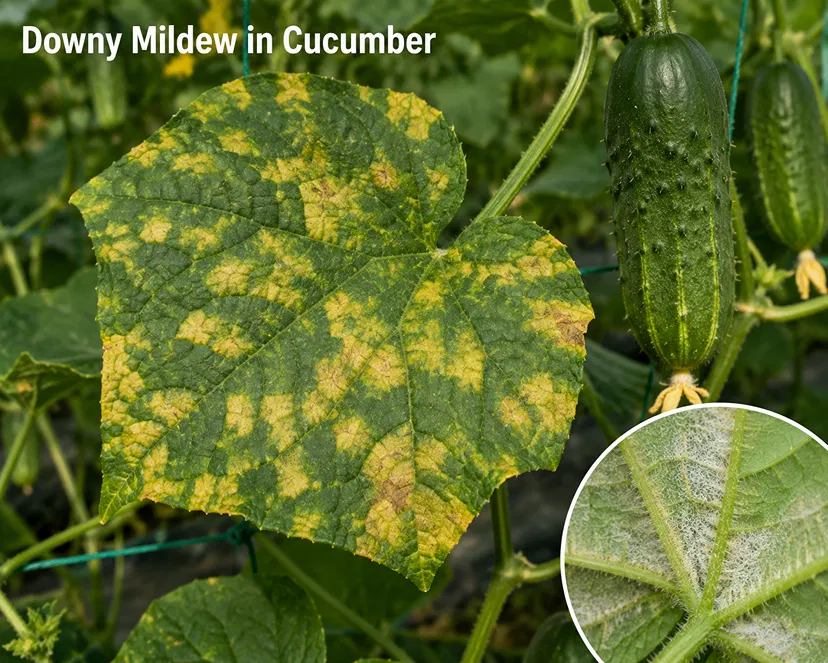
- Yellow, angular patches on the upper leaf surface, boxed in by the leaf veins
- A grey to purplish fuzzy growth on the underside of the leaf, most visible in the early morning
- Older, lower leaves affected first, drying and curling as the disease progresses
- Rapid defoliation in humid conditions, leaving vines thin and exposed
- Smaller, poor-quality fruit on heavily affected plants
Causes
Downy mildew in bitter gourd is caused by the oomycete pathogen Pseudoperonospora cubensis. It spreads fastest in high humidity, cool nights with heavy dew, and overhead irrigation, and moves easily between overcrowded vines with poor air circulation. Wind-borne spores from nearby infected cucurbit crops can also introduce the disease into a healthy field.
Metiram 55% + Pyraclostrobin 5% WG
This combination pairs a multi-site contact fungicide with a systemic strobilurin that blocks the fungus's energy production. Metiram prevents spores from germinating on contact, while pyraclostrobin moves into the leaf tissue for lasting, curative protection. Together they hold up well even in wet, humid conditions.
Product Recommendation
Mandipropamid 23.4% SC
A contact and translaminar fungicide that disrupts phospholipid biosynthesis and cell wall formation in the fungus, stopping spore germination before it can spread further. It locks onto the leaf surface and moves into the tissue, giving strong rainfast protection to new growth.
Product Recommendation
Disclaimer: Always confirm current label registration, approved dosage, water volume, and pre-harvest interval (PHI) for your state before using any product — labels are periodically revised by regulatory authorities.
This guide is a general advisory. Do your own research and verification before using any product. Always confirm suitability for your crop stage, region, and field conditions before making any purchase, spray, or crop-management decision.