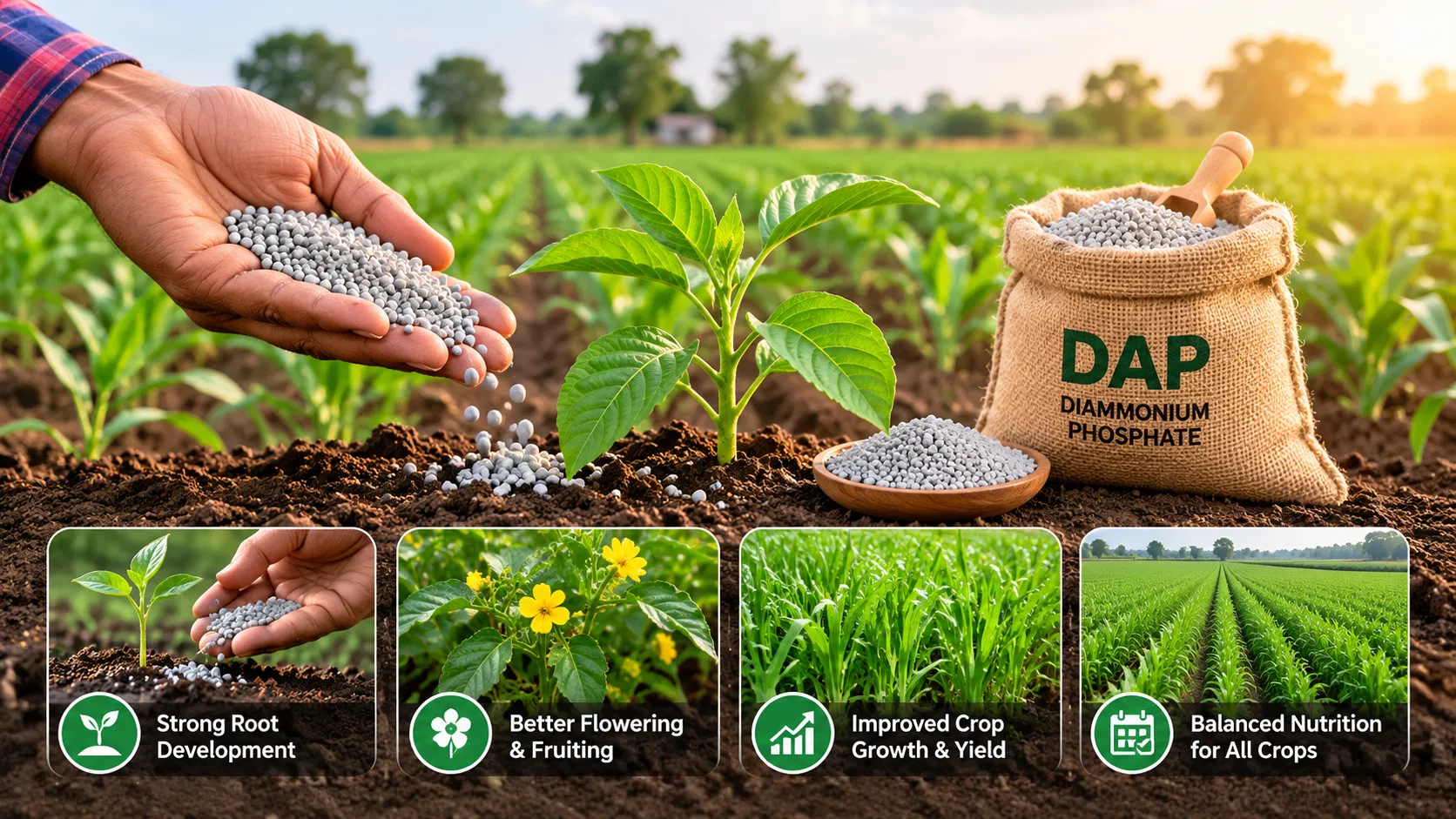
If you want a fertilizer that delivers a fast, reliable boost of phosphorus and nitrogen, diammonium phosphate (DAP) is one of the most widely used options in agriculture. Farmers and gardeners value DAP for its strong nutrient content, easy handling, and proven ability to support early root development, vigorous growth, and higher crop performance. Understanding the right diammonium phosphate uses and application rates can make a major difference in how effectively your crops respond.
What Is Diammonium Phosphate (DAP)?
Diammonium phosphate is a granular, water-soluble fertilizer commonly formulated as 18-46-0, meaning it contains 18% nitrogen and 46% phosphorus expressed as phosphate. It is one of the most concentrated sources of phosphorus available for crop production.
DAP is especially popular because it supplies two essential nutrients at once:
- Nitrogen to support early vegetative growth
- Phosphorus to encourage root development, flowering, and seed formation
Because of this nutrient combination, DAP is widely used in row crops, cereals, vegetables, pasture systems, and even some fruit and ornamental plantings.
Main Uses of Diammonium Phosphate
1. Starter Fertilizer for Early Growth
One of the most common diammonium phosphate uses is as a starter fertilizer at planting. Early in the season, young plants need phosphorus to establish strong roots and absorb nutrients efficiently. DAP helps crops get off to a strong start, particularly in cool soils where phosphorus availability is often limited.
2. Base or Pre-Plant Fertilizer
DAP can be applied before planting and incorporated into the soil. This helps create a nutrient-rich zone in the root area, improving nutrient access during early crop development. It is often used in fields preparing for corn, wheat, rice, soybeans, and other high-demand crops.
3. Phosphorus Deficiency Correction
When soil tests show low phosphorus levels, DAP is a practical corrective fertilizer. It helps restore fertility and supports balanced crop nutrition. In soils with phosphorus deficiency, crops may show poor root growth, delayed maturity, and reduced yield potential.
4. Fertigation and Broadcast Applications
In some production systems, DAP may be used in fertigation programs or broadcast onto fields before rainfall or irrigation. Its solubility makes it suitable for certain liquid feeding or blended fertilizer systems, although compatibility and crop needs should always be checked first.
5. Blended Fertilizer Formulations
DAP is often used as a component in fertilizer blends because it provides a strong phosphorus base. It combines well with other nutrients to create customized fertilizer programs for specific crops, soil conditions, and seasonal goals.
Benefits of Using DAP Fertilizer
Diammonium phosphate is favored because it offers several important agronomic benefits:
- High nutrient concentration for efficient fertilizer use
- Promotes strong root development in young plants
- Supports flowering and seed production
- Improves early crop vigor
- Easy to store, handle, and apply
- Works well in many cropping systems
Because DAP contains both nitrogen and phosphorus, it can reduce the need for multiple fertilizer products at planting time, saving time and improving efficiency.
Diammonium Phosphate Application Rates
The correct diammonium phosphate application rate depends on crop type, soil fertility, yield goals, planting method, and soil test results. There is no single rate that fits every situation, but general application ranges can help guide use.
Typical General Application Rates
- Row crops: 50 to 200 kg per hectare
- Field crops with phosphorus deficiency: 100 to 250 kg per hectare
- Starter placement at planting: 20 to 50 kg per hectare, depending on crop sensitivity and placement method
- Broadcast application: Adjusted according to soil test recommendations and nutrient targets
These rates are only general references. Soil analysis should always guide the final decision to avoid under- or over-application.
Application Rates by Crop Type
Corn: DAP is often used at planting or pre-plant. Starter rates are usually modest to avoid seedling injury while still delivering enough phosphorus for early growth.
Wheat: Wheat responds well to phosphorus early in the season. DAP can be applied before planting or as a band near the seed zone.
Rice: In flooded or low-phosphorus soils, DAP is commonly used to improve establishment and early root growth.
Vegetables: Rates are typically lower and should be carefully managed based on crop sensitivity and soil conditions.
Pasture and forage crops: DAP is used to improve stand establishment and support leafy growth, especially where soil phosphorus is limited.
How to Apply DAP Fertilizer Correctly
Proper placement matters as much as the rate itself. DAP works best when nutrients are positioned where roots can reach them efficiently.
- Test the soil first to determine phosphorus and nitrogen needs.
- Choose the application method based on crop type and equipment availability.
- Apply before planting or at planting for best early-season response.
- Use band placement carefully to reduce nutrient loss and improve uptake.
- Avoid over-application, especially in sensitive crops or phosphorus-rich soils.
When broadcasting DAP, incorporation into the soil can improve nutrient efficiency and reduce surface losses. In starter applications, keeping fertilizer slightly away from the seed helps prevent damage while still supporting early growth.
Important Safety and Management Tips
Although DAP is widely used and effective, it should be handled with care to get the best results.
- Store in a cool, dry place to prevent caking
- Avoid mixing without checking compatibility if using in blends or liquid systems
- Follow local fertilizer recommendations and environmental guidelines
- Do not apply more than the crop or soil can use
- Use protective equipment during handling and application
Overuse can lead to nutrient imbalance, wasted input costs, and potential environmental concerns. Responsible fertilizer management improves both yield and sustainability.
When DAP Works Best
DAP is most effective when crops need a strong phosphorus supply early in development, especially in soils with low to moderate phosphorus levels. It performs well in cool climates, newly planted fields, and systems where rapid root establishment is critical.
Best results come from matching DAP application rates to soil test data, crop demand, and placement method.
Conclusion
Diammonium phosphate remains one of the most valuable fertilizers in modern agriculture because it delivers a powerful combination of phosphorus and nitrogen in a convenient form. Whether used as a starter fertilizer, broadcast application, or soil fertility correction tool, DAP can significantly improve early growth and final yield when applied correctly.
If you want the best results, start with a soil test, choose the right application method, and adjust your diammonium phosphate application rate to match the needs of your crop. Smart use of DAP leads to stronger roots, healthier plants, and more productive harvests.