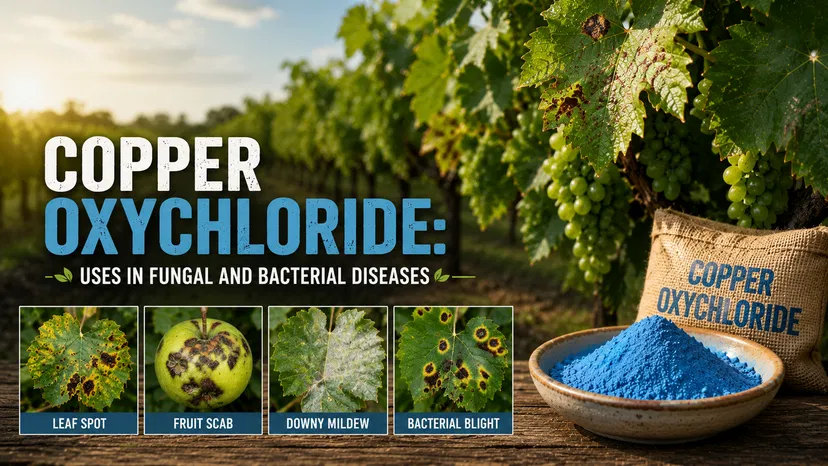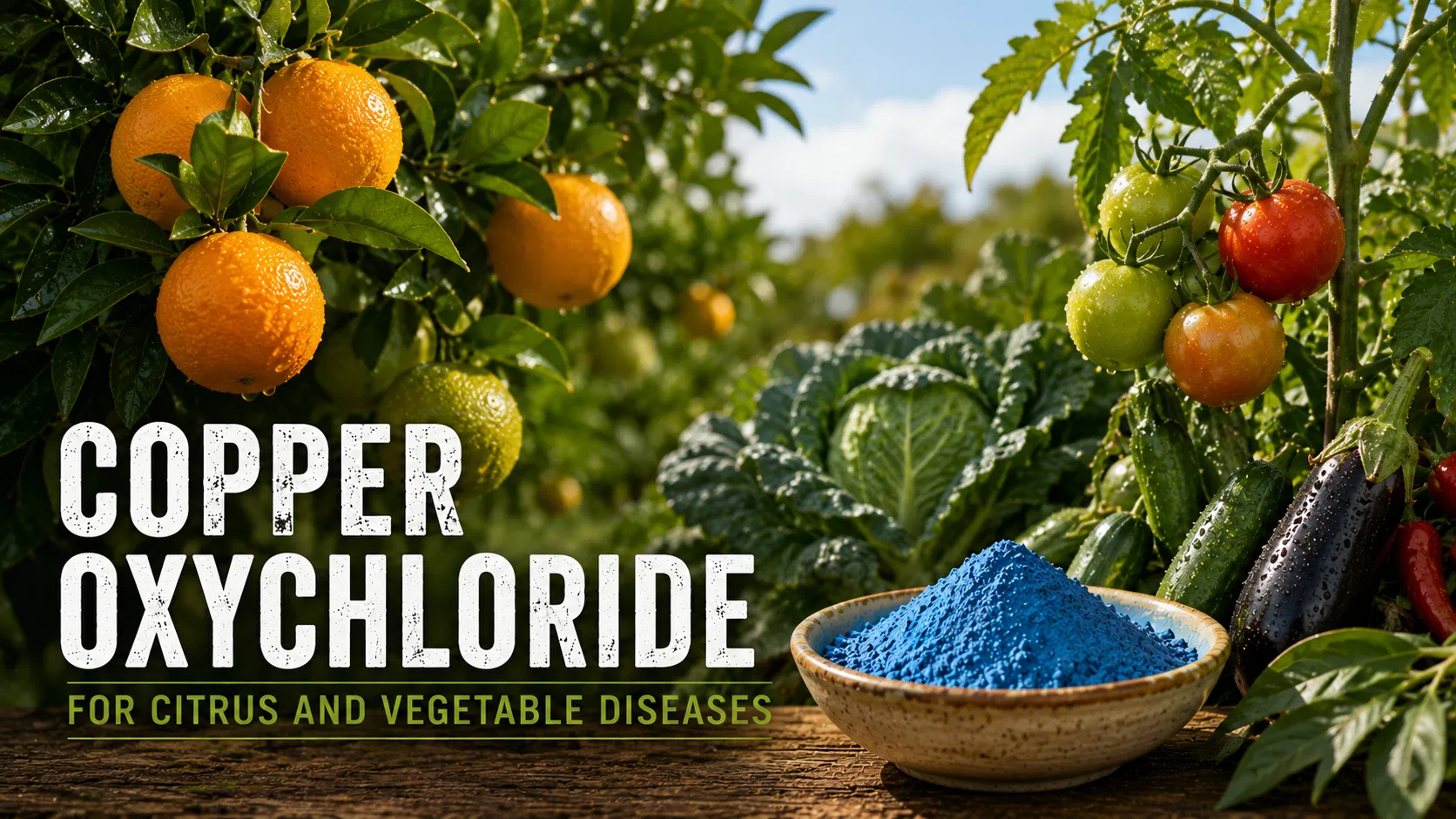
When citrus leaves start spotting and vegetable crops show signs of blight, a fast, reliable disease-control strategy can make all the difference. Copper oxychloride is one of the most trusted fungicides for managing a wide range of fungal and bacterial diseases in citrus and vegetable crops. Used correctly, it can help protect plant health, preserve yield, and support stronger harvests.
In this guide, we'll explore how copper oxychloride works, which diseases it helps control, and how to use it safely and effectively in citrus and vegetable production.
What Is Copper Oxychloride?
Copper oxychloride is a copper-based protective fungicide and bactericide commonly used in agriculture. It works by releasing copper ions that interfere with the growth and spread of disease-causing pathogens on plant surfaces.
Unlike systemic products that move inside the plant, copper oxychloride acts as a contact fungicide. That means it forms a protective layer on leaves, stems, and fruit to help prevent infection before it starts.
Why Farmers Use Copper Oxychloride
Copper oxychloride is valued for its broad-spectrum activity and versatility across many crops. It is especially useful in wet, humid, and disease-prone growing regions where fungi and bacteria spread quickly.
- Protects against fungal and bacterial diseases
- Suitable for citrus, tomatoes, peppers, potatoes, onions, and other vegetables
- Helps prevent leaf spots, blights, cankers, and rots
- Can be integrated into preventive spray programs
- Offers long-lasting surface protection when applied properly
Common Citrus Diseases Controlled by Copper Oxychloride
Citrus crops are highly susceptible to diseases that affect leaves, fruit, and twigs. Copper oxychloride is often used to reduce the spread of key citrus pathogens, especially during periods of active growth and rainfall.
1. Citrus Canker
Citrus canker is a serious bacterial disease that causes raised lesions on leaves, fruit, and stems. Copper oxychloride helps suppress the spread of infection and is often used as part of a broader management program.
2. Melanose
Melanose appears as rough, dark lesions on fruit and foliage. Copper oxychloride applications can help protect new growth and reduce visible damage.
3. Greasy Spot
This fungal disease causes leaf yellowing and premature leaf drop. Copper sprays are commonly used as a preventive measure to minimize infection pressure.
4. Anthracnose
Anthracnose can affect blossoms, fruit, and twigs, especially in moist conditions. Copper oxychloride helps create a protective barrier against disease development.
Vegetable Diseases Managed with Copper Oxychloride
Vegetable growers often rely on copper oxychloride to manage fungal and bacterial diseases that can rapidly reduce plant vigor and market quality. It is especially useful in crops exposed to frequent rain or overhead irrigation.
1. Bacterial Spot
Bacterial spot commonly affects tomatoes and peppers, causing dark lesions on leaves and fruit. Copper oxychloride is frequently used to slow its spread and protect healthy tissue.
2. Early Blight
Early blight is a major disease in tomatoes and potatoes. Copper oxychloride can help reduce leaf infection when applied preventively.
3. Late Blight
While not a cure, copper oxychloride may be included in preventive spray programs to help suppress late blight risk under favorable conditions.
4. Downy Mildew
Downy mildew can attack several vegetables, including cucurbits and leafy crops. Copper-based protection can be part of an integrated approach to disease management.
5. Leaf Spots and Blights
Various fungal leaf spots and blights can spread quickly through vegetable fields. Copper oxychloride helps protect healthy foliage and reduce overall disease pressure.
How Copper Oxychloride Works
Copper oxychloride works by disrupting enzyme activity and other essential processes in fungi and bacteria. Once sprayed on the plant surface, it forms a protective deposit that helps prevent spores and pathogens from establishing infection.
Important: Copper oxychloride is most effective as a preventive treatment, not a curative one. It should be applied before disease becomes severe.
Application Tips for Best Results
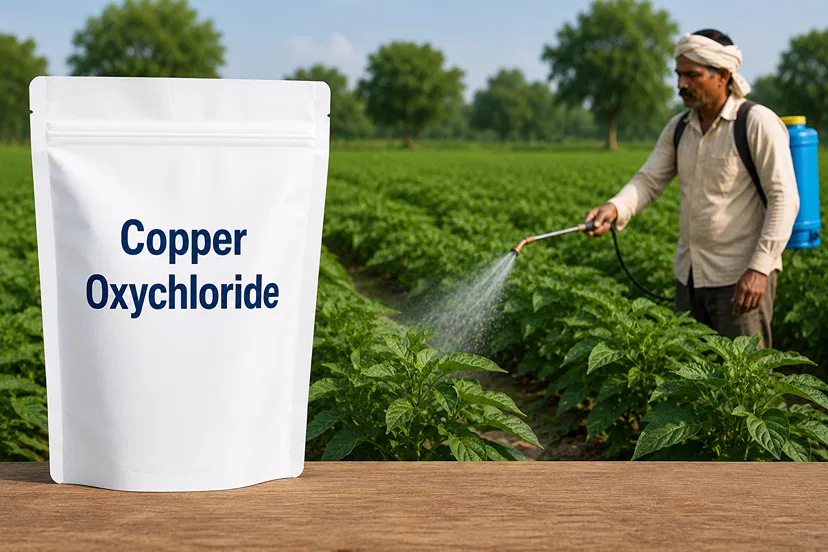
To get the best disease-control results, timing and coverage are critical. Copper oxychloride performs best when applied according to crop stage, weather conditions, and disease pressure.
- Apply preventively: Start before disease becomes visible or at the first sign of risk.
- Ensure thorough coverage: Spray all plant surfaces, including the undersides of leaves.
- Use during favorable conditions: Avoid spraying before heavy rain whenever possible, as wash-off can reduce effectiveness.
- Follow label rates: Always use the recommended dosage for the crop and disease target.
- Rotate with other products: Use in rotation with other fungicide classes to reduce resistance risk.
Safety and Crop Considerations
Although copper oxychloride is widely used, it must be handled carefully to avoid crop injury and environmental buildup. Excessive copper use can lead to phytotoxicity, especially on tender growth or under hot conditions.
- Do not exceed recommended application rates
- Avoid repeated high-dose sprays without a management plan
- Test on a small area if using on sensitive crops
- Wear protective equipment during mixing and spraying
- Observe pre-harvest intervals and local regulations
Because copper can accumulate in soil over time, responsible use is essential. A well-planned program helps protect crops while minimizing long-term environmental impact.
When to Use Copper Oxychloride in Crop Programs
Copper oxychloride is often most effective during:
- Rainy or humid periods
- Early crop growth stages
- Flowering and fruit set in citrus
- Periods of disease pressure in tomato, pepper, and potato crops
- Integrated disease management programs where prevention is key
It works best when paired with good farm hygiene, resistant varieties, crop rotation, proper spacing, and irrigation management.
Benefits of Using Copper Oxychloride
For growers looking for a dependable protective fungicide, copper oxychloride offers several practical advantages:
- Broad-spectrum protection against multiple diseases
- Useful in organic and conventional systems, depending on local standards
- Supports crop quality by reducing blemishes and infection
- Fits preventive spray schedules for high-risk seasons
- Cost-effective disease management for many growers
Conclusion
Copper oxychloride remains a valuable tool for managing citrus and vegetable diseases when used as part of a preventive, well-timed spray strategy. From citrus canker and melanose to bacterial spot and leaf blights in vegetables, it offers broad protection that can help growers safeguard crop health and yield.
If you want stronger disease control, better crop protection, and a more proactive approach to plant health, copper oxychloride deserves a place in your management plan. Use it wisely, follow label directions, and combine it with good agronomic practices for the best results.