Citrus trees are prized for their glossy leaves, fragrant blossoms, and sweet fruit, but a citrus leaf miner infestation can quickly ruin that beauty. If you've noticed curled, twisted, or silvery new leaves on your lemon, lime, orange, or grapefruit tree, you may already be dealing with this common pest. The good news is that effective citrus leaf miner control starts with knowing exactly what to look for and when to spray.
What Is Citrus Leaf Miner?
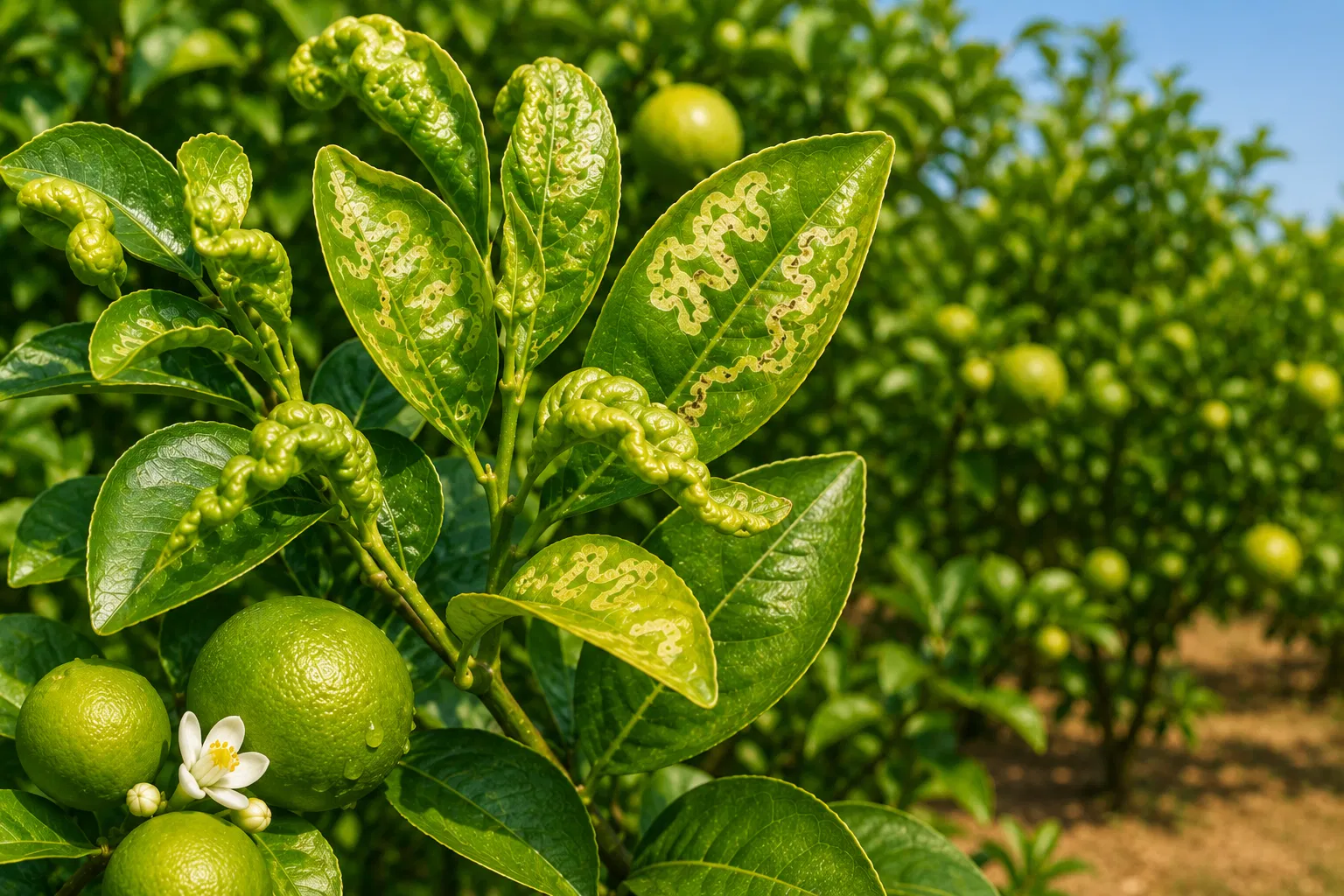
Citrus leaf miner is a tiny moth whose larvae feed inside young citrus leaves. Instead of chewing holes on the surface, the larvae tunnel through the tender leaf tissue, creating winding trails and distorted growth. While mature trees usually survive minor damage, repeated infestations can weaken young trees and reduce overall vigor.
This pest is especially active during periods of flush growth, when citrus trees produce soft, new leaves. That makes timing critical. Spraying too early or too late often wastes effort and reduces effectiveness.
Symptoms of Citrus Leaf Miner Damage
Identifying citrus leaf miner symptoms early gives you the best chance to protect new growth. Look closely at the newest leaves on the tree, especially during warm weather and after rain or irrigation that triggers fresh flushes.
Common signs include:
- Wavy, curled, or twisted leaves on tender new growth
- Silvery, winding trails visible on the leaf surface
- Blister-like tunnels between the upper and lower leaf layers
- Leaves that look distorted or stunted
- Reduced growth on young citrus trees
The damage is usually most visible on soft, newly expanded leaves. Older leaves are typically not affected because the insect prefers tender tissue. If you gently hold a leaf up to the light, the feeding trails may be easier to spot.
Tip: The most serious citrus leaf miner damage happens to young trees, nursery plants, and any citrus tree producing frequent flushes of new growth.
Why Citrus Leaf Miner Is a Problem
Although leaf miner damage may look mostly cosmetic at first, it can create real stress for citrus trees. Severe infestations can reduce the tree's ability to photosynthesize, slow growth, and make new leaves more vulnerable to other problems. On young trees, repeated damage can delay establishment and reduce long-term productivity.
Leaf miner injury can also make new foliage more susceptible to scorching, wind stress, and secondary pests. That is why citrus leaf miner control is not just about appearance. It is about protecting the tree's overall health during its most vulnerable stage of growth.
Best Time to Spray for Citrus Leaf Miner
Spray timing is the key to successful citrus leaf miner control. The best time to spray is when new leaves are just emerging and before the larvae enter the leaf tissue. Once the larvae are inside the leaf, most contact sprays will not reach them effectively.
Spray when you see:
- New citrus flush beginning to expand
- Fresh leaves still soft and light green
- Early signs of moth activity in the evening
- Very small feeding damage before visible leaf curling starts
Because leaf miners attack new growth in cycles, you may need to monitor your trees regularly. Citrus trees can produce several flushes per year, and each one may attract leaf miner activity.
In many climates, warm spring and summer conditions are the highest-risk periods. However, in frost-free regions, flushes can occur nearly year-round. That means inspection should be ongoing rather than seasonal.
How to Control Citrus Leaf Miner Effectively
Successful control usually works best with a combination of monitoring, cultural care, and targeted spray applications. A single treatment rarely solves the problem long term, especially if the tree keeps producing flushes.
1. Monitor new growth closely
Check your trees at least once or twice a week during active growth periods. Focus on the newest leaves because that is where infestation starts. Early detection makes all the difference.
2. Prune with care
Avoid heavy pruning that triggers excessive tender growth, since that can attract more leaf miner activity. Light, strategic pruning is better than stimulating a major flush of vulnerable new leaves.
3. Use targeted sprays at the right time
If spray control is needed, apply products when the leaves are still young and before larvae tunnel inside. Read the label carefully and follow all directions for citrus use. Many treatments are more effective when repeated during each growth flush if pressure remains high.
4. Support tree health
Healthy trees are better able to tolerate insect pressure. Keep citrus trees watered properly, mulched, and fertilized according to their needs. Avoid overfertilizing, which can encourage excessive tender growth and make infestation more likely.
Spray Options for Citrus Leaf Miner Control
Several spray types may be used depending on the level of infestation and your gardening approach. The best product depends on the age of the tree, severity of damage, and local recommendations. Always follow label instructions and use only products approved for citrus.
Common spray categories include:
- Horticultural oils for smothering eggs and young larvae
- Insecticidal soaps for early-stage control on tender foliage
- Systemic treatments in some settings, where permitted and appropriate
- Neem-based products as part of a broader pest management plan
For many home growers, horticultural oil is a practical option because it can help protect fresh leaves if applied at the right stage. The critical factor is coverage and timing. Spray the new flush thoroughly, especially the undersides and growing tips where pests are active.
Late sprays are much less effective. Once the leaf miner has entered the leaf, visible damage may continue even if the insect is no longer active. That is why prevention during flush development is so important.
What Not to Do
Some common mistakes make citrus leaf miner control much harder than it needs to be.
- Do not wait until leaves are heavily curled before spraying.
- Do not overprune and trigger unnecessary new growth.
- Do not assume one spray will protect the tree all season.
- Do not treat mature, hardened leaves when the infestation is on new flush only.
- Do not ignore repeated infestations on young citrus trees.
Timing, consistency, and observation matter far more than aggressive treatment after the fact. The earlier you act, the better your results will be.
When to Call It Cosmetic and When to Act
Not every leaf miner problem requires panic. On established citrus trees, minor leaf miner damage is often mostly cosmetic and may not justify repeated intervention. However, if the tree is young, newly planted, or producing frequent flushes with visible damage, control becomes more important.
If the majority of new leaves are affected or the tree is struggling to grow normally, treatment is usually worthwhile. Healthy, undamaged new foliage helps the tree build energy, so protecting that growth can pay off quickly.
Final Thoughts on Citrus Leaf Miner Control
Citrus leaf miner control is all about watching for the first signs of new flushes and spraying before larvae enter the leaves. Once you understand the symptoms and timing, this pest becomes much easier to manage. Look for curled, silvery, distorted young leaves, monitor growth closely, and act early with the right spray approach.
If you want better results, make citrus leaf miner management a routine part of your tree care. Check new growth regularly, spray at the right stage, and keep trees healthy so they can bounce back quickly. With timely action and consistent monitoring, you can protect your citrus trees and keep them growing strong.