Healthy paddy fields do not always need more chemical inputs to produce better results. In many rice-growing systems, biofertilizers for paddy offer a smarter, soil-friendly way to improve nutrient availability, strengthen root growth, and support higher yields. When applied correctly in the field, these biological inputs can help farmers reduce fertilizer costs while improving soil health season after season.
If you want stronger seedlings, improved tillering, and better nutrient efficiency in rice cultivation, understanding the field application of biofertilizers in paddy is essential. The key is not just choosing the right product, but applying it at the right stage, in the right way, and under the right field conditions.
Why Biofertilizers Matter in Paddy Cultivation
Paddy fields are unique because they are often flooded, low in oxygen, and heavily dependent on nutrient management. Chemical fertilizers can deliver quick results, but they do not always improve long-term soil fertility. Biofertilizers work differently. They contain beneficial microorganisms that help plants access nutrients more efficiently.
In rice farming, biofertilizers can:
- Fix atmospheric nitrogen and make it available to plants
- Improve phosphorus solubilization in the root zone
- Support better root development and seedling vigor
- Enhance microbial activity in flooded soils
- Reduce dependence on synthetic fertilizers
- Improve soil structure and long-term productivity
For farmers focused on sustainable rice production, biofertilizers are not just an alternative. They are a practical tool for improving both productivity and soil resilience.
Common Biofertilizers Used in Paddy Fields
Different biofertilizers serve different purposes in rice cultivation. Choosing the right one depends on your soil condition, crop stage, and fertility goals.
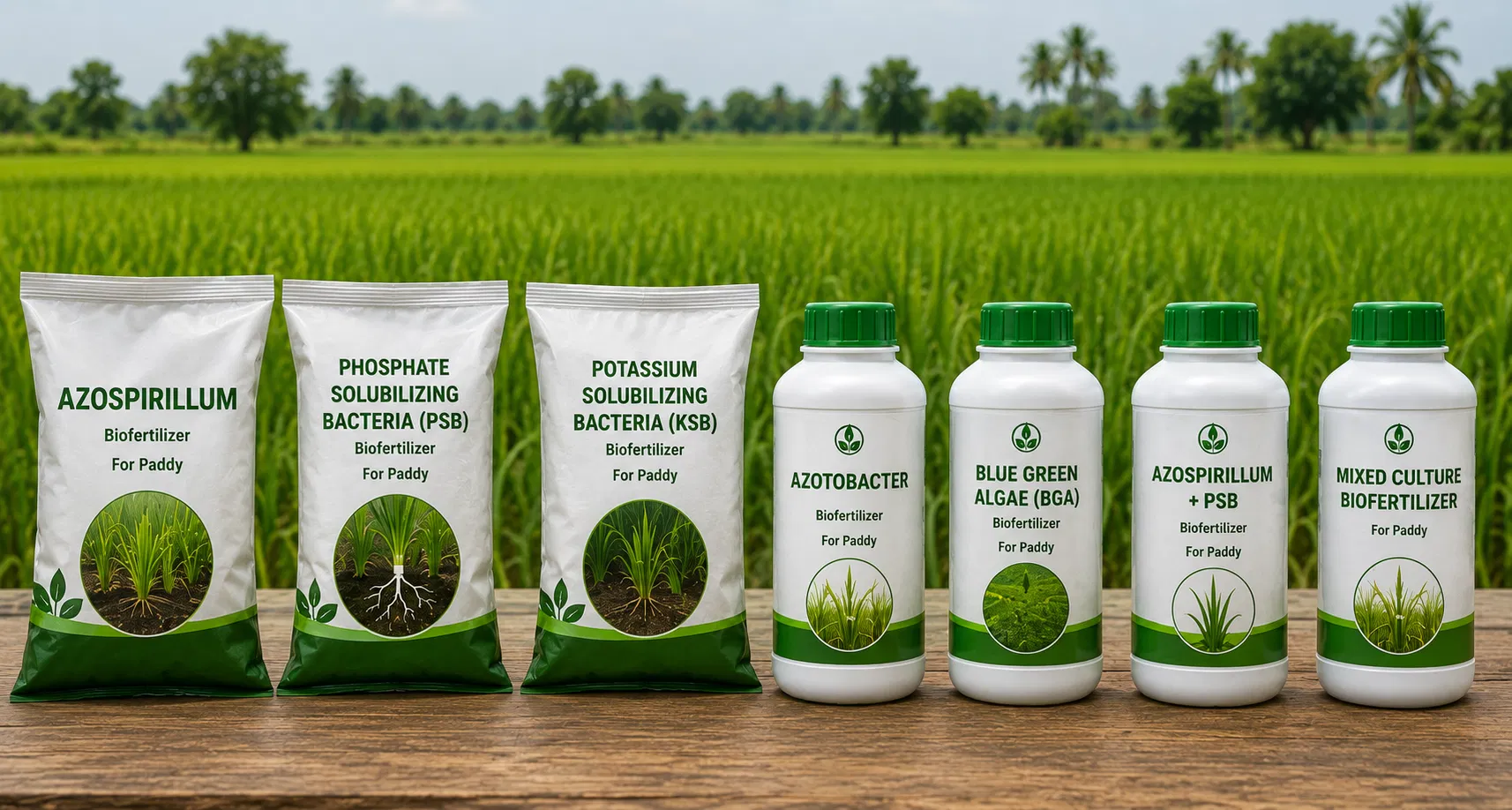
1. Azospirillum
Azospirillum is a nitrogen-fixing biofertilizer widely used in paddy. It helps supply nitrogen to the crop and stimulates root growth, which improves nutrient uptake.
2. Azotobacter
Azotobacter is another nitrogen fixer, often used in nursery and main field applications. It performs well in aerobic conditions and supports healthy plant growth.
3. Phosphate-Solubilizing Bacteria (PSB)
These microorganisms convert unavailable phosphorus into forms plants can absorb. This is especially useful in soils where phosphorus is present but locked in unavailable forms.
4. Blue-Green Algae and Azolla
In lowland rice systems, blue-green algae and Azolla can contribute natural nitrogen, improve organic matter, and support eco-friendly field management.
5. Potassium and Zinc Solubilizers
These are increasingly important in nutrient-deficient paddy soils. They help release potassium and zinc, both of which are important for crop vigor and grain quality.
Best Time to Apply Biofertilizers in Paddy
Timing plays a major role in the success of biofertilizer application. The best results usually come when the microbes are introduced during early crop stages, when roots are actively developing.
- Nursery stage: Seed treatment or seedling root dipping helps establish beneficial microbes early.
- Transplanting stage: Root dipping before transplanting improves root colonization in the field.
- Main field stage: Soil application or broadcasting can support nutrient cycling during crop growth.
Applying biofertilizers at the right stage improves survival of the microorganisms and increases their effectiveness in the field.
Field Application Methods for Biofertilizers in Paddy
There are several effective ways to apply biofertilizers in paddy fields. The method you choose should match the product type and local farming practice.
1. Seed Treatment
Seed treatment is one of the most common and efficient methods. It coats seeds with beneficial microbes before sowing, helping seedlings establish quickly.
How to do it:
- Mix the biofertilizer with water or a sticker solution as recommended by the manufacturer
- Coat the seeds evenly
- Dry seeds in shade before sowing
This method works well for direct-seeded paddy and nursery preparation.
2. Seedling Root Dip
For transplanted rice, root dipping is highly effective. It ensures the microbes attach directly to the roots before seedlings enter the main field.
Root dipping gives biofertilizers a stronger start because the microorganisms are placed exactly where the plant needs them most: around the roots.
How to do it:
- Prepare a slurry of biofertilizer and water
- Dip seedling roots for 20–30 minutes before transplanting
- Transplant immediately after dipping
3. Soil Application
Soil application is useful for larger field areas and for biofertilizers that work best in the root zone. This method is often combined with organic matter for better distribution.
How to do it:
- Mix biofertilizer with well-decomposed farmyard manure or compost
- Broadcast evenly in the field
- Apply during land preparation or just before transplanting
4. Nursery Bed Application
Applying biofertilizers to nursery beds helps young seedlings develop stronger roots and better nutrient uptake before they are moved to the field.
Field Conditions That Improve Biofertilizer Performance
Biofertilizers are living microorganisms, so they perform best under favorable conditions. Poor field management can reduce their effectiveness.
- Avoid excessive chemical use: High doses of pesticides and some fertilizers can harm beneficial microbes.
- Maintain organic matter: Compost and manure help create a supportive environment for microorganisms.
- Use fresh biofertilizers: Expired or poorly stored products may contain fewer viable microbes.
- Keep proper moisture: Microbes need moisture to survive and become active.
- Apply in shade or cool conditions: Direct sunlight can reduce microbial viability during application.
Good field conditions can significantly improve the success of biofertilizers in paddy farming.
Dos and Don’ts for Paddy Farmers
Dos
- Buy biofertilizers from trusted suppliers
- Check the expiry date and storage instructions
- Use the correct dose as per label recommendations
- Combine with organic inputs when possible
- Apply during cooler parts of the day
Don’ts
- Do not expose biofertilizers to direct sunlight for long periods
- Do not mix incompatible chemicals with live microbial products
- Do not use old or contaminated packets
- Do not expect instant visible results like chemical fertilizers
Benefits Farmers Can Expect
When applied properly, biofertilizers can bring multiple benefits to paddy cultivation. Results may vary based on soil, climate, and management, but the overall impact is often positive.
- Better seedling establishment
- Improved root growth
- Enhanced nutrient uptake
- Stronger tillering in rice plants
- Reduced fertilizer cost over time
- Improved soil health and microbial diversity
- More sustainable and eco-friendly rice farming
Many farmers find that biofertilizers work best when integrated with balanced fertilization rather than used as a complete replacement for all nutrients.
Integrating Biofertilizers with Smart Paddy Nutrition
The most effective paddy nutrition programs often combine biofertilizers with organic manures and a balanced dose of primary nutrients. This integrated approach supports immediate crop needs while also improving long-term soil fertility.
A practical strategy may include:
- Organic manure or compost before planting
- Biofertilizer seed treatment or root dipping
- Balanced NPK management based on soil test results
- Supplementary micronutrient support where needed
This combination helps farmers get the best of both worlds: reliable crop performance and healthier soils.
Conclusion
Biofertilizers for paddy are a practical and sustainable solution for modern rice farming. They are most effective when applied correctly in the field, at the right stage, and under the right conditions. By using seed treatment, root dipping, soil application, and proper field management, farmers can improve crop growth while protecting soil health.
If you want better paddy productivity with lower dependence on chemical inputs, now is the time to adopt biofertilizers as part of your field nutrition plan. Start with the right product, apply it correctly, and let beneficial microbes work for your crop and your soil.