If you want bigger harvests, better fruit quality, and stronger trees, timing matters just as much as the fertilizer you use. Potash plays a major role in fruit development, sugar formation, color, flavor, and overall plant health. But applying it at the wrong time can reduce its effectiveness and waste money. Knowing the best time to apply potash for fruit crops can make a noticeable difference in yield and fruit quality.
Why Potash Matters for Fruit Crops
Potash is a source of potassium, one of the most important nutrients for fruit-bearing plants. It supports flower formation, fruit sizing, disease resistance, water regulation, and ripening. Fruit crops with enough potassium often produce firmer, sweeter, and more colorful fruit.
Potash is especially important for crops such as apples, citrus, bananas, grapes, mangoes, peaches, berries, and stone fruits. When potassium levels are low, plants may show weak growth, poor fruit set, small fruit, uneven ripening, and increased susceptibility to stress.
Key idea: Potash works best when applied before and during periods of active fruit development, not when the crop has already passed its major nutrient demand stage.
The Best Time to Apply Potash for Fruit Crops
The best time to apply potash for fruit crops is usually during the early growing season, just before flowering, and again during fruit development if the crop has high potassium demand. In many cases, split applications are more effective than a single heavy dose.
1. Before Flowering
Applying potash before flowering helps prepare the plant for bloom, pollination, and early fruit set. During this stage, the crop is building the foundation for the season’s yield. Adequate potassium supports vigorous bud development and healthy flower formation.
2. During Fruit Set and Early Fruit Growth
This is one of the most important windows for potassium supply. As fruits begin to form and expand, the plant needs more potassium to support cell division, fruit sizing, and sugar movement. A well-timed application during this stage can improve fruit size and market quality.
3. During Peak Fruit Development
Many fruit crops have a strong potassium demand while fruit is rapidly growing. If the soil test shows low potassium, or if the crop is known to be a heavy feeder, a supplemental potash application during this stage may help maintain fruit quality and reduce stress.
4. After Harvest, in Some Perennial Crops
For perennial fruit crops like apples, grapes, citrus, and mangoes, post-harvest potash can help replenish nutrient reserves in the plant. This is especially useful when the crop has removed a lot of potassium from the soil during the season. Post-harvest applications support next season’s bud health and recovery.
Factors That Affect Potash Timing
The best potash application schedule depends on the crop, soil conditions, climate, and irrigation system. A one-size-fits-all approach does not work well for fruit production.
Crop Type
Different fruit crops have different nutrient needs and growth cycles. For example, bananas and citrus may require more regular potassium feeding, while apples and grapes often benefit from targeted applications at specific growth stages.
Soil Test Results
Soil testing is the most reliable way to decide when and how much potash to apply. If potassium levels are already adequate, extra fertilizer may not improve yield. If levels are low, early correction is important because potassium deficiency can limit fruit development quickly.
Soil Texture
Sandy soils tend to leach potassium more easily, which means fruit growers may need smaller, more frequent applications. Clay soils hold potassium better but may still require supplementation if the crop demand is high.
Rainfall and Irrigation
Heavy rain can wash nutrients below the root zone, while consistent irrigation can improve nutrient uptake. In areas with frequent rainfall, split applications are often the safest and most efficient choice.
Growth Stage
Potash demand is not the same throughout the year. Plants need less potassium during dormancy and more during active shoot growth, flowering, fruit set, and fruit filling. Aligning application with these stages improves nutrient efficiency.
How to Apply Potash for Fruit Crops
There are several ways to apply potash, and the best method depends on the crop and farm setup.
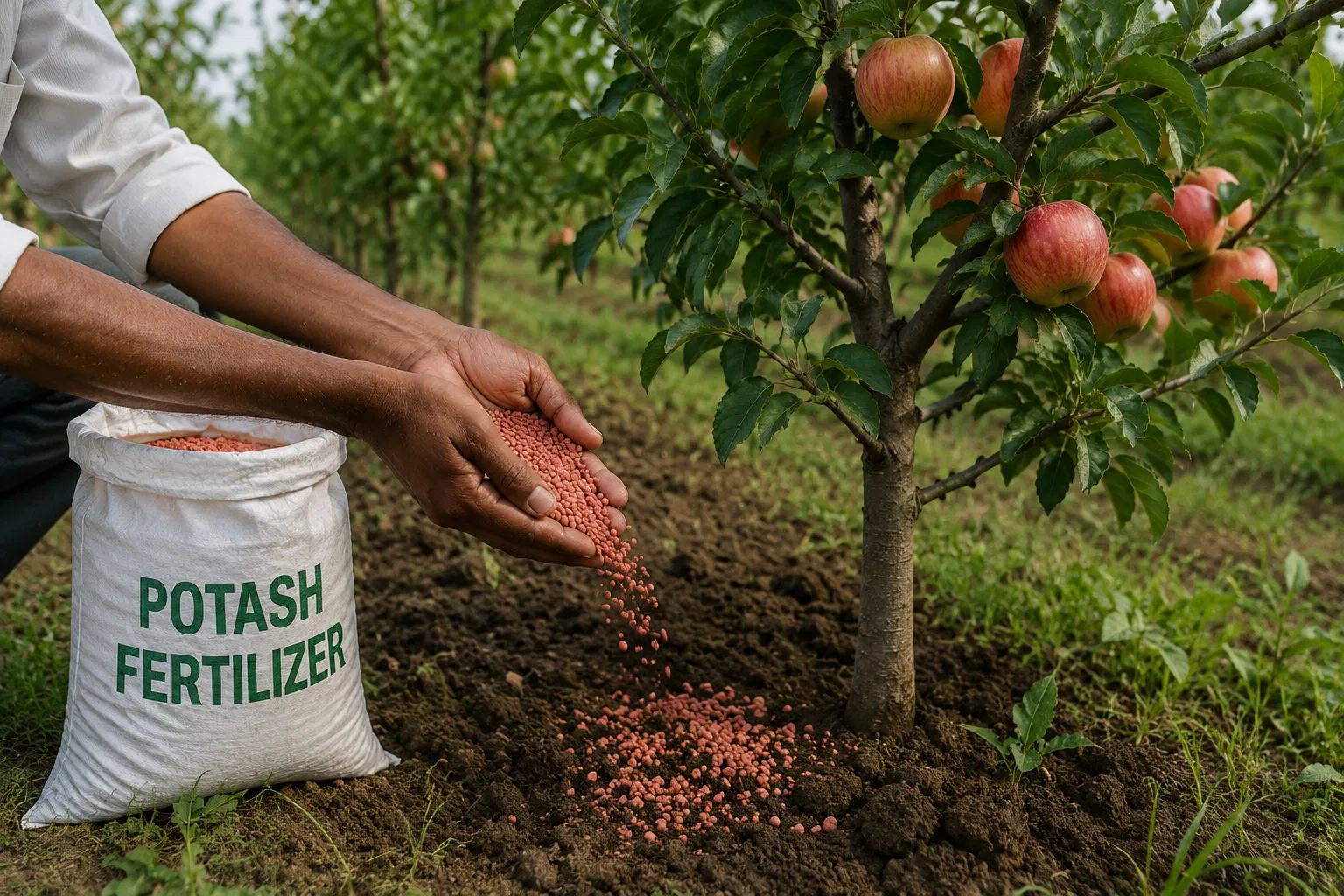
- Broadcast application: Spread potash evenly around the root zone and lightly incorporate it into the soil if possible.
- Band placement: Place fertilizer in concentrated zones near active roots for better efficiency in some orchards.
- Fertigation: Deliver potassium through irrigation systems for precise feeding during critical growth stages.
- Foliar spray: Use as a quick correction when plants show signs of deficiency, though foliar feeding should not replace soil applications in most cases.
For best results, apply potash in the root zone where feeder roots are active. Avoid placing large amounts too close to the trunk or stem, as this can reduce efficiency and may damage young plants.
Signs Your Fruit Crops May Need Potash
Recognizing potassium deficiency early can help you time applications better. Common signs include:
- Yellowing or scorching on older leaves
- Poor fruit size or uneven fruit development
- Weak stems or reduced vigor
- Low sugar content or poor flavor
- Reduced disease tolerance
- Premature leaf drop in severe cases
These symptoms may also be caused by other issues, so soil and leaf analysis are the best ways to confirm a potassium shortage.
Best Practices for Timing Potash Applications
To get the most value from potash, use a planned nutrient management approach instead of guessing.
- Test the soil before the season starts.
- Apply the first dose before flowering or at early spring growth.
- Split the remaining amount during fruit set and fruit enlargement.
- Adjust timing based on rainfall, irrigation, and crop response.
- Recheck nutrient status after harvest if the crop is perennial.
Split applications are often the best strategy because they reduce nutrient loss and match the crop’s changing needs. This is especially useful in orchards and vineyards where fruit quality depends on steady nutrient availability.
Common Mistakes to Avoid
Even good fertilizer can be ineffective if it is used incorrectly. Avoid these common mistakes when applying potash to fruit crops:
- Applying too late in the season, after most fruit growth has already occurred
- Using too much at once instead of split applications
- Skipping soil tests and guessing the rate
- Applying during dry soil conditions without irrigation support
- Ignoring the crop’s specific growth stage and nutrient demand
When potash is applied at the right time and in the right amount, the plant can use it efficiently for fruit production rather than storing it unused in the soil.
Conclusion
The best time to apply potash for fruit crops is before flowering, during fruit set, and through early fruit enlargement, with some perennial crops also benefiting from post-harvest feeding. The exact timing depends on the crop type, soil test results, weather, and irrigation system. By matching potash applications to the plant’s growth cycle, you can improve fruit size, quality, and overall orchard performance.
Final insight: Don’t wait until fruit problems appear. Plan potash applications ahead of the season, split them when needed, and base every decision on crop stage and soil test results for the best return.