Keeping cattle fed consistently throughout the year is one of the biggest challenges in livestock farming. Seasonal shortages, rising feed costs, and changing weather conditions can quickly affect herd health and farm profitability. The solution is a reliable fodder plan built around the right crops. By growing a mix of high-yield, nutritious fodder crops, you can maintain a steady supply of cattle feed in every season and reduce dependence on purchased feed.
This guide covers the best fodder crops to grow for year-round cattle feed, including grasses, legumes, cereals, and perennial options that can support your herd through changing conditions.
Why Year-Round Fodder Planning Matters
A consistent cattle feed supply is essential for animal growth, milk production, weight gain, and overall herd performance. When fodder availability drops, cattle can lose body condition and productivity may decline. Growing multiple fodder crops across different seasons helps spread risk and ensures your animals always have access to fresh, nutritious feed.
Smart fodder planning is not just about growing more feed. It is about growing the right feed at the right time to keep your cattle well-nourished all year long.
Top Fodder Crops to Grow for Year-Round Cattle Feed
1. Maize for Silage and Green Fodder
Maize is one of the most popular fodder crops for cattle because it grows quickly, produces high biomass, and is highly palatable. It is especially valuable for silage production, which provides a dependable feed reserve during dry or lean months.
- Best use: Green fodder and silage
- Advantages: High yield, good energy content, easy to ensile
- Season: Warm-season crop
Maize works well as part of a fodder rotation and can be planted in succession to maintain feed supply.
2. Sorghum
Sorghum is a drought-tolerant fodder crop that performs well in hot, dry regions where other crops may struggle. It produces abundant forage and can be harvested multiple times depending on the variety.
- Best use: Green chop, hay, silage
- Advantages: Drought resistance, strong regrowth, high yield
- Season: Warm-season crop
For farms in low-rainfall areas, sorghum is a dependable option for building feed security.
3. Napier Grass
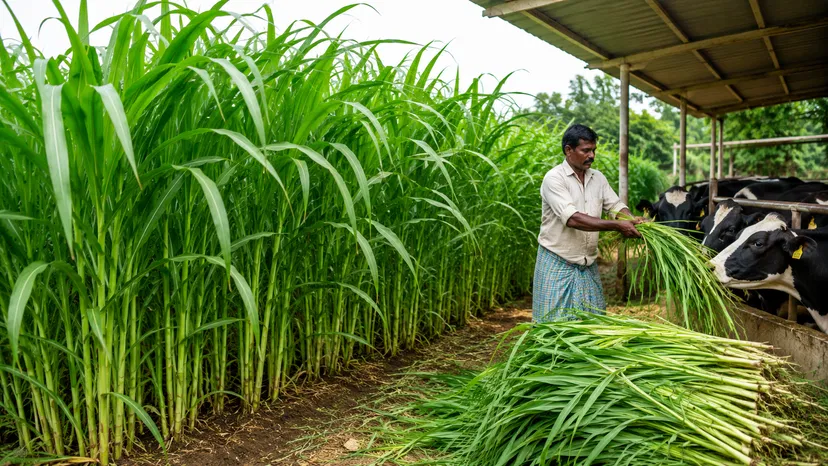
Napier grass, also known as elephant grass, is a fast-growing perennial fodder crop that provides multiple harvests per year. It is widely grown for cut-and-carry feeding systems because of its high biomass and rapid regrowth.
- Best use: Fresh fodder
- Advantages: High yield, repeated harvesting, perennial growth
- Season: Warm and humid conditions
Napier grass is an excellent long-term fodder solution for dairy and beef cattle operations.
4. Lucerne (Alfalfa)
Lucerne is a premium legume fodder crop known for its high protein content and digestibility. It is ideal for improving milk production and supporting growth in cattle.
- Best use: Green fodder, hay, silage
- Advantages: High protein, rich in minerals, multiple cuttings
- Season: Cool to moderate climates
Because lucerne improves soil fertility through nitrogen fixation, it is also valuable in sustainable cropping systems.
5. Berseem Clover
Berseem clover is a highly nutritious winter fodder crop that is widely used in cattle feeding systems. It is tender, palatable, and rich in protein, making it ideal for dairy cattle.
- Best use: Green fodder
- Advantages: Fast-growing, highly digestible, protein-rich
- Season: Cool season
Berseem is especially useful when you need fresh green fodder during the winter months.
6. Ryegrass
Ryegrass is a reliable cool-season grass that provides excellent forage quality. It grows quickly, responds well to grazing or cutting, and can fill feed gaps during cooler months.
- Best use: Grazing and fresh cut fodder
- Advantages: High digestibility, quick establishment, good regrowth
- Season: Cool season
Ryegrass is often used in pasture mixes for continuous grazing systems.
7. Oats
Oats are a versatile fodder crop that can be harvested as green fodder, hay, or silage. They are especially useful in colder seasons when warm-season fodder crops are not productive.
- Best use: Green chop, hay, silage
- Advantages: Fast growth, good forage quality, flexible use
- Season: Cool season
Oats are a practical choice for extending forage availability during winter or early spring.
8. Cowpea
Cowpea is a legume fodder crop that offers both protein-rich forage and soil benefits. It grows well in warm climates and improves feed quality when mixed with grasses.
- Best use: Green fodder and mixed forage
- Advantages: High protein, drought tolerance, soil improvement
- Season: Warm season
Intercropping cowpea with maize or sorghum can boost both yield and nutritional value.
Best Fodder Crop Combinations for Continuous Supply
To achieve year-round cattle feed, it is best to grow a combination of crops rather than relying on a single variety. Different crops mature at different times and perform best in different seasons. A mixed strategy helps maintain a balanced supply of energy, protein, and fiber.
Suggested Crop Rotation Plan
- Warm season: Maize, sorghum, Napier grass, cowpea
- Cool season: Lucerne, berseem clover, ryegrass, oats
- Perennial support: Napier grass and lucerne for repeated harvests
- Silage reserve: Maize or sorghum silage for dry periods
This approach spreads harvests across the year and helps avoid feed shortages when one crop is out of season.
What to Consider Before Choosing Fodder Crops
Not every fodder crop will suit every farm. Climate, soil type, water availability, and livestock needs all play a role in crop selection. Choosing crops based on your local conditions will improve yields and reduce production risks.
- Climate: Match crops to warm or cool seasons
- Soil fertility: Some crops need richer soil, while legumes can improve it
- Irrigation access: Important for high-yield crops in dry periods
- Feed purpose: Choose between silage, grazing, hay, or fresh cut fodder
- Livestock type: Dairy cattle often need higher protein, while beef cattle may need more energy
By aligning crop selection with your herd's needs, you can improve both feed efficiency and animal performance.
Tips for Maximizing Fodder Yield
Growing fodder crops successfully is not only about planting the right seeds. Good management practices can make a major difference in yield and quality.
- Prepare the soil well before planting
- Use quality seed for better germination
- Apply balanced fertilizer based on soil testing
- Harvest at the right stage for best nutrition
- Use irrigation where possible during dry spells
- Store excess fodder as hay or silage for later use
Careful timing and proper storage can turn a seasonal harvest into a reliable year-round feed source.
Conclusion
Growing fodder crops for year-round cattle feed is one of the smartest ways to protect your herd and strengthen your farm's resilience. A well-planned mix of warm-season, cool-season, and perennial fodder crops can keep feed flowing in every month of the year. Whether you rely on maize, sorghum, Napier grass, lucerne, or ryegrass, the key is diversification and planning.
Start by evaluating your climate, soil, and livestock needs, then build a fodder system that works across seasons. With the right crop mix and management practices, you can secure a steady, nutritious, and cost-effective feed supply for your cattle year-round.