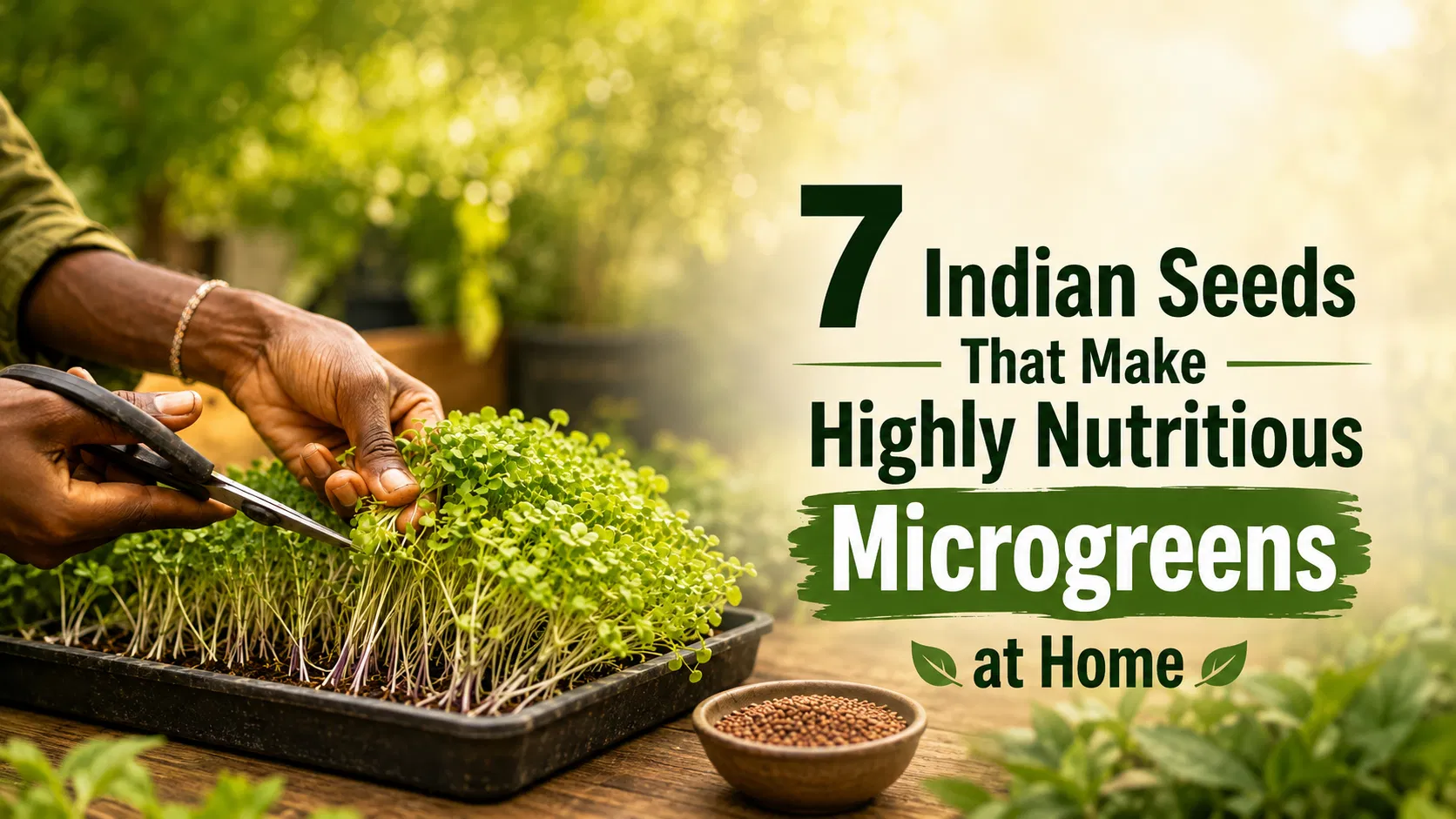
Microgreens are simply vegetable and herb seedlings harvested young — usually 7 to 21 days after sowing, once the first true leaves appear. Agronomically, this is the growth stage where a plant's nutrient concentration per gram is at its highest, because the seedling is drawing on both its stored seed reserves and active new growth at the same time. That's why microgreens routinely test at several times the vitamin and mineral density of the same crop grown to full maturity. Here are seven seeds that are widely available in India and grow into reliably nutritious, easy microgreens.
1. Radish
Radish is one of the fastest and most forgiving microgreens, ready to harvest in just 5–8 days. It germinates at a wide range of temperatures and has a distinct peppery flavour, with a high concentration of vitamin C and folate at this early stage.
2. Mustard
Mustard microgreens germinate quickly and are rich in vitamin A, C, and K, along with a sharp, spicy flavour that makes them a popular garnish. They tolerate cooler temperatures well, making them a reliable choice through most of the Indian winter.
3. Fenugreek (Methi)
Fenugreek microgreens carry the same distinctive slightly bitter flavour as mature methi leaves, along with a good iron and fibre content. They germinate in 3–5 days and are one of the easiest legume-family microgreens to grow without any special equipment.
4. Sunflower
Sunflower microgreens are larger and crunchier than most, with a mild, nutty taste and a notably high protein and healthy fat content for a microgreen. Soaking the seed for 8–12 hours before sowing improves germination uniformity considerably.
5. Coriander
Coriander microgreens taste close to the mature herb but grow in a fraction of the time, and are a good source of vitamin K and antioxidants. Note that coriander is slower than most microgreens, typically taking 12–18 days to reach harvest size.
6. Beetroot
Beetroot microgreens develop a striking red stem and are particularly high in folate and antioxidant pigments called betalains. They germinate a little slower than most on this list, so plan for 10–14 days to harvest.
7. Amaranthus
Amaranthus microgreens are a good source of iron, calcium, and vitamin A, and their fine, colourful leaves make them a popular garnish crop. They're well suited to India's warmer months, germinating best above 25°C.
Growing Microgreens Successfully
Across all seven, the basic method is the same: sow seed densely on a shallow tray of moist, well-draining growing medium, keep it consistently damp without waterlogging, and provide bright indirect light. Because harvest happens so early, there's no need for fertilizing during the growth cycle — the seed's own stored nutrients are usually enough to carry it to harvest.
Frequently Asked Questions
Do microgreens need soil to grow?
Soil isn't mandatory — many growers use coco peat, a thin layer of potting mix, or even a damp paper towel — but a light, well-draining medium generally gives the most consistent results at home.
Are microgreens really more nutritious than the full-grown vegetable?
Studies on several crops have found microgreens can contain several times the vitamin and antioxidant concentration of their mature counterparts by weight, though this varies by crop and growing conditions.
Can I regrow microgreens after cutting them?
Most microgreens are cut-once crops, since they're harvested at the stem base — after that, the plant doesn't have enough leaf area left to regenerate a second useful harvest.