Fungal diseases are the single largest disease category affecting home and small-scale vegetable gardens in India, and most of them share a common thread: they thrive in humid, poorly ventilated conditions and spread fastest once they're already established. Catching symptoms in their first week, rather than after a plant is visibly collapsing, is usually the difference between losing a leaf or two and losing the whole crop. Here are five common fungal diseases and their early warning signs.
1. Early Blight in Tomato
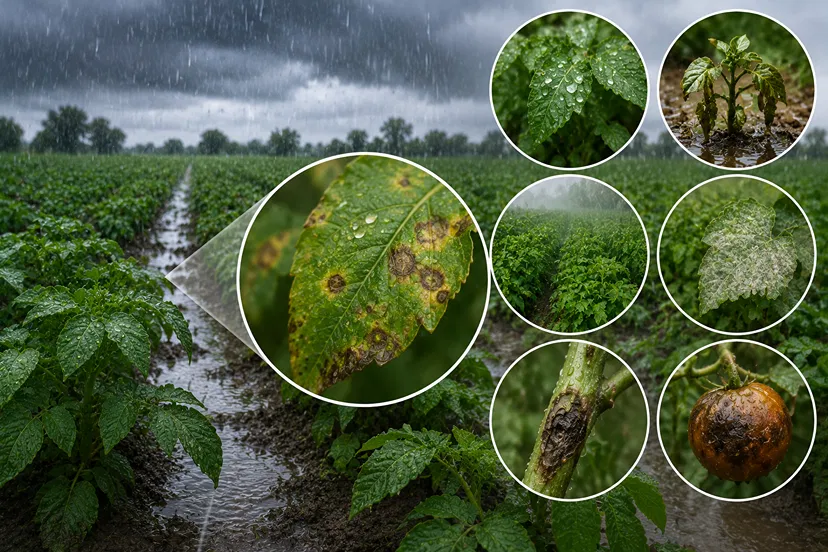
Early blight shows up first as small, dark concentric-ringed spots on the lower, older leaves of tomato plants, before spreading upward if left untreated. It's favoured by warm, humid conditions and repeated leaf wetness, so improving airflow around plants and avoiding overhead watering in the evening both help slow its spread.
2. Powdery Mildew in Cucurbits
Powdery mildew appears as a white, powder-like coating on the upper leaf surface of cucumber and related vining crops. Unlike most fungal diseases, it can develop even in relatively dry conditions as long as humidity is high, and it spreads quickly once established — catching it as a few small white patches, rather than a fully coated leaf, makes it far easier to control.
3. Anthracnose in Chilli
Anthracnose typically shows up as sunken, dark, water-soaked spots on ripening chilli fruit, sometimes with visible concentric rings inside the lesion. It's a post-harvest as well as field disease, meaning infected-looking fruit can continue to deteriorate even after picking, so removing and discarding affected fruit promptly limits how far spores spread to healthy ones.
4. Downy Mildew in Leafy Greens
Downy mildew on spinach and similar leafy crops appears as pale yellow patches on the upper leaf surface with a corresponding fuzzy grey-purple growth underneath — that undersurface growth is the clearest identifying sign, so checking the underside of a few suspect leaves early is worth the extra minute.
5. Damping Off in Seedlings
Damping off affects seedlings rather than mature plants, causing the stem to rot right at the soil line and the seedling to collapse within days of emerging. It's driven by overly wet, poorly drained soil and unsterilized growing medium, making it one of the most preventable fungal diseases on this list with the right seedling hygiene.
General Early Warning Signs Worth Checking Weekly
Across all five diseases, a few habits catch problems early: check the undersides of leaves, not just the tops; look at older, lower leaves first, since many fungal diseases establish there before spreading upward; and treat any unusual spotting, powdery coating, or wilting as worth investigating immediately rather than waiting to see if it spreads.
Managing an Outbreak
Once a fungal disease is confirmed, prompt action matters more than the specific product used. A targeted fungicide applied at the first sign of symptoms is far more effective than the same product applied after a disease has spread through most of the plant, and for gardeners who prefer an organic approach, a bio-fungicide can offer preventive and early-stage control with a lower environmental footprint.
Frequently Asked Questions
Why do fungal diseases spread faster in humid weather?
Most fungal spores need moisture on the leaf surface to germinate and infect a plant, so prolonged leaf wetness from humidity, dew, or overhead watering creates ideal infection conditions.
Can fungal diseases spread between different vegetable crops?
Some fungal pathogens are crop-specific, while others, like certain blights and mildews, can affect a broader range of related plants — which is why crop rotation and good garden hygiene matter even across different beds.
Is it better to remove infected leaves or treat the whole plant?
Both, generally — removing visibly infected leaves reduces the spore source immediately, while a fungicide or bio-fungicide application protects the remaining healthy tissue from further spread.