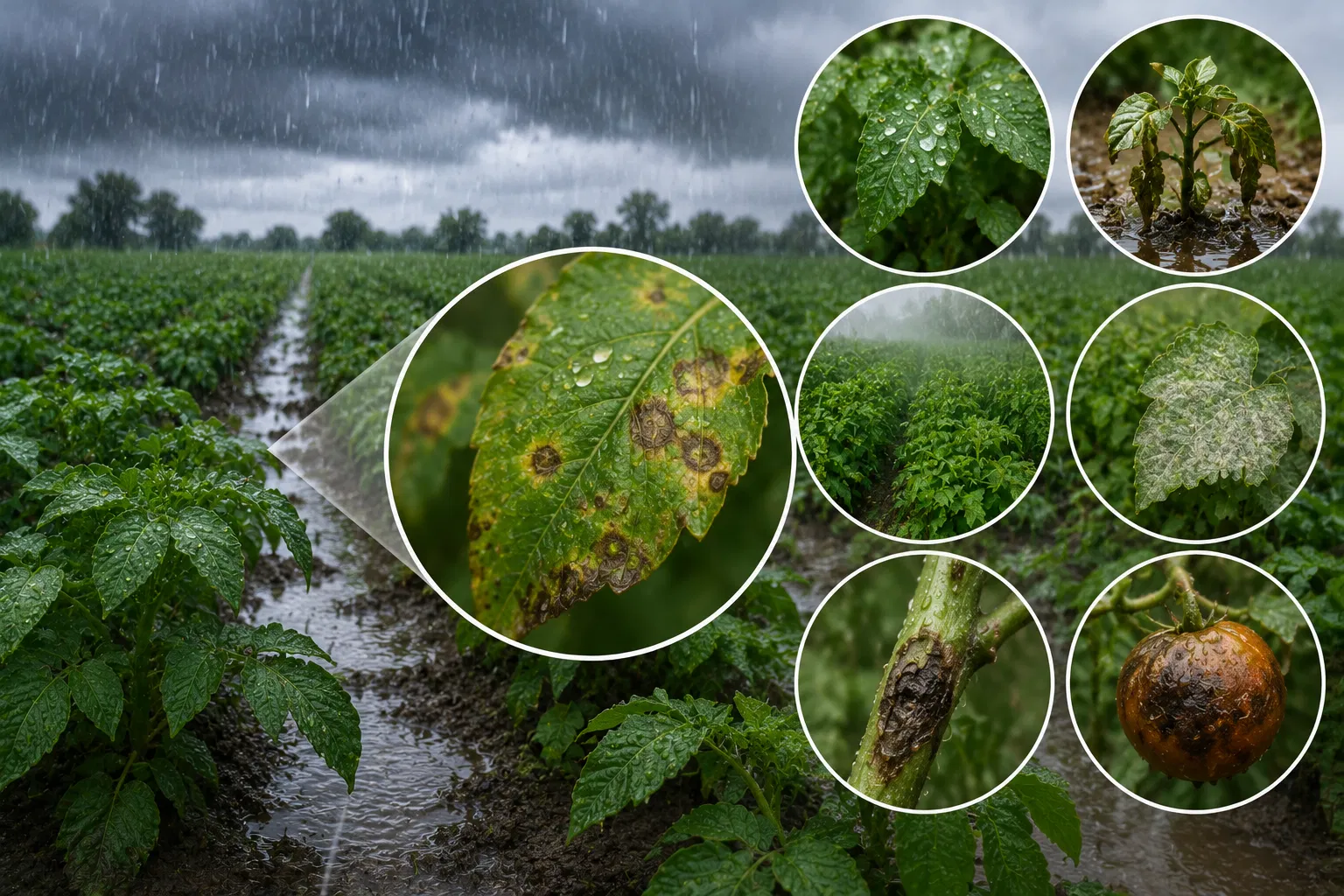
When the rainy season begins, crops often face a rapid increase in fungal disease pressure. Frequent rainfall, high humidity, cloudy conditions, and prolonged leaf wetness create an ideal environment for fungal spores to germinate, spread, and infect plants.
Diseases such as leaf spot, blight, rust, powdery mildew, downy mildew, anthracnose, and fruit rot can develop quickly when weather conditions remain wet. Understanding why plant fungal diseases increase during the rainy season helps farmers take preventive action before infections reduce crop quality and yield.
Why Plant Fungal Diseases Increase During the Rainy Season
Most crop-infecting fungi require moisture to germinate and enter plant tissues. During the rainy season, repeated rainfall and persistent humidity provide the moisture needed for rapid disease development.
Warm temperatures further accelerate fungal growth, while cloudy weather slows the drying of leaves and soil. Together, these conditions create a highly favorable environment for plant diseases.
1. High Humidity Encourages Fungal Growth
Humidity often remains high throughout the rainy season. When moisture stays in the air and on plant surfaces, fungal spores can germinate more easily.
Dense crop canopies may remain humid even after rainfall stops. Limited airflow prevents leaves from drying quickly, allowing fungal infections to establish and spread.
2. Prolonged Leaf Wetness Increases Infection
Rain, dew, and irrigation can keep leaves wet for several hours. Many fungal pathogens need a specific period of leaf wetness before they can infect a crop.
The longer leaves remain wet, the greater the risk of diseases such as:
- Early and late blight
- Leaf spot
- Anthracnose
- Downy mildew
- Rust
- Fruit and stem rot
Repeated rainfall can create continuous infection cycles, making diseases difficult to control once they become established.
3. Rain Splash Spreads Fungal Spores
Many fungal pathogens survive in infected crop debris, soil, seeds, or plant residues. Raindrops striking these surfaces can splash spores onto nearby leaves, stems, flowers, and fruits.
Heavy rain may spread spores across rows, while runoff can move contaminated soil and plant material to other parts of the field.
4. Warm Temperatures Speed Up Disease Development
Rainy seasons in many regions are both wet and warm. These temperatures support rapid fungal growth and shorten the time between infection and visible symptoms.
A crop that appears healthy one week may show widespread disease symptoms soon afterward if weather conditions remain favorable.
5. Reduced Sunlight Slows Plant Drying
Cloudy skies reduce sunlight and lower evaporation. Leaves, flowers, and fruits therefore remain wet for longer periods after rainfall.
Reduced sunlight can also slow photosynthesis and weaken plant growth, making crops less capable of resisting or recovering from infection.
6. Waterlogged Soil Weakens Plant Roots
Excess rainfall can saturate the soil and reduce oxygen around the roots. Waterlogged plants become stressed and more vulnerable to soil-borne fungal diseases.
Root rot, collar rot, damping-off, and wilt diseases are more likely to develop in poorly drained fields.
Common Crop Fungal Diseases During the Rainy Season
Different crops are affected by different pathogens, but several fungal diseases become especially common during wet and humid weather.
- Leaf spot: Produces brown, black, or yellow-edged lesions on foliage.
- Blight: Causes rapid browning and death of leaves, stems, or shoots.
- Anthracnose: Creates dark, sunken lesions on leaves, stems, and fruits.
- Downy mildew: Produces yellow patches on upper leaf surfaces and fungal growth underneath.
- Powdery mildew: Appears as white or grey powdery growth on leaves and shoots.
- Rust: Causes yellow, orange, or brown pustules on foliage.
- Fruit rot: Leads to soft, discoloured, or sunken areas on developing and harvested fruits.
- Root rot: Damages roots under waterlogged or poorly drained conditions.
Signs of Fungal Disease in Crops
Early identification is essential because fungal diseases can spread rapidly during rainy weather. Farmers should inspect crops regularly for symptoms such as:
- Yellow, brown, or black spots on leaves
- White, grey, or fuzzy fungal growth
- Water-soaked lesions
- Premature leaf fall
- Wilting despite moist soil
- Stem or collar discoloration
- Rotting flowers, fruits, or roots
- Stunted or uneven crop growth
Symptoms may initially appear in low-lying, shaded, or poorly ventilated sections of the field where moisture remains for longer periods.
Key insight: Rain itself does not directly cause every fungal disease, but it creates the moisture, humidity, and dispersal conditions that allow pathogens to infect crops rapidly.
Crops Most Vulnerable During the Rainy Season
Fungal diseases can affect nearly every crop, but vegetables, fruits, pulses, oilseeds, cereals, and plantation crops may face particularly high disease pressure during prolonged wet weather.
Vulnerable crops often include:
- Tomato
- Chilli
- Potato
- Brinjal
- Onion
- Grapes
- Banana
- Groundnut
- Soybean
- Paddy
- Cotton
Closely spaced crops and varieties with poor disease resistance are generally at greater risk.
How to Prevent Fungal Diseases During the Rainy Season
1. Improve Field Drainage
Ensure excess rainwater can leave the field quickly. Raised beds, drainage channels, and properly levelled land can reduce waterlogging and root disease.
2. Maintain Proper Plant Spacing
Adequate spacing improves air circulation and allows leaves to dry faster. Avoid overly dense planting, especially in crops prone to foliar diseases.
3. Remove Infected Plant Material
Prune or remove infected leaves, fruits, and stems whenever practical. Severely affected plant material should be disposed of away from the field to reduce sources of future infection.
4. Avoid Overhead Irrigation
When rainfall is already frequent, avoid unnecessary irrigation. If irrigation is required, apply water near the root zone instead of wetting the foliage.
5. Control Weeds
Weeds restrict airflow and may host fungal pathogens. Keeping the field and surrounding boundaries clean can reduce humidity and disease reservoirs.
6. Use Balanced Fertilization
Excessive nitrogen produces dense, tender growth that may be highly susceptible to fungal infection. Use balanced fertilizers according to crop needs and soil-test recommendations.
7. Use Disease-Free Seeds and Planting Material
Some fungal diseases enter the field through infected seeds, seedlings, tubers, or cuttings. Use certified, healthy planting material and treat seeds when recommended.
8. Monitor Crops Frequently
Inspect the crop after rainfall and during periods of high humidity. Early detection allows infected areas to be managed before disease spreads across the field.
9. Apply Suitable Fungicides Preventively
During high-risk weather, registered fungicides may be required to protect susceptible crops. Preventive applications are often more effective than treatments applied after severe infection develops.
Always select a product registered for the crop and disease, follow label instructions, maintain the correct dosage, and rotate modes of action to reduce fungicide resistance.
Rainy-Season Crop Protection Practices
An integrated approach provides better results than depending on a single treatment. Effective rainy-season crop protection should combine field sanitation, drainage, resistant varieties, balanced nutrition, weather monitoring, and timely disease control.
- Check fields immediately after heavy rain.
- Remove standing water and clear blocked drainage channels.
- Inspect lower and inner leaves for early symptoms.
- Remove infected plant parts where practical.
- Review the weather forecast before spraying.
- Apply treatments only under suitable weather conditions.
- Maintain accurate records of disease symptoms and applications.
Common Mistakes to Avoid
- Waiting until the disease is severe before taking action
- Ignoring standing water and poor drainage
- Using excessive nitrogen during humid weather
- Planting crops too closely
- Spraying immediately before heavy rainfall
- Repeating the same fungicide mode of action continuously
- Leaving infected crop residue in the field
- Applying unregistered products or incorrect dosages
Conclusion
Plant fungal diseases increase during the rainy season because high humidity, prolonged leaf wetness, warm temperatures, rain splash, and waterlogged soil create ideal conditions for infection and spread.
Farmers can reduce disease losses by improving drainage, maintaining proper spacing, removing infected material, using balanced nutrition, monitoring crops regularly, and applying suitable preventive treatments when required.
Early action is essential. By combining good field management with timely disease prevention, growers can protect crop health, reduce yield losses, and maintain better produce quality throughout the rainy season.