When vegetables start looking tired, slow-growing, or pale, the problem often comes down to nutrition. That is where water-soluble fertilizers make a big difference. They deliver nutrients quickly, mix easily with water, and give vegetable growers precise control over feeding. Whether you manage a backyard plot or a larger garden, choosing the right water-soluble fertilizer can improve plant health, boost flowering, and support bigger harvests.
In this guide, we will cover the top water-soluble fertilizers every vegetable grower should know, what makes them effective, and how to use them for the best results.
Why Water-Soluble Fertilizers Work So Well for Vegetables
Vegetables are heavy feeders. They grow fast, produce rapidly, and need a steady supply of nutrients throughout the season. Water-soluble fertilizers are especially useful because they:
- Absorb quickly through roots
- Work well in drip irrigation and fertigation systems
- Allow precise nutrient control
- Help correct deficiencies faster than granular fertilizers
- Support both seedlings and mature plants
Tip: Water-soluble fertilizers are ideal when plants need a quick nutrient boost, but they work best as part of a consistent feeding program.
1. Balanced NPK Water-Soluble Fertilizer
A balanced fertilizer with equal or near-equal nitrogen, phosphorus, and potassium is one of the most versatile choices for vegetable growers. Common formulas include 20-20-20 and 10-10-10.
This type of fertilizer supports overall plant growth, making it a good option for young transplants, leafy vegetables, and general maintenance feeding. It helps plants build strong roots, healthy foliage, and steady development.
Best for:
2. High-Nitrogen Water-Soluble Fertilizer
Vegetables such as lettuce, spinach, cabbage, kale, and broccoli often need more nitrogen to produce lush green growth. High-nitrogen water-soluble fertilizers are designed to push strong leafy development without unnecessary excess phosphorus or potassium.
Look for formulas with a higher first number, such as 24-8-16 or 30-10-10. These products are especially helpful during early vegetative growth or after harvest cuts in leafy crops.
Strong nitrogen support encourages vigorous growth, but too much can reduce fruiting in crops that produce tomatoes, peppers, or squash.
Best for:
- Leafy greens
- Brassicas
- Young seedlings after establishment
- Fast regrowth after harvesting cut-and-come-again crops
3. High-Phosphorus Water-Soluble Fertilizer
Phosphorus supports root growth, flowering, and fruit development. A high-phosphorus formula is useful when planting transplants or encouraging blooming and fruit set in fruiting vegetables. Common examples include 10-52-10 or similar formulations.
This type of fertilizer is not always needed throughout the season, but it can be valuable at transplanting or during flowering stages when plants benefit from extra support below the soil line and in reproductive growth.
Best for:
- Transplanted seedlings
- Tomatoes during bloom
- Peppers during fruit set
- Root development in new plantings
4. High-Potassium Water-Soluble Fertilizer
Potassium plays a major role in flower quality, fruit size, disease resistance, and stress tolerance. For vegetable growers, a high-potassium fertilizer is especially useful once plants begin flowering and fruiting. Formulas like 15-5-30 or 12-12-36 are popular choices.
Potassium also helps plants handle heat, drought, and other environmental stress, making it a smart choice during peak summer production.
Best for:
- Tomatoes
- Peppers
- Squash
- Beans
- Fruiting vegetables in heavy production
5. Calcium-Rich Water-Soluble Fertilizer
Calcium is essential for strong cell walls and healthy fruit development. A calcium-rich water-soluble fertilizer can help prevent common problems like blossom-end rot in tomatoes and peppers. It is also useful for leafy greens and other crops that need strong structural growth.
Calcium moves slowly within the plant, so regular application matters. Consistent feeding is often more effective than waiting until a deficiency appears.
Best for:
- Tomatoes
- Peppers
- Leafy greens
- Crops prone to fruit disorders
6. Magnesium and Micronutrient Water-Soluble Fertilizer
Sometimes vegetables need more than the standard NPK trio. Magnesium, iron, manganese, zinc, boron, and other micronutrients all play a role in plant metabolism and chlorophyll production. Water-soluble fertilizers that include micronutrients help prevent hidden deficiencies that can reduce yield and plant vigor.
These products are especially useful in sandy soils, container gardens, or beds that have been heavily cropped over time.
Best for:
- Container vegetables
- Soils with nutrient deficiencies
- Plants showing yellowing or weak growth
- High-output garden beds
How to Choose the Right Water-Soluble Fertilizer
The best fertilizer depends on the crop stage and the problem you are trying to solve. A vegetable garden does not need the same feeding formula all season long.
- For seedlings and young plants: Use a balanced, gentle formula.
- For leafy growth: Choose a high-nitrogen product.
- For rooting and transplanting: Use a high-phosphorus fertilizer.
- For flowering and fruiting: Switch to a high-potassium formula.
- For deficiency prevention: Add calcium and micronutrients when needed.
Always read the label carefully and follow the recommended dilution rate. More is not better with water-soluble fertilizer. Overfeeding can burn roots, encourage weak growth, or create nutrient imbalances.
Best Practices for Applying Water-Soluble Fertilizers
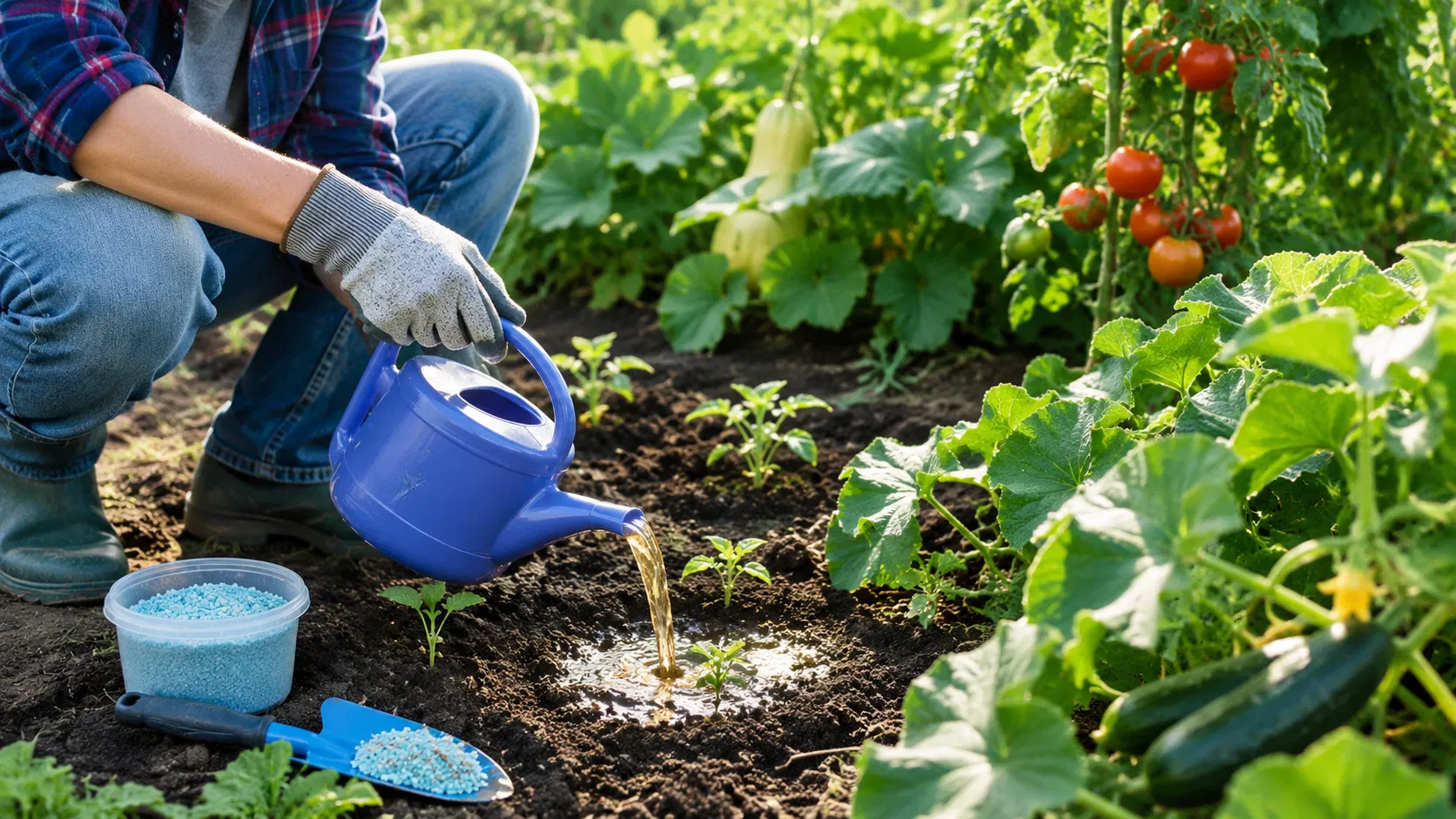
To get the most from water-soluble fertilizers, apply them correctly and consistently.
- Feed early in the morning or late in the day
- Water plants before fertilizing if the soil is dry
- Apply evenly around the root zone
- Avoid spraying on stressed plants during extreme heat
- Rotate formulas based on crop stage
For many vegetable growers, weekly or biweekly feeding works well, especially in containers or raised beds where nutrients wash out faster.
Conclusion
Water-soluble fertilizers are one of the most effective tools for growing healthier, more productive vegetables. From balanced NPK blends to high-nitrogen, high-phosphorus, high-potassium, calcium-rich, and micronutrient formulas, each type serves a specific purpose in the garden.
If you want stronger plants and better harvests, match the fertilizer to your crop’s growth stage and keep your feeding routine consistent. The right water-soluble fertilizer can turn an average vegetable garden into a thriving, high-yield growing space.
Start with the right formula, feed with purpose, and your vegetables will show the difference.