If you want faster nutrient uptake, better crop uniformity, and more efficient fertilizer use, water soluble fertilizers for fertigation are one of the smartest tools in modern agriculture. When applied correctly through irrigation, these fertilizers deliver essential nutrients directly to the root zone, helping plants grow stronger while reducing waste and improving yield potential.
What Are Water Soluble Fertilizers?
Water soluble fertilizers are specially formulated nutrients that dissolve completely in water. Unlike conventional granular fertilizers, they can be mixed into irrigation systems without clogging equipment, making them ideal for drip irrigation, sprinkler systems, and other fertigation setups.
These fertilizers are available in various nutrient combinations, including nitrogen, phosphorus, potassium, calcium, magnesium, and micronutrients such as iron, zinc, manganese, and boron. Because they dissolve fully, plants can absorb them quickly and efficiently.
Why Use Water Soluble Fertilizers in Fertigation?
Fertigation combines fertilization with irrigation, allowing nutrients to be delivered exactly when and where crops need them. This approach offers several important benefits:
- Improved nutrient efficiency: Nutrients are applied in smaller, more targeted doses.
- Faster plant response: Water soluble nutrients are readily available for uptake.
- Reduced fertilizer loss: Less nutrient runoff, leaching, and volatilization.
- Better crop uniformity: Plants receive a more consistent nutrient supply.
- Labor savings: Fertilizer application can be automated through irrigation systems.
For growers aiming to maximize productivity while conserving resources, fertigation with water soluble fertilizers is an effective and practical solution.
How Fertigation Works
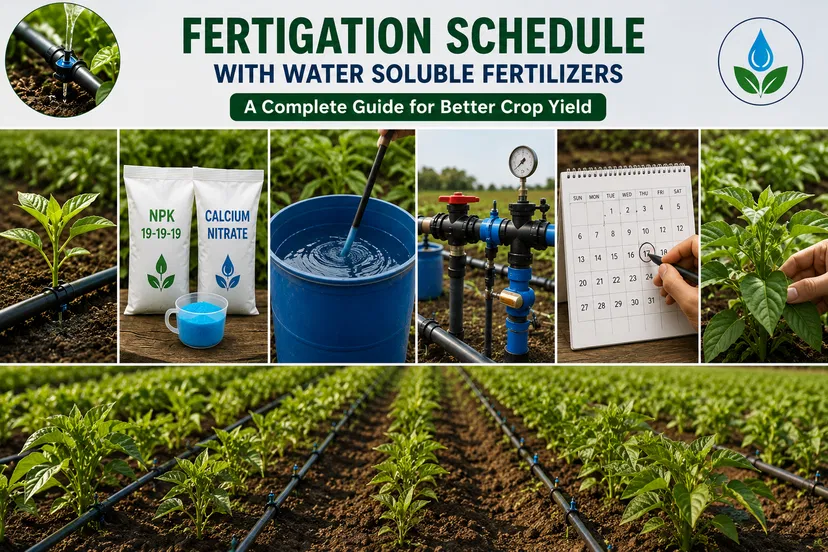
Fertigation uses irrigation water as a delivery system for nutrients. A fertilizer injector or dosing system mixes the soluble fertilizer into the water before it reaches the plants. This allows precise control over nutrient concentration and timing.
Because the fertilizer is diluted and distributed through irrigation lines, nutrients are delivered directly to the active root zone. This minimizes waste and supports steady crop development throughout the growing cycle.
Types of Water Soluble Fertilizers
Different crops and growth stages require different nutrient formulas. Common types of water soluble fertilizers include:
1. Balanced NPK Fertilizers
These contain nitrogen (N), phosphorus (P), and potassium (K) in varying ratios. They are widely used for general crop nutrition and are especially useful during vegetative growth and early development.
2. High-Nitrogen Fertilizers
These are designed to support leafy growth and vigorous vegetative development. They are often used for crops such as leafy vegetables, turf, and young transplants.
3. High-Phosphorus Fertilizers
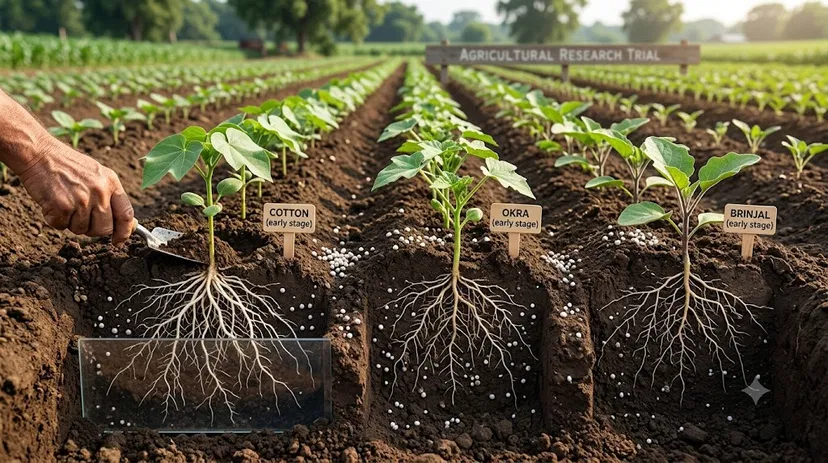
Phosphorus supports root development, flowering, and early establishment. These fertilizers are commonly used during transplanting and early growth stages.
4. High-Potassium Fertilizers
Potassium improves fruit quality, color, size, and stress tolerance. They are often applied during flowering, fruiting, and maturation stages.
5. Calcium, Magnesium, and Micronutrient Blends
These formulations help correct deficiencies and support strong structural growth, photosynthesis, and enzyme function. They are essential for crops with high nutrient demand.
Best Crops for Water Soluble Fertilizers
Water soluble fertilizers are used across a wide range of crops, especially those grown under controlled or high-value production systems. Common examples include:
- Vegetables such as tomato, cucumber, pepper, lettuce, and onion
- Fruit crops such as strawberry, grape, citrus, and banana
- Ornamentals and nursery plants
- Greenhouse crops
- Turf and landscape plants
- Row crops under precision irrigation systems
These crops benefit from precise feeding because nutrient demand often changes quickly during different growth stages.
How to Use Water Soluble Fertilizers Correctly
To get the best results from fertigation, proper application is essential. Follow these key practices:
- Test your water quality: Check pH, hardness, salinity, and bicarbonate levels before selecting a fertilizer program.
- Choose the right formula: Match the nutrient ratio to the crop stage and soil conditions.
- Dissolve completely: Mix fertilizers thoroughly to avoid sediment and equipment blockage.
- Use calibrated injectors: Ensure the system applies the correct concentration every time.
- Apply in small, frequent doses: This helps maintain steady nutrient availability.
- Flush the system regularly: Prevent residue buildup and protect irrigation components.
It is also important to monitor crop response and adjust the fertigation schedule as needed. Soil testing and tissue analysis can help fine-tune nutrient management for better results.
Common Mistakes to Avoid
Even high-quality water soluble fertilizers can underperform if misused. Avoid these common mistakes:
- Applying too much fertilizer at once
- Ignoring crop-specific nutrient requirements
- Mixing incompatible fertilizers in the same tank
- Failing to account for water pH and salinity
- Using poor-quality irrigation equipment
- Skipping regular system maintenance
Over-fertilization can damage roots, reduce yield quality, and increase production costs. Precision is always better than excess.
How Water Soluble Fertilizers Improve Crop Performance
When managed properly, fertigation with water soluble fertilizers can support faster establishment, stronger vegetative growth, improved flowering, and better fruit set. Crops often show more uniform development because nutrients are supplied consistently throughout the growing season.
In modern agriculture, nutrient timing matters as much as nutrient type. Delivering the right fertilizer at the right moment can make a major difference in crop performance.
Growers also benefit from improved fertilizer use efficiency, which can reduce input costs over time while supporting sustainable farming practices.
Choosing the Right Water Soluble Fertilizer
The best fertilizer depends on your crop, growth stage, irrigation system, and production goals. Before choosing a product, consider the following:
- Crop type and nutrient demand
- Stage of growth
- Soil fertility status
- Water quality and pH
- Compatibility with other inputs
- System design and injection capacity
For best results, work with a crop nutrition plan rather than applying fertilizers randomly. A balanced strategy improves efficiency and helps prevent both deficiencies and excesses.
Final Thoughts
Water soluble fertilizers for fertigation offer a powerful way to improve nutrient delivery, support crop health, and increase production efficiency. Their complete solubility, flexibility, and precision make them a valuable choice for growers who want better control over plant nutrition.
If you are looking to optimize yields and get more from every irrigation cycle, adopting a fertigation-based fertilizer program is a smart next step. Choose the right formulation, monitor your system carefully, and apply nutrients with precision for healthier crops and stronger results.