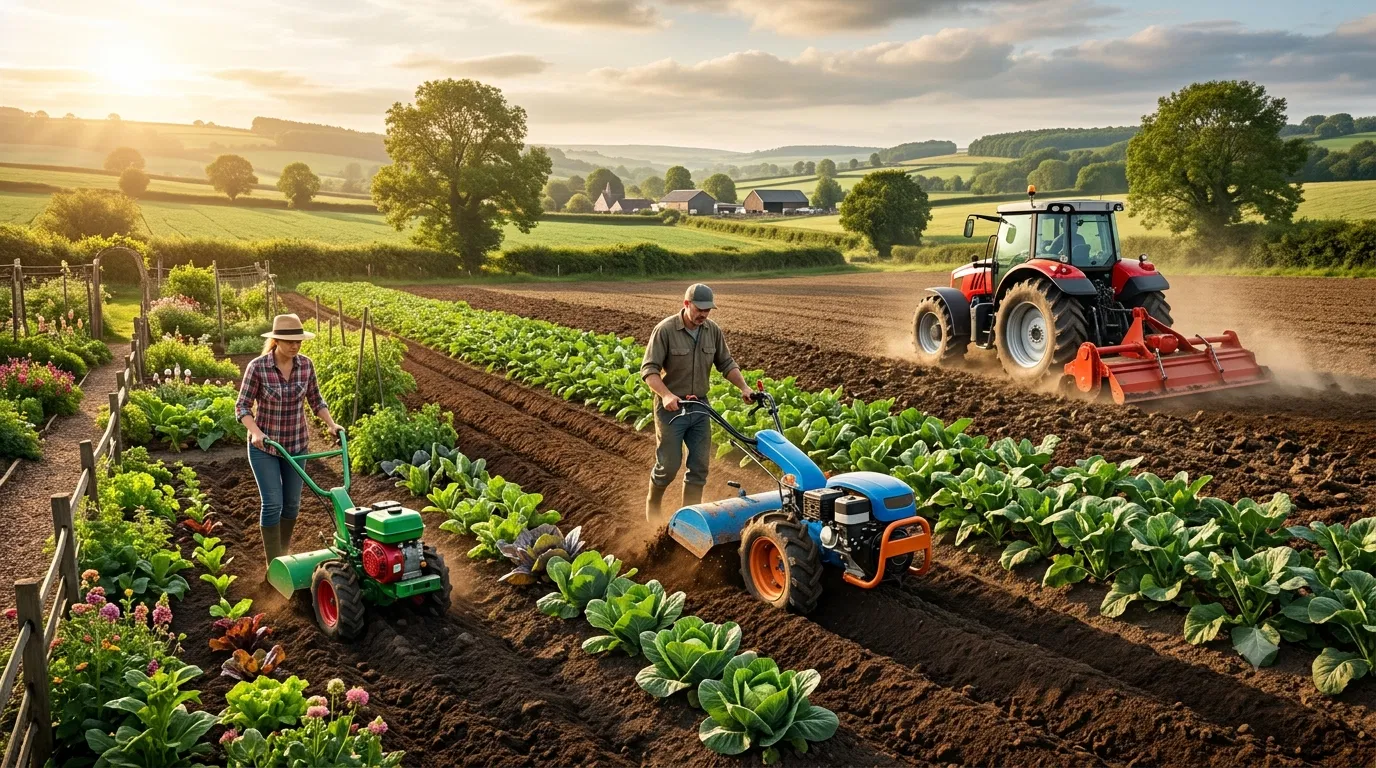
When it comes to preparing soil efficiently, the right tiller can save hours of labor and dramatically improve planting results. From breaking up compacted ground to mixing compost into garden beds, different types of tillers are designed for different farm tasks. Choosing the best one depends on your soil condition, field size, crop type, and the level of power you need.
Whether you manage a small vegetable plot, a large field, or a mixed-use farm, understanding the types of tillers and their farm applications helps you work smarter, not harder. Below, we’ll explore the most common tiller types, how they work, and where each one fits best.
What Is a Tiller?
A tiller is a farm machine used to break, loosen, and aerate soil before planting. It helps create a better seedbed by improving soil structure, mixing in organic matter, and controlling weeds. Tillers are also called cultivators in some contexts, though cultivators are often used for lighter soil work.
In modern farming, tillers come in many sizes and power levels, ranging from handheld garden tillers to heavy-duty tractor-mounted rotary tillers. Each type serves a specific purpose, making it important to match the machine to the task.
Main Types of Tillers and Their Uses
1. Front-Tine Tillers
Front-tine tillers have tines positioned in front of the wheels and engine. The tines pull the machine forward as they dig into the soil. These tillers are commonly used in small gardens and light-to-medium soil preparation tasks.
Best farm applications:
- Small vegetable beds
- Raised garden plots
- Light soil loosening
- Mixing compost into topsoil
Front-tine tillers are affordable and easy to maneuver, making them popular among small-scale farmers and home growers. However, they can be harder to control in hard or rocky soil because the tines do the pulling.
2. Rear-Tine Tillers
Rear-tine tillers place the tines behind the wheels, giving the operator better control and deeper digging power. These machines are more powerful than front-tine models and are better suited for larger or tougher soil conditions.
Best farm applications:
- Breaking new ground
- Preparing larger garden spaces
- Tilling compacted soil
- Working in clay-heavy soil
Rear-tine tillers are ideal for farmers who need stronger performance and a smoother tilling experience. Some models offer adjustable tine rotation and depth settings, which improve versatility across different crops and field conditions.
3. Mini Tillers
Mini tillers are compact, lightweight machines built for very small-scale soil preparation. They are often used in home gardens, greenhouse beds, and tight spaces where larger machines cannot operate easily.
Best farm applications:
- Greenhouses
- Nursery beds
- Small herb gardens
- Between closely spaced rows
Although mini tillers are not designed for heavy-duty work, they excel in precision tasks and tight areas. They are especially useful for specialty growers who need frequent, shallow soil cultivation without disturbing root systems.
4. Cultivator Tillers
Cultivator tillers are made for shallow soil work rather than deep breaking. They are often used after planting to control weeds, aerate the top layer of soil, and maintain row crops.
Best farm applications:
- Weed control between rows
- Light soil aeration
- Maintaining crop beds
- Post-planting cultivation
These tillers are valuable in ongoing field maintenance. They help reduce weed competition and improve water penetration without disturbing established plants too much.
5. Tractor-Mounted Rotary Tillers
Tractor-mounted rotary tillers are heavy-duty implements attached to a tractor’s three-point hitch or PTO system. They are designed for large-scale agriculture and can process wide sections of soil quickly and evenly.
Best farm applications:
- Large field preparation
- Row crop production
- Orchard floor management
- Seedbed creation
These tillers are highly efficient for commercial farms that need consistent soil tilth across broad areas. They are especially useful before planting grains, vegetables, and other field crops. The rotary action cuts through residue and blends it into the soil, helping with organic matter distribution.
6. Power Tillers
Power tillers are versatile motorized machines, often used in small and medium-sized farms. They are popular in regions where tractor access is limited or where farms have smaller, irregular plots.
Best farm applications:
- Paddy field preparation
- Wet soil cultivation
- Inter-row tilling
- Multi-purpose farm operations
Many power tillers can be fitted with attachments for plowing, harrowing, and transport tasks. Their flexibility makes them a cost-effective choice for farmers seeking multiple functions in one machine.
7. Self-Propelled Tillers
Self-propelled tillers are designed to move forward on their own, reducing operator effort. They are often used for medium-duty cultivation and can be a practical choice for farms that need efficient but manageable equipment.
Best farm applications:
- General soil preparation
- Frequent cultivation work
- Farm nursery maintenance
- Medium-sized plots
These tillers provide a balance between ease of use and performance. Farmers who want less physical strain and better speed than manual or push-operated tools often prefer this type.
How to Choose the Right Tiller for Your Farm
Selecting the right tiller starts with understanding your soil and your farming goals. A machine that works well in loose loam may struggle in sticky clay or rocky ground. Likewise, a compact tiller may be perfect for a greenhouse but inefficient for a large field.
Consider these factors before buying:
- Field size: Larger farms need more powerful, wider tillers.
- Soil type: Hard, compacted, or clay soil requires stronger tines and engines.
- Depth of tillage: Deep tilling calls for rear-tine or tractor-mounted models.
- Crop type: Row crops and delicate plants may need shallow cultivation tools.
- Budget: Cost should match both farm scale and frequency of use.
- Attachment options: Multi-purpose machines offer better long-term value.
As a rule of thumb, lighter tillers are best for maintenance and small beds, while heavier tillers are better for breaking new ground and working larger acreage.
Farm Applications of Tillers by Use Case
Different tillers serve different stages of production. In fact, one farm may need more than one type of tiller depending on the season and crop cycle.
Seedbed Preparation
Before planting, tillers help break soil clumps, level the surface, and create a fine seedbed. Rear-tine tillers and tractor-mounted rotary tillers are often best for this job.
Weed Management
Shallow cultivation with cultivator tillers helps suppress weeds without damaging roots. This is especially helpful in vegetable fields and orchards.
Soil Aeration
Tilling improves airflow and water movement through the soil. This supports healthier root development and can improve nutrient uptake.
Organic Matter Incorporation
Compost, manure, and crop residue can be mixed into the soil with a tiller, improving fertility and structure over time.
Orchard and Vineyard Maintenance
In orchards and vineyards, compact tillers or cultivator models are often used to manage weeds and maintain clean rows without disturbing tree or vine roots.
Benefits of Using the Right Tiller
Using the correct tiller brings several practical advantages to farm operations:
- Better soil preparation
- Reduced labor and time
- Improved weed control
- More efficient fertilizer and compost mixing
- Healthier root zones for crops
- Higher consistency in planting conditions
In short, the right tiller improves both productivity and soil health.
Final Thoughts
From front-tine tillers for small beds to tractor-mounted rotary tillers for large-scale farming, each type has a clear role in modern agriculture. The best choice depends on your soil conditions, crop needs, and farm size. By understanding the types of tillers and their farm applications, you can make a smarter equipment investment and get better results from every planting season.
Choose a tiller that matches your land, your crops, and your workflow—and your soil will reward you with better growth, easier planting, and stronger harvests.
If you want more productive field preparation, start by matching the tiller to the task. That single decision can make a major difference in efficiency, crop performance, and long-term farm success.