When it comes to irrigation, the right sprinkler can make the difference between a thriving landscape and wasted water. Whether you’re maintaining a backyard lawn, watering a garden, or managing a large commercial property, understanding the types of sprinklers and their applications is essential for efficient, healthy, and cost-effective watering.
Different sprinkler systems are designed for different spaces, plant types, water pressures, and coverage needs. Choosing the wrong one can lead to dry patches, overwatering, runoff, and higher utility costs. The good news? Once you know how each type works, selecting the best sprinkler becomes much easier.
Why Sprinkler Type Matters
Not all landscapes are created equal. A small flower bed has very different watering needs than a wide sports field or a residential lawn. The best sprinkler systems deliver water evenly, minimize waste, and match the shape and size of the area being irrigated.
Choosing the right sprinkler helps you:
- Improve water efficiency
- Prevent plant stress from under- or overwatering
- Reduce runoff and soil erosion
- Save time and maintenance effort
- Keep lawns and plants healthier year-round
1. Fixed Spray Sprinklers
Fixed spray sprinklers are one of the most common options for residential irrigation. They distribute water in a steady spray pattern over a specific area, usually in a fan shape. These sprinklers are best for small to medium-sized spaces that need consistent coverage.
They are often used in:
- Lawns
- Flower beds
- Shrub areas
- Small garden plots
Because they apply water quickly, fixed spray sprinklers work best in areas with flat terrain and well-draining soil. However, they may not be ideal for sloped areas where runoff can be a problem.
Best for:
Small landscapes and zones with uniform watering needs.
2. Rotary Sprinklers
Rotary sprinklers, also known as gear-driven sprinklers, rotate streams of water across a larger area. Instead of spraying water all at once, they apply it more slowly and evenly, which makes them an excellent choice for medium to large lawns.
These sprinklers are commonly used in:
- Residential lawns
- Commercial landscapes
- Large turf areas
- Open garden spaces
One of the biggest advantages of rotary sprinklers is their efficiency. Since they release water at a slower rate, they reduce runoff and allow the soil more time to absorb moisture. This makes them especially useful in areas with clay-heavy soil or slight slopes.
Best for:
Medium to large areas where water conservation is important.
3. Oscillating Sprinklers
Oscillating sprinklers are a popular choice for home use because they cover rectangular areas with a back-and-forth motion. A row of small nozzles sprays water in a fan pattern while the sprinkler arm moves side to side.
They are ideal for:
- Small to medium lawns
- Rectangular garden spaces
- Temporary watering needs
- Light-duty residential irrigation
These sprinklers are easy to use and offer fairly even coverage, but they are best suited for flat areas. Wind can affect performance, and water distribution may not be as precise as other systems.
Best for:
Homeowners looking for a simple, affordable sprinkler for regular lawn watering.
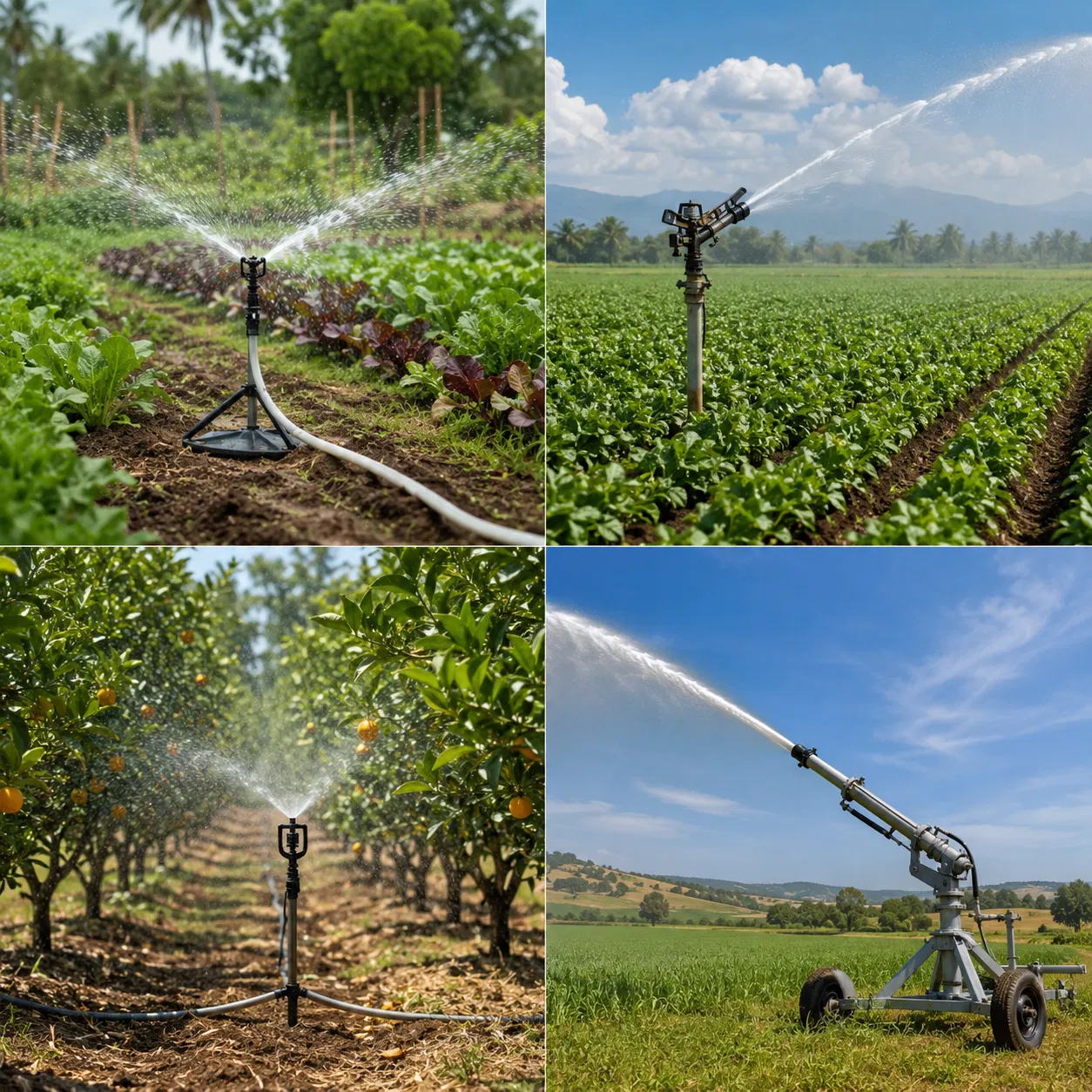
4. Impact Sprinklers
Impact sprinklers are known for their distinctive clicking sound and strong water coverage. They use a spring-loaded arm that moves back and forth as the water stream pushes it, creating a rotating spray pattern.
This type is especially effective for:
- Large lawns
- Pastures
- Agricultural fields
- Dust control applications
Impact sprinklers are durable and can operate in tough conditions, including areas with hard water or debris. Their strong spray makes them suitable for larger spaces, though they may not offer the same quiet operation or precision as more modern sprinkler types.
Best for:
Large outdoor spaces that need reliable, heavy-duty irrigation.
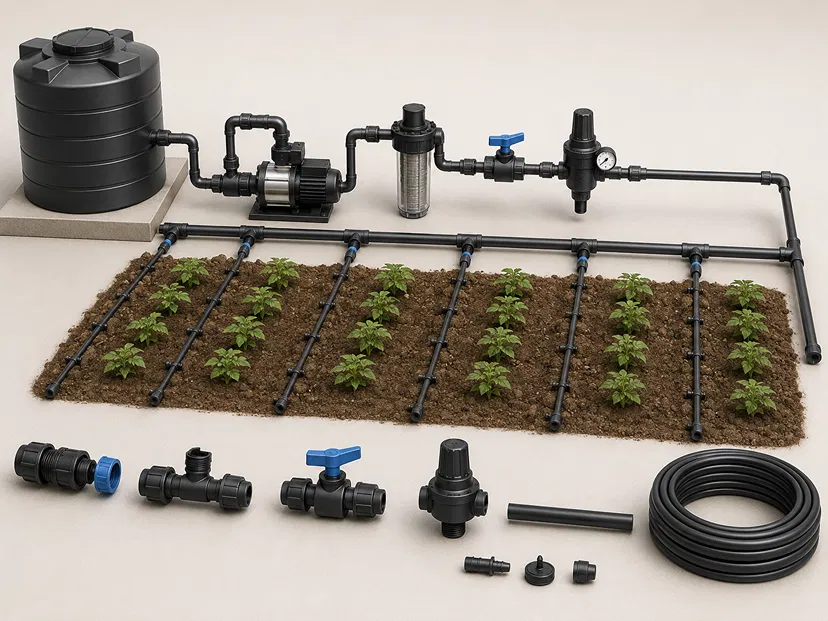
5. Drip Irrigation Systems
While not a traditional sprinkler, drip irrigation is one of the most efficient watering methods available and is often included in discussions about irrigation systems. Instead of spraying water over a wide area, it delivers moisture directly to the roots through tubes and emitters.
Drip irrigation is ideal for:
- Flower beds
- Vegetable gardens
- Container plants
- Hedges and shrubs
- Landscape beds
This method significantly reduces evaporation and water waste. It is especially valuable in dry climates or for plants that require targeted watering. However, it does require more planning and maintenance than a standard sprinkler head system.
Best for:
Precise, water-efficient irrigation for gardens and plant beds.
6. Pop-Up Sprinklers
Pop-up sprinklers are a common choice for in-ground irrigation systems. They remain hidden below the surface when not in use and rise up when water pressure is applied. This design helps maintain a clean landscape appearance and reduces the risk of damage from foot traffic or mowing.
They are often used in:
- Residential lawns
- Commercial properties
- Park landscapes
- Sports turf
Pop-up sprinkler heads can be either fixed spray or rotary, making them highly versatile. They are a favorite among homeowners who want a permanent irrigation solution that blends into the landscape.
Best for:
Lawns and landscapes that need an unobtrusive, built-in watering system.
7. Traveling Sprinklers
Traveling sprinklers move across the lawn on their own, following a hose path while watering the area. They are often used for large properties where stationary sprinklers would be less practical.
These are useful for:
- Expansive lawns
- Large garden plots
- Irregularly shaped outdoor areas
- Temporary irrigation setups
Traveling sprinklers are convenient because they require less repositioning, but they may not be ideal for highly landscaped or obstacle-filled spaces.
Best for:
Large open areas that need broad, movable coverage.
How to Choose the Right Sprinkler
Selecting the right sprinkler depends on more than just the size of your yard. You also need to consider soil type, water pressure, plant type, and local climate. A well-matched sprinkler system will deliver better results and use less water over time.
Ask yourself these questions:
- What shape is the area I need to water?
- How large is the space?
- Is the soil sandy, loamy, or clay-based?
- Do I need a permanent or temporary system?
- Am I watering grass, flowers, vegetables, or shrubs?
The most efficient irrigation system is not always the most powerful one—it is the one that matches your landscape’s exact needs.
Sprinkler Applications by Landscape Type
Understanding the practical applications of each sprinkler type can help narrow your options quickly.
- Small lawns: Fixed spray or oscillating sprinklers
- Large lawns: Rotary, impact, or pop-up sprinklers
- Gardens: Drip irrigation or fixed spray heads
- Sloped areas: Rotary sprinklers or drip systems
- Agricultural fields: Impact or traveling sprinklers
- Decorative beds: Drip irrigation for precision watering
Final Thoughts
There are many types of sprinklers and their applications to consider, and each one serves a specific purpose. From simple oscillating models for small lawns to efficient drip systems for targeted plant care, the right sprinkler can improve plant health, reduce water waste, and make irrigation easier to manage.
If you want a greener lawn, healthier garden, and lower water bills, start by evaluating your space and matching it with the best sprinkler type. A smart irrigation choice today can pay off in better results all season long.
Ready to upgrade your watering system? Take a closer look at your landscape’s needs and choose the sprinkler that delivers the right coverage, at the right time, in the right way.